
Sauropod Tails: Power, Defense, and Communication
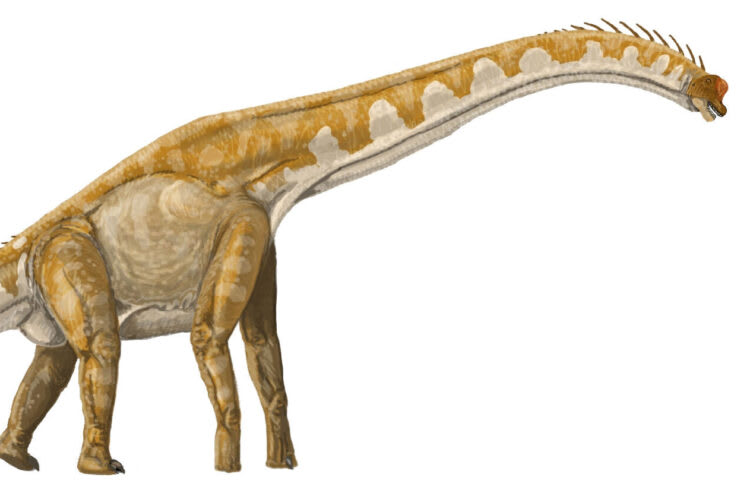
Uncovering the Dynamic Tail of Giraffatitan
Giraffatitan, one of the largest dinosaurs to ever roam the Earth, is often remembered for its long neck and towering height. However, the other end of its body—the tail—has remained largely overlooked. Now, a groundbreaking study is changing that narrative by revealing the surprising flexibility and functionality of this once-forgotten part of the sauropod.
The research, led by Verónica Díez Díaz from the Museum für Naturkunde in Berlin and published in Royal Society Open Science, provides the most detailed reconstruction of the range of motion in the tail of Giraffatitan brancai. The findings challenge long-held assumptions about how these massive creatures moved and lived.
Decoding Dinosaur Tails, Vertebra by Vertebra
For nearly a decade, Díez Díaz has been working on what can be described as a biomechanical puzzle. The fossil in question, MB.R.2921, consists of 18 well-preserved tail vertebrae and 14 chevron bones, all from a single individual found in the Tendaguru Formation. These bones have provided crucial insights into the structure and function of the tail.
According to the study, tails have a long evolutionary history, predating paired appendages in vertebrates by about 200 million years. Yet, their role and development remain poorly understood. The 3D modeling conducted by Díez Díaz and her team has shown that the tail was not a rigid structure but a flexible, muscular organ capable of complex movements.
The Tail’s Range of Motion
Previous reconstructions often depicted sauropods dragging their tails or holding them stiffly. However, the simulations conducted by the researchers reveal a different picture. The tail could arch upward to over 100 degrees, flex downward more than 50 degrees, and swing side to side with significant range. In some cases, it could even twist in place.
Díez Díaz explained that the main use of the tail was to assist in propulsion, helping the animal move. It may also have served as a tool for defense and communication with other dinosaurs.
Understanding the Tail’s Function
To analyze the tail’s movement, the researchers used advanced digital tools to model each vertebra. They reconstructed the bones in what is known as the “osteological neutral pose,” restoring their natural alignment without the distortions caused by fossilization. By testing the possible movements between vertebrae, they determined the limits of motion based on when bones would have collided or disarticulated in life.
A key factor in the study was the reconstruction of intervertebral cartilage, which doesn’t fossilize. Based on data from modern-day crocodiles and birds, the team inferred the presence of fibrocartilaginous discs similar to those in human spines. This soft tissue likely allowed the tail to bend and twist with remarkable flexibility, especially near the hips.
Why Tail Mobility Matters
Understanding the movement of Giraffatitan’s tail helps answer broader questions about sauropod biology and behavior. For instance, it informs our understanding of locomotion, as the front portion of the tail served as an attachment site for muscles that powered the hind legs. Tail mobility also impacts models of dinosaur metabolism, influencing how far and fast they could travel and how they used energy.
Additionally, the study suggests that tail movements might have played a role in communication and defense. While speculative, the possibility that tail flicks or whips could have served as signals to other dinosaurs or as predator deterrents is plausible.
New Perspectives on Old Fossils
One of the most intriguing discoveries was the difference in joint structures between the tail and the rest of the spine. Unlike the stable, interlocking joints found elsewhere, the tail vertebrae are amphicoelous—shallowly concave on both ends. This design required thick intervertebral discs to cushion movement, much like shock absorbers in a biological suspension bridge.
Another notable finding was a previously unknown feature: a “double surface” on the postzygapophyses, which appears to increase dorsal flexibility. The team suspects this feature exists in other sauropods but has gone unnoticed until now.
What’s Next?
The study of MB.R.2921 is just the beginning. Díez Díaz and her colleagues are expanding their biomechanical analyses to other sauropod tails from the Tendaguru beds. Their goal is to understand how different species coexisted, interacted, and moved across the Late Jurassic landscape.
For Díez Díaz, the excitement lies in bringing fossil remains to life through musculoskeletal reconstructions and simulations. As the field continues to evolve, the study of dinosaur tails promises to offer new insights into their movement, social lives, and survival strategies.
With every new discovery, we get closer to understanding these ancient giants in full—not just the neck that stretched upward, but also the tail that trailed behind, driving their movement with balance, strength, and fluidity.

Post a Comment for "Sauropod Tails: Power, Defense, and Communication"
Post a Comment