
The rise and fall of white-tailed deer
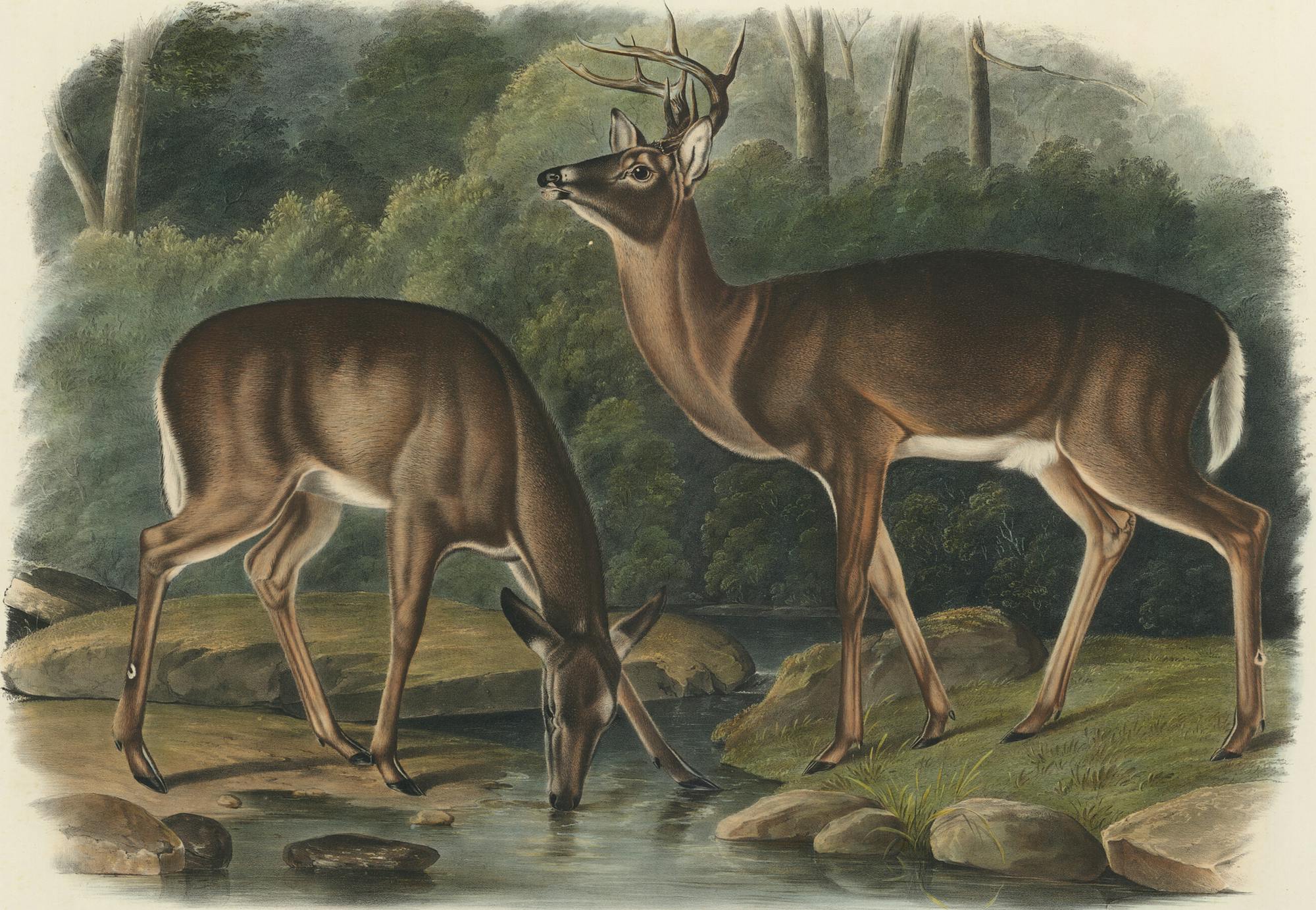
The Rise and Fall of White-Tailed Deer in North America
White-tailed deer are now a common sight across American backyards, gardens, and highway corridors. However, it might come as a surprise that these animals were nearly extinct just over a century ago. Today, their population is estimated to be between 30 million and 35 million, but at the turn of the 20th century, there were as few as 300,000 white-tailed deer across the entire continent—just 1% of the current population.
This dramatic decline was widely noted during the 19th century. In 1854, Henry David Thoreau observed that no deer had been hunted near Concord, Massachusetts, for a generation. His famous work, “Walden,” included references to the scarcity of deer in the area, highlighting how the species had become nearly invisible in local ecosystems.
But what caused this near extinction, and how did the species manage to recover?
As a historical ecologist and environmental archaeologist, I have spent years studying the history of white-tailed deer. My research has involved examining archaeological sites across the eastern United States, analyzing historical records, and reviewing ecological data to understand the complex story of this species.
Precolonial Era: A Stable Population
White-tailed deer have been hunted for thousands of years, dating back to the earliest migrations of people into North America over 15,000 years ago. However, they were not the most important food source during that time.
Archaeological evidence suggests that deer populations began to grow significantly after the extinction of large megafauna like mammoths and mastodons, which opened up new ecological niches. From about 6,000 years ago onward, deer bones became more common in archaeological sites, reflecting the cultural and economic importance of the species for Indigenous peoples.
Despite being frequently hunted, deer populations did not appear to decline significantly before AD 1600. Unlike other species such as elk or sturgeon, which saw population drops due to Indigenous hunting, white-tailed deer seem to have remained resilient. Some evidence points to localized declines, but overall, deer remained abundant for thousands of years.
One possible reason for their resilience is the use of controlled burning by Indigenous peoples. Fire was used to promote new vegetation growth, creating ideal habitats for deer. This practice may have helped sustain deer populations despite hunting pressure.
Ecologists estimate that there were roughly 30 million white-tailed deer in North America on the eve of European colonization—similar to today’s numbers.
Colonial Era: A Sharp Decline
The arrival of European colonists marked a turning point for white-tailed deer. My recent analysis of deer bones from two archaeological sites in what is now Connecticut revealed a significant increase in hunting pressure following colonization.
At a site dated to the 11th to 14th centuries—before European contact—I found that only 7% to 10% of the deer killed were juveniles. This low percentage indicated minimal hunting pressure, as hunters typically target adult deer for more meat and better hides.
However, at a nearby site occupied in the 17th century—just after colonization—the percentage of juvenile deer increased to 22% to 31%. This shift suggests a major rise in hunting pressure, likely driven by the commodification of deer.
Venison, antlers, and deerskins had long been traded among Indigenous groups, but with European colonization, deer became part of a trans-Atlantic capitalist system. They were now exploited for profit rather than just sustenance. This commercial demand led to widespread overhunting and pushed the species toward extinction.
20th-Century Recovery
The 20th century brought a dramatic recovery for white-tailed deer. The rise of the conservation movement in the late 19th and early 20th centuries played a crucial role in saving the species from extinction.
Concerned citizens and outdoorsmen advocated for new protections for wildlife. Legislation such as the Lacey Act of 1900 helped ban the interstate trade of poached game, effectively ending commercial deer hunting. Combined with state-level protections, these efforts helped restore deer populations.
Conservation-oriented hunting practices and reintroductions of deer from surviving populations also contributed to their rebound. Today, white-tailed deer thrive across much of North America.
Lessons from History
The story of white-tailed deer highlights an important truth: humans are not inherently harmful to the environment. While hunting from the 17th through 19th centuries threatened the species, precolonial Indigenous hunting and environmental management appeared to be relatively sustainable. Modern regulatory efforts in the 20th century helped prevent further decline and allowed the species to recover.
This history serves as a reminder that with careful management and conservation, even species on the brink of extinction can make a remarkable comeback.

Post a Comment for "The rise and fall of white-tailed deer"
Post a Comment