
The SERP Domination Guide: Mastering Search Visibility in 2026
The Evolution of Search and the Need for a New SEO Strategy
Search is undergoing one of its most significant transformations in recent decades, and it’s essential that your SEO strategy evolves alongside it. The landscape is now more complex than ever, with new challenges emerging from the rise of AI-driven features like AI Overviews. These features are changing how users interact with search results, often leading to fewer clicks on traditional organic listings.
The reality is that even when you secure a top organic position, you’re now competing against AI Overviews that can steal those clicks before a user ever lands on your site. However, this complexity also presents new opportunities. The SERP has become more abundant, offering multiple touchpoints where brands can make an impact. The key is to create total visibility across these various channels to capture every high-intent moment.
This is where the search visibility framework comes into play. It’s designed to help brands dominate the SERPs by ensuring they appear in as many relevant placements as possible. This approach not only maximizes market coverage but also diversifies lead generation and builds brand authority.
Understanding the Search Visibility Framework
At its core, the search visibility framework focuses on omnipresence—owning multiple placements on the first page of search results. The goal is to be present for every high-intent moment, whether a user is looking for information, trying to find a local business, seeking instructions, or ready to make a purchase.
To achieve this, the framework targets several key areas within the SERP:
- Paid Ads (PPC): Immediate visibility for competitive queries.
- Local Services Ads (LSAs): Ideal for capturing local intent.
- Map Pack: Essential for businesses with physical locations.
- Organic Listings: The foundation of long-term visibility.
- Featured Snippets: Provide quick answers and boost credibility.
- AI Overviews: Increasingly influential in shaping user behavior.
- People Also Ask (PAA): Offers additional visibility through related questions.
- Videos: Engaging content that can drive traffic.
- E-commerce/Shopping Features: Critical for transactional searches.
- “Things to Know” and “What People Are Saying” Modules: Enhance trust and relevance.
By appearing in multiple slots for the same query, brands can maximize their reach, generate traffic from diverse sources, and build stronger relationships with their audience.
Why Total SERP Coverage Matters
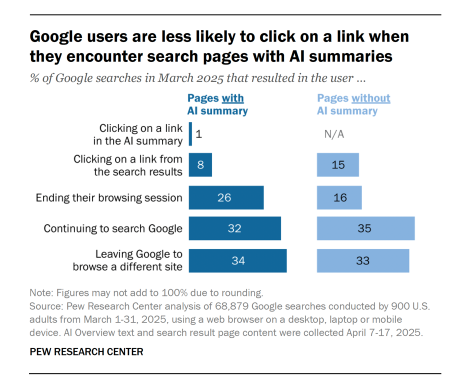
Google’s AI Overviews have had a noticeable impact on user behavior, with some studies suggesting that they significantly reduce click-through rates. For example, research indicated that only 8% of users clicked on traditional results after encountering an AI summary. However, other studies, such as one conducted by Terakeet, found that being included in AI Overviews could actually increase clicks, especially for transactional queries. Additionally, TrustRadius reported that 90% of B2B buyers clicked on sources featured in AI Overviews.
This highlights the growing importance of not just appearing in AI Overviews but also maintaining strong positions across the rest of the SERP. The search visibility framework is built to address this challenge, ensuring that your brand remains visible no matter the context.
The Five Pillars of the Search Visibility Framework
The framework is built around five key pillars that work together to enhance visibility across the SERP:
-
Content
Content serves as the foundation of the framework, providing value and structure that supports all other elements. High-quality, well-organized content improves organic rankings, strengthens paid ad landing pages, enhances local profile relevance, and contributes to a better user experience. -
Organic Search
Traditional SEO remains the backbone of search visibility. Strong technical health, precise keyword targeting, and effective on-page optimization ensure that your brand is discoverable for a wide range of queries. -
Paid Search
Paid campaigns offer immediate visibility for competitive keywords where organic rankings may take time to develop. They help fill coverage gaps and capitalize on commercial micromoments. -
Local Search
Local SEO provides geographic dominance, making it easier for nearby customers to find your business. -
User Experience
A seamless user experience ensures that every click—whether from AI Overviews, organic, paid, or local sources—has the best chance of converting into a meaningful action.
Together, these pillars create a multifaceted strategy that enhances visibility and drives measurable results.
Measuring the Impact of the Search Visibility Framework
Tracking the success of the search visibility framework requires more than just traditional rankings data. It involves monitoring a variety of metrics that reflect your presence across AI Overviews, SERP features, and different stages of the customer journey.
Key metrics to track include:
- Executive KPIs: Business outcomes, leads, impressions, and share of voice.
- Paid Performance: Cost per click (CPC), conversions, and return on ad spend (ROAS).
- Local Performance: Map Pack visibility, calls, reviews, and Local Pack rankings.
- Organic Performance: Clicks, click-through rate (CTR), snippet wins, and content rankings.
- Content Features: PAA coverage, video impressions, and FAQ schema results.
- Website Health: Core Web Vitals scores, page speed, and schema errors.
- SERP Coverage: Percentage of features owned per target query.
- Visibility Weight Score: A weighted measure of SERP feature prominence.
- Conversion Efficiency: How effectively traffic turns into leads or sales.
- Funnel Stage Visibility: Reach of top-of-funnel (TOFU) content, middle-of-funnel (MOFU) conversion rates, and bottom-of-funnel (BOFU) decision support.
- AI SERP-Specific Analytics: Citation tracking and engagement within AI Overviews.
By consolidating these metrics into a custom SEO dashboard, you can gain a comprehensive view of your performance and make data-driven decisions to optimize underperforming assets.
From Uncertainty to Opportunity
Search is no longer a straightforward path from query to click. Users now navigate a complex maze of AI-generated answers and competing SERP features. However, this doesn’t mean invisibility is inevitable. With the right strategy, brands can re-engineer their SEO programs to seize every opportunity the SERP offers, rather than focusing on what’s been lost.

Post a Comment for "The SERP Domination Guide: Mastering Search Visibility in 2026"
Post a Comment