
TIFF 2025: Nanouk Leopold's Nature-Inspired 'Whitetail'
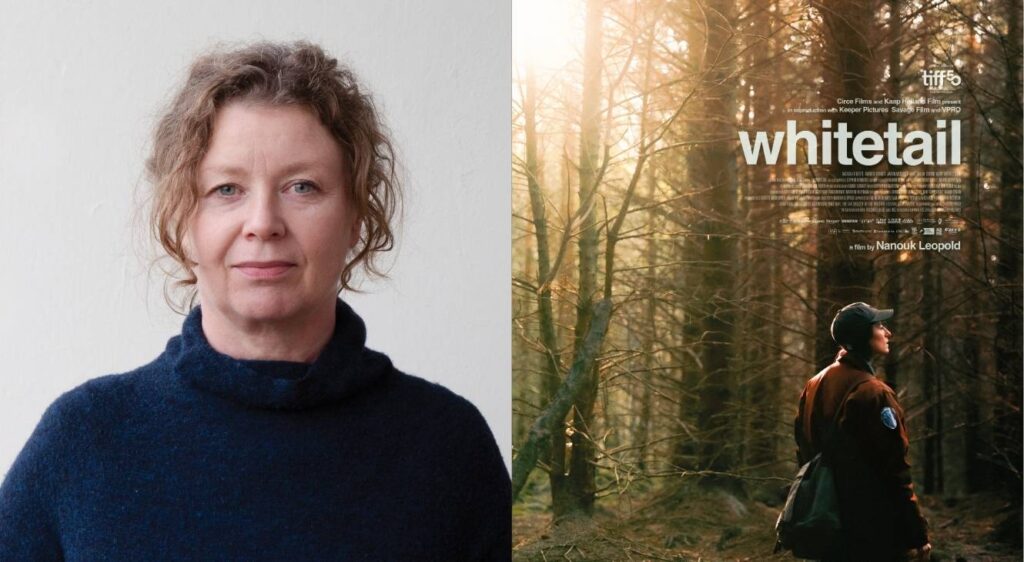
A Journey Through Trauma and Nature in Whitetail
In Whitetail, the latest film by director Nanouk Leopold, we follow Jen (Natasha O’Keeffe), a forest ranger who balances her responsibilities managing Ireland’s local woods with caring for her ailing father, Daniel (Andrew Bennett). As she navigates this dual life, Jen is forced to confront a painful past when her ex-boyfriend, Oscar (Aaron McCusker), returns home. This event triggers a flood of unresolved trauma tied to the tragic death of her sister. Meanwhile, the growing threat of poaching adds another layer of pressure to her already overwhelming life.
Whitetail explores the complex nature of trauma through Jen’s emotional journey. She cycles through various coping mechanisms, often avoiding the pain that lies beneath. The process of facing this trauma is slow and difficult, revealing the raw, uncomfortable truths that come with healing. The film is as much about character development as it is about the symbolic representation of trauma, with Natasha O’Keeffe delivering a powerful performance as the emotionally turbulent Jen.
Before the world premiere of Whitetail at the Toronto International Film Festival, Leopold and O’Keeffe shared insights into the creative process behind the film. Their conversation touched on the inspiration for the story, how the natural environment influenced their work, and the challenges of portraying Jen’s internal struggles.
The Spark of Inspiration
When asked about the initial inspiration for Whitetail, Leopold described it as an image—a woman in the woods, deeply connected to her surroundings. “She belongs there. She has a purpose being there,” she said. However, finding the right story took time. “Stories come and then they tend to take you away in a certain direction. Sometimes we would leave the woods, and I was like, no, no, no, no, no, I want to go back into the woods. She has to stay there.”
Leopold also reflected on how the story evolved. Originally conceived with a male protagonist, the idea shifted after someone suggested making it a woman’s story. “I didn’t even know why I started with a man. It was so long ago,” she admitted. Despite the challenges, the final result was worth the effort. “The poster is being made. It features a woman in the woods. She’s there. She’s also there in the film. So I’m really happy that she came.”
The Forest as a Symbol
The forest plays a central role in Whitetail, not just as a setting but as a symbol of Jen’s inner turmoil. While nature is often seen as open and free, the film portrays it as a place that can trap and confine. O’Keeffe described the different forests used in the film, from the dark, ancient woodlands to the regenerating areas of Glengarriff. “We had night shoots in the woods, and how different and almost scary and heightened it all feels at night,” she said.
Leopold emphasized the importance of the natural environment in shaping the film. “I told my producer from the Netherlands that I was in love with all these little bushes and groups of trees,” she explained. “We went all over Kerry County, searching for the right locations.” Each forest had its own meaning and emotion, contributing to the film’s visual and thematic depth.
Performance and Internal Struggles
O’Keeffe spoke about the challenge of portraying Jen’s trauma on screen. “With the shooting of film, it’s so rare for it to be in any successive order,” she said. “On the job, it felt more like an artistic flow than a job.” To prepare, she focused on understanding Jen’s emotional beats and the underlying story. “There was a lot of internal work before getting on camera,” she added. “I did a lot of digging into the story, asking questions about Jen’s relationships and experiences.”
One of the key elements in her performance was the small, hidden necklace that Jen wears, a symbol of her connection to her sister. “It’s a very small, childish necklace,” O’Keeffe noted. “It’s there, but you don’t have to notice it. It’s a subtle detail that helped me connect with Jen.”
Rebirth and Healing
Leopold highlighted the theme of rebirth in the film, drawing parallels between Jen’s personal healing and the natural cycle of regeneration. “Jen’s work with the oak trees mirrors the process of trauma recovery,” she said. “It’s about taking seeds, nurturing them, and putting them back in a safe place. That’s what nature does to help with trauma.”
O’Keeffe agreed, noting that Jen’s strong sense of boundaries reflects her internal struggle. “She’s a woman with real boundaries,” she said. “There’s so much physical versus internal conflict.”
Whitetail had its world premiere at the 2025 Toronto International Film Festival. Fans can look forward to updates on its theatrical release.

Post a Comment for "TIFF 2025: Nanouk Leopold's Nature-Inspired 'Whitetail'"
Post a Comment