
Tri-Rail faces funding crisis as state slashes railroad support
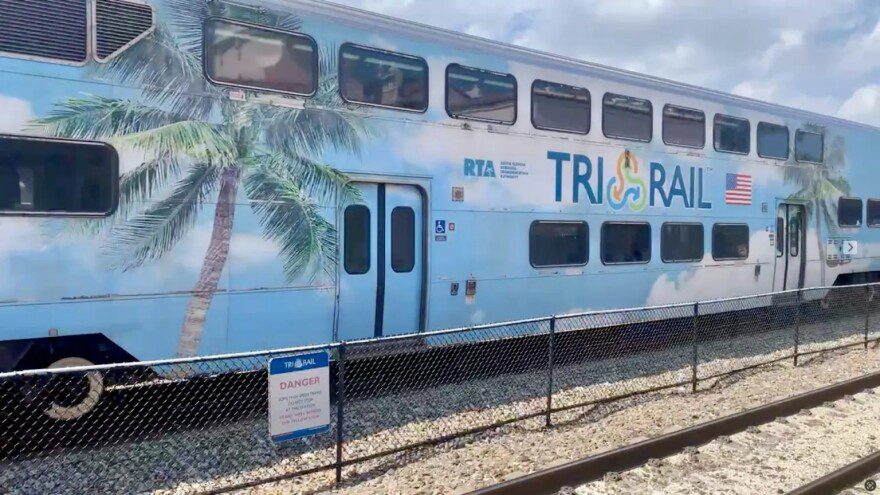
A Major Shift in Funding for South Florida Rail
Since 2013, the state of Florida has been allocating at least $42 million annually to operate and maintain a railroad network that serves South Florida. This includes 80 miles of track used by Amtrak passenger trains, CSX freight trains, and Tri-Rail, the regional commuter service connecting Palm Beach, Broward, and Miami-Dade counties. However, recent decisions by the Florida Department of Transportation (FDOT) have thrown this system into uncertainty.
In a surprising move after the fiscal year began on July 1, FDOT announced it would reduce its annual contribution from the previously mandated $42.1 million to just $15 million. The gap is even larger than that, as the state had planned to pay $62 million this year. If the three South Florida counties fail to cover the remaining shortfall or if lawmakers force FDOT to reconsider, the South Florida Regional Transportation Authority (SFRTA), which was established in the 1980s to manage the rail system, may cease to exist by July 2027.
This decision marks a major shift in responsibility. SFRTA Chairperson and Palm Beach County Commissioner Marci Woodward compared the situation to the state running a bus on I-95 and then expecting the counties to pay for the maintenance of the highway. "This is equivalent to them saying, ‘We run a bus on I-95 so, well, now you have to pay for the maintenance of I-95,'" she said during an August 26 workshop.
An Existential Crisis for Tri-Rail
The counties, already facing pressure to contribute more than $4.2 million annually, are reluctant to take full ownership of the rail line, which the state purchased in 1988 to ease congestion during the early stages of Interstate 95 expansion. Despite this, they want Tri-Rail to continue as an alternative to the congested highway and eventually transition to the coastal FEC Railway tracks, which could expand services into northern Palm Beach County.
Tri-Rail, which currently runs from Miami to Mangonia Park, has long planned for a station at the VA Medical Center in Riviera Beach. However, these plans are now in jeopardy due to the funding crisis. From mid-2024 to June, Tri-Rail provided a record 4.57 million rides, but fares only cover about $15 million of its $150 million annual budget, which includes capital expenses.
If the SFRTA is dissolved, it’s likely that Tri-Rail will also be affected. SFRTA board member and Miami-Dade Commissioner Raquel Regalado described the situation as an “existential crisis.” She warned that eliminating Tri-Rail would lead to more drivers on roads that require significant state and federal subsidies to maintain.
Uncertainty About Future Operations
It remains unclear how the state would fulfill its obligations to provide safe and operational rails for Amtrak and CSX if the SFRTA is dissolved. Additionally, the exact amount that Amtrak and CSX pay the state to operate the railroad is not publicly known, as these contracts are considered proprietary. However, SFRTA Executive Director David Dech, a former CSX executive, noted that the amount is likely less than the $15 million the state is offering this year.
Tri-Rail had expected to receive $62 million this year, but so far, it has received nothing. The cost of dispatching trains and maintaining the rail lines and stations is $49 million annually, according to SFRTA officials. Since 2013, the state has consistently met its statutory obligation of $42.1 million, and this year, the state had pledged over $60 million, with Tri-Rail planning for $62 million in its budget.
Legislative Changes and Legal Disputes
During the extended legislative session that ended in June, lawmakers redirected revenue from real estate documentary stamps, which had previously funded the SFRTA, into the state's general fund. This change allowed the state to use the money for any state expense. FDOT officials argued that without this source, they could only afford to pay $15 million for the rail line, viewing the statute as a one-time obligation rather than a perpetual requirement.
However, SFRTA attorney Teresa Moore argued that the statute clearly states that FDOT “shall” transfer $42.1 million annually to the SFRTA. She emphasized that removing the source of the funds does not negate the state’s legal obligation.
Pressure on Counties to Contribute More
FDOT District 4 Secretary Steve Braun, who oversees the Fort Lauderdale-Palm Beach region, suggested that the state’s decision was aimed at encouraging the counties to increase their contributions. He pointed out that while the state had historically contributed more than $42 million, the counties had been relatively stagnant in their support. He urged the counties to offer more funding to make the state’s continued investment more palatable.
Despite this, the counties have been hesitant. At a recent workshop, Deputy County Administrator Todd Bonlarron mentioned that discussions about increasing contributions were ongoing, but no specific number had been agreed upon. SFRTA Director Dech believes the state is waiting for the counties to take the next step.
Long-Term Challenges and Possible Solutions
The state’s push for greater county contributions echoes a long-standing debate. In 2006, the state proposed shifting more Tri-Rail costs to the counties, but the plan was blocked by then-Governor Jeb Bush. Later, FDOT promised to use toll money from I-95 express lanes, but this commitment was never fulfilled.
By 2009, the state passed a law requiring annual support for Tri-Rail, which became effective in 2013. However, the only exception came in 2017 when a new law gave the two sides until 2019 to find an alternative funding source. SFRTA argues that the failure to do so did not end the state’s $42 million pledge.
Financial Shortfalls and Cost-Cutting Measures
When the pandemic hit, SFRTA accepted federal assistance that is now expiring, leading to a projected budget shortfall of $90 million in three years. This has raised concerns among all three counties. In response, the SFRTA governing board held an emergency session and explored cost-cutting measures to show the state they were serious about cooperation.
However, some cuts proved ineffective. For example, eliminating all administrative staff would only extend the agency’s lifespan by six weeks, and cutting weekend trains would save $3.6 million but inconvenience 13,000 riders. Dech emphasized that the agency cannot save itself into prosperity and needs alternative funding sources.
County Resistance to Full Responsibility
Owning the tracks and Tri-Rail’s 19 stations would give the counties more flexibility to raise revenues through concessions and nearby development. They could also reduce costs by eliminating expensive elevators and pedestrian bridges. However, most Palm Beach County commissioners are unwilling to cover the $30 million gap needed to keep the railroad running.
Commissioner Sara Baxter stated that she was not in favor of funding the railroad, calling it a “no-win” situation for taxpayers. SFRTA Chairperson Marci Woodward explained that the counties had expected more time to figure out how to contribute more toward the subsidy. For now, SFRTA will use reserves to cover the shortfall, giving the agency time to revisit the issue in the next legislative session.
State House Speaker Daniel Lopez has shown interest in recapturing the state’s funds, according to SFRTA officials. “Either it will be fixed or it won’t,” Woodward said, adding that the counties are not in favor of paying for the operation and maintenance of the line, as they believe it is the state’s responsibility.
Under one scenario, if the state reduces its payment to $49 million a year, the counties would need to increase their contribution to $6.7 million each, up from $4.2 million. But even this may be difficult given the state’s efforts to limit county spending through audits and property tax reforms.
County Mayor Maria Marino expressed concern about where the money would come from, especially if property taxes are eliminated. “If there’s no property taxes, there is no money to do this,” she said. “This would be an unfunded mandate for us.”

Post a Comment for "Tri-Rail faces funding crisis as state slashes railroad support"
Post a Comment