
Trump's Crackdown on Political Opposition Begins
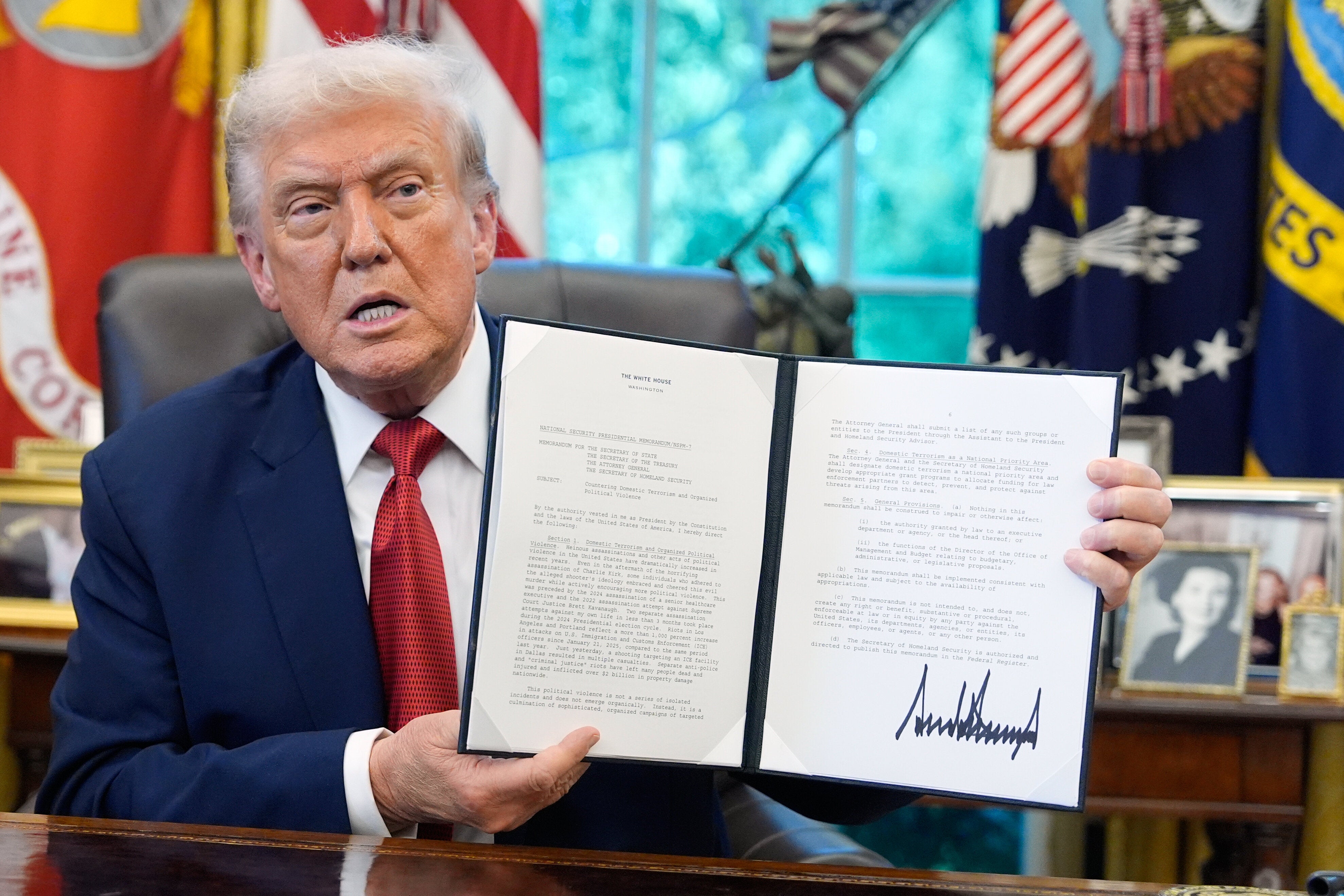
Understanding the Trump Administration’s New Approach to Domestic Terrorism
The Trump administration has introduced a new policy that has raised significant concerns among legal experts and civil liberties advocates. This policy, outlined in a presidential memo, aims to address what the administration refers to as “domestic terrorism.” However, the definition of this term is broad and potentially dangerous, leading to fears of a crackdown on political dissent.
Defining Domestic Terrorism
According to the memo, domestic terrorism includes speech and association that could be seen as supporting or encouraging actions against the government. The administration links recent events such as the assassination of conservative activist Charlie Kirk and the attempted assassination of President Donald Trump to a broader pattern of political violence. These incidents are framed as part of a larger campaign designed to silence opposing voices and disrupt democratic processes.
The memo suggests that any speech advocating for anti-Americanism, anti-capitalism, or anti-Christianity, as well as support for the overthrow of the U.S. government, could be considered a threat. This vague language raises concerns about the potential misuse of the memo to target individuals and groups with differing political views.
Impact on Free Speech and Political Dissent
Legal experts warn that this approach could lead to a chilling effect on free speech. Katie Fallow, deputy litigation director for the Knight First Amendment Institute at Columbia University, expressed concern over the administration's actions, comparing them to historical periods like the Nixon era and the Red Scare. She emphasized that the memo's broad definitions could allow the government to target individuals and organizations it disagrees with under the guise of combating violence.
Will Creeley, legal director for the Foundation for Individual Rights and Expression, echoed these concerns, stating that the memo identifies specific viewpoints the administration dislikes and suggests they can be grounds for investigation. This could lead to a situation where simply expressing certain opinions becomes a risk.
Targeting Organizations and Funding
The memo also targets funding networks that support political dissent. Vice President JD Vance highlighted the need to go after “NGO networks” that he claims foment violence. Specific mentions include billionaire George Soros’ Open Society Foundations and the Ford Foundation, which fund various progressive and human rights groups. These organizations are accused of supporting causes that the administration deems problematic.
The Department of Justice has reportedly begun exploring potential charges against the Open Society Foundations. Allegations include racketeering, arson, wire fraud, and material support for terrorism. These claims are based on a research memo from a conservative communications firm, which alleges that the foundations have funded groups linked to terrorism. However, many of these allegations are rooted in the expression of support for Palestinian causes, which is not inherently illegal.
Legal and Financial Implications
The memo directs the IRS to investigate nonprofits for connections to domestic terrorism and refer them to the Department of Justice for prosecution. It also instructs the Treasury Department to examine financial flows and coordinate with agencies to trace illicit funding streams. This could lead to pressure on banks to freeze accounts of organizations labeled as supporters of domestic terrorism.
Experts warn that if an organization is declared a terrorist-supporting entity, it could lose all access to banking services. This poses a significant threat to the operations of nonprofit groups that advocate for progressive causes.
Legal Challenges and First Amendment Concerns
Despite the administration's efforts, the First Amendment protects a wide range of speech, including views that many Americans may find offensive. Legal scholars argue that any attempt to suppress political dissent would face strong opposition in court. Even the Supreme Court's conservative majority has shown support for protecting core political speech.
However, the mere existence of this policy could still have a chilling effect on free expression. As Fallow noted, the threat of government action may deter individuals and groups from speaking out, even if their actions are legally protected.
Conclusion
The Trump administration's new approach to domestic terrorism represents a significant shift in how the government addresses political dissent. While the intent may be to combat violence, the broad definitions and potential for misuse raise serious concerns about the protection of free speech and the role of the government in regulating political expression. As the legal challenges unfold, the implications of this policy will likely shape the future of political discourse in the United States.

Post a Comment for "Trump's Crackdown on Political Opposition Begins"
Post a Comment