
Unusual Currencies That Shaped History
The Evolution of Money: A Journey Through Unconventional Currencies
Throughout history, the concept of money has taken many forms. While modern societies rely on paper bills and digital transactions, ancient civilizations used a wide array of unconventional items to facilitate trade and economic activity. These currencies were not only practical but also deeply embedded in the cultures and traditions of the people who used them. From massive stone discs to tea bricks, these unique forms of money offer fascinating insights into human ingenuity and the universal need to assign value.
Rai Stones: The Heavy Currency of Yap
On the remote island of Yap in Micronesia, the Yapese developed one of the most intriguing forms of currency—Rai stones. These enormous limestone discs, some weighing up to four tons and measuring twelve feet across, were quarried from the distant island of Palau and transported by canoe and raft. The journey was perilous, often resulting in loss of life, which only increased the stones’ value.
What makes Rai stones particularly remarkable is that they were rarely moved. Instead, ownership changed hands while the stones remained in place. The community maintained a shared record of who owned which stone, effectively creating an early form of a distributed ledger system—long before the advent of cryptocurrency.
Even stones that sank to the ocean floor during transport were still considered valuable, demonstrating the power of collective agreement over physical possession.
Cowrie Shells: A Universal Medium of Exchange
Before the rise of modern currencies, cowrie shells served as a widely accepted medium of exchange across Africa, Asia, and the Indian Ocean. These small, glossy shells from the Maldives were prized for their durability, portability, and limited supply. They were so universally accepted that they remained legal tender in parts of Africa until the 1960s.
Cowrie shells democratized trade, as anyone could collect and use them without requiring specialized skills. Different shell sizes represented different values, making them convenient for everyday transactions. However, the global trade in cowrie shells had a darker side, as they were sometimes used to purchase enslaved people during the Atlantic slave trade.
Despite this, cowrie shells retained spiritual significance in some African cultures, symbolizing fertility, wealth, and protection.
Salt: The Precious Commodity
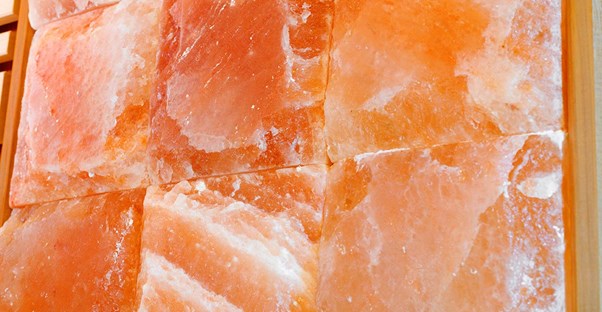
Salt, now a common seasoning, was once one of the most valuable commodities in human history. The word "salary" comes from the Latin word for salt, highlighting its importance in ancient Rome. In many regions, salt was essential for food preservation, making it highly sought after.
In Ethiopia, merchants created standardized salt bars called "amoleh," which functioned as currency. In Tibet, salt cakes were pressed with images of the Grand Khan and used as both currency and a symbol of political power. The salt trade routes shaped economies worldwide, with places like the Wieliczka salt mines in Poland funding entire kingdoms.
In China, the government tightly controlled salt production, and smuggling was punishable by death. Gandhi’s Salt March in 1930 challenged British colonial rule by targeting the control of salt as both a commodity and a tool of oppression.
Tea Bricks: The Dual-Purpose Currency
Tea bricks became a form of currency in Tibet, Mongolia, and parts of China as early as the 9th century. These compressed tea bricks were easy to transport and could be brewed into a drink if needed, making them a versatile form of money.
Different grades of tea determined the value, and official stamps helped prevent counterfeiting. Tibetan traders would carry strings of tea bricks across the Himalayas, exchanging them for horses, tools, and other goods. Some bricks were even infused with yak butter and salt, making them more nutritious and suitable for local consumption.
Tea bricks were especially useful for nomadic cultures, as they were stable in extreme conditions and had medicinal properties.
Cigarettes: The De Facto Currency in Closed Economies
While not an official currency, cigarettes became the primary form of money in prisoner-of-war camps, prisons, and other closed economies throughout the 20th century. British economist R.A. Radford documented this phenomenon in German POW camps during World War II, providing one of the earliest studies of informal economies.
Cigarettes were ideal for such environments because they were divisible, durable, and had intrinsic value. Non-smokers would still accept them, as they could trade them to smokers. Over time, exchange rates between different brands emerged, with certain brands like Marlboros holding higher value.
The cigarette economy led to the development of complex systems, including professional traders and "cigarette bankers" who managed deposits and loans.
Playing Cards: An Emergency Solution in New France
In 1685, New France (now Quebec) faced a severe currency crisis when a supply ship from France was delayed. To solve the problem, Intendant Jacques de Meulles issued playing cards as official currency, writing denominations on them and signing them as legal tender.
This emergency measure worked so well that card money became a regular part of the economy for over 70 years. The cards were lightweight, hard to counterfeit, and easy to use. Different denominations were created using combinations of whole cards and cut pieces.
However, the system collapsed when France abandoned its North American colonies, leaving many colonists with worthless playing cards instead of silver coins.
Feather Money: The Ceremonial Currency of Santa Cruz
On the Pacific island of Santa Cruz, red feather coils known as "tevau" served as currency for important transactions such as bride prices and ceremonial exchanges. These feathers came from specific birds and were prepared according to traditional methods passed down through generations.
Creating feather money was an art form, requiring careful harvesting, cleaning, dyeing, and weaving. A single coil could take months to complete, making them extremely valuable. Unlike everyday currency, feather money was reserved for significant social and cultural events, often passed down through families as heirlooms.
Chocolate Money: The Divine Currency of the Aztecs
The Aztecs and Maya used cacao beans as currency in Mesoamerica. These beans, traded in their natural, bitter form, were considered so valuable that they were believed to be a gift from the god Quetzalcoatl. Cacao beans were portable, divisible, and difficult to counterfeit, making them ideal for trade.
Detailed exchange rates existed, with a turkey costing 200 beans and a tomato just one. When Spanish conquistadors arrived, they initially dismissed cacao beans as worthless but soon realized their widespread acceptance and began using them in trade themselves.
Chocolate eventually made its way to Europe, where it became a luxury item for the aristocracy, marking a shift from practical currency to a symbol of wealth and refinement.

Post a Comment for "Unusual Currencies That Shaped History"
Post a Comment