
5 Major Overhauls of the White House
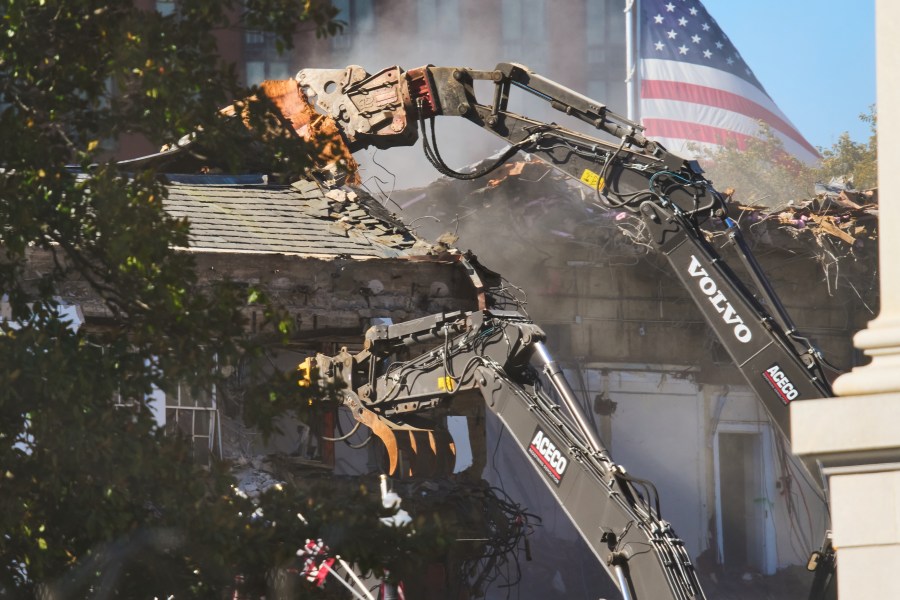
The White House has long been a symbol of American history and power, but its physical structure has also evolved over time. President Trump's recent decision to construct a grand ballroom attached to the White House—starting with the demolition of part of the East Wing this week—has sparked discussions about how past presidents have left their own marks on the building. From Teddy Roosevelt to Barack Obama, each administration has made changes that reflect their vision for the executive residence.
A Legacy of Change
Harry Truman oversaw one of the most significant modernizations of the White House in 1948, when parts of the building were deemed unsafe. The renovations, which cost around $5.7 million (over $50 million today), involved gutting the structure while preserving as much of its original design as possible. Truman, who moved to Blair House during the work, was pleased with the outcome, though he admitted the price tag was steep. “It is worth it—but not 5 ½ million dollars,” he said, adding, “If I could have had charge of the construction it would have been done for half the money and in half the time!”
The White House Historical Association notes that elements like the South Portico, North Portico, East Wing, West Wing, and Truman Balcony were all once controversial but are now considered iconic. These additions show how the White House has continuously adapted to meet the needs of its occupants and the nation.
Major Renovations Through the Years
1902: The creation of the West Wing began under President Theodore Roosevelt. Prior to this, there was no designated space for official presidential business. Roosevelt wanted a central office for the commander in chief, leading to the construction of the first presidential office on the west side of the White House. This area, later called the “Roosevelt Room,” became the heart of presidential operations.
1933: Franklin D. Roosevelt expanded the West Wing significantly, adding 25,000 square feet of permanent office space. He also relocated the Oval Office to its current location in the southeast corner of the West Wing. FDR added an indoor pool on the West Terrace for exercise, funded by The Daily News through the Roosevelt Swimming Pool Fund. While this pool was eventually covered by the briefing room, an outdoor pool built under President Ford still exists on the South Lawn.
1948: Truman’s renovation project was the most extensive in the White House’s history. The building was completely gutted, and new structural elements were added. Despite the high cost, Truman and his family returned to a beautifully restored residence, expressing satisfaction with the results.
1973: President Nixon added a one-lane bowling alley under the driveway leading to the North Portico. The space, funded by private donors, was used by staff and visitors. Interestingly, a bowling lane had previously existed in what is now the Situation Room during Truman’s time, and Eisenhower had moved another alley to the basement beneath the Old Executive Office Building.
2009: President Obama converted the White House tennis court into a full-scale basketball court, making it usable for both sports. The court hosted events featuring college basketball teams and Wounded Warriors.
Trump’s Grand Ballroom
Trump’s proposed ballroom, attached to the East Wing, represents a bold new chapter in the White House’s history. Unlike previous renovations, this project is entirely funded by private donors. The White House has defended the initiative, calling it a necessary addition that honors the legacy of past improvements.
Ed Lengel, former chief historian for the White House Historical Association, emphasized that nothing in the past compares to Trump’s ambitions. “There’s never been anything like that before. And I think I can say that with total confidence. There’s been nothing on that scale, even close to that scale, has ever been done before,” he said.
Conclusion
From the West Wing to the bowling alleys, the White House has continually evolved to meet the needs of its occupants. Each president has contributed to its transformation, leaving behind a legacy that reflects their vision. As Trump’s ballroom project moves forward, it will add another chapter to the storied history of the executive mansion.

Post a Comment for "5 Major Overhauls of the White House"
Post a Comment