
Asheville's River Arts District Seeks Resilience Without Relocation After Helene
A Year After Helene: The River Arts District's Struggle for Resilience
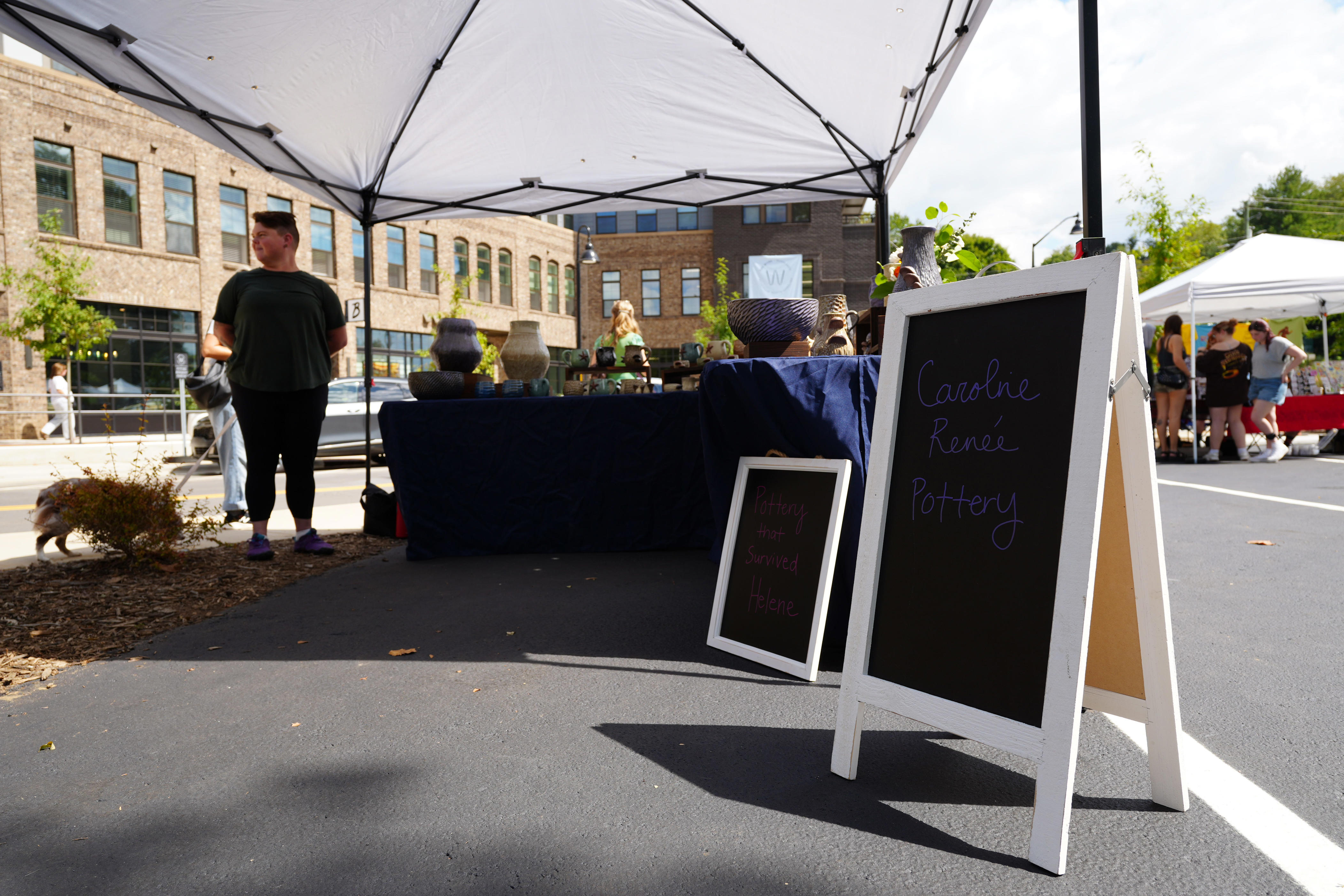
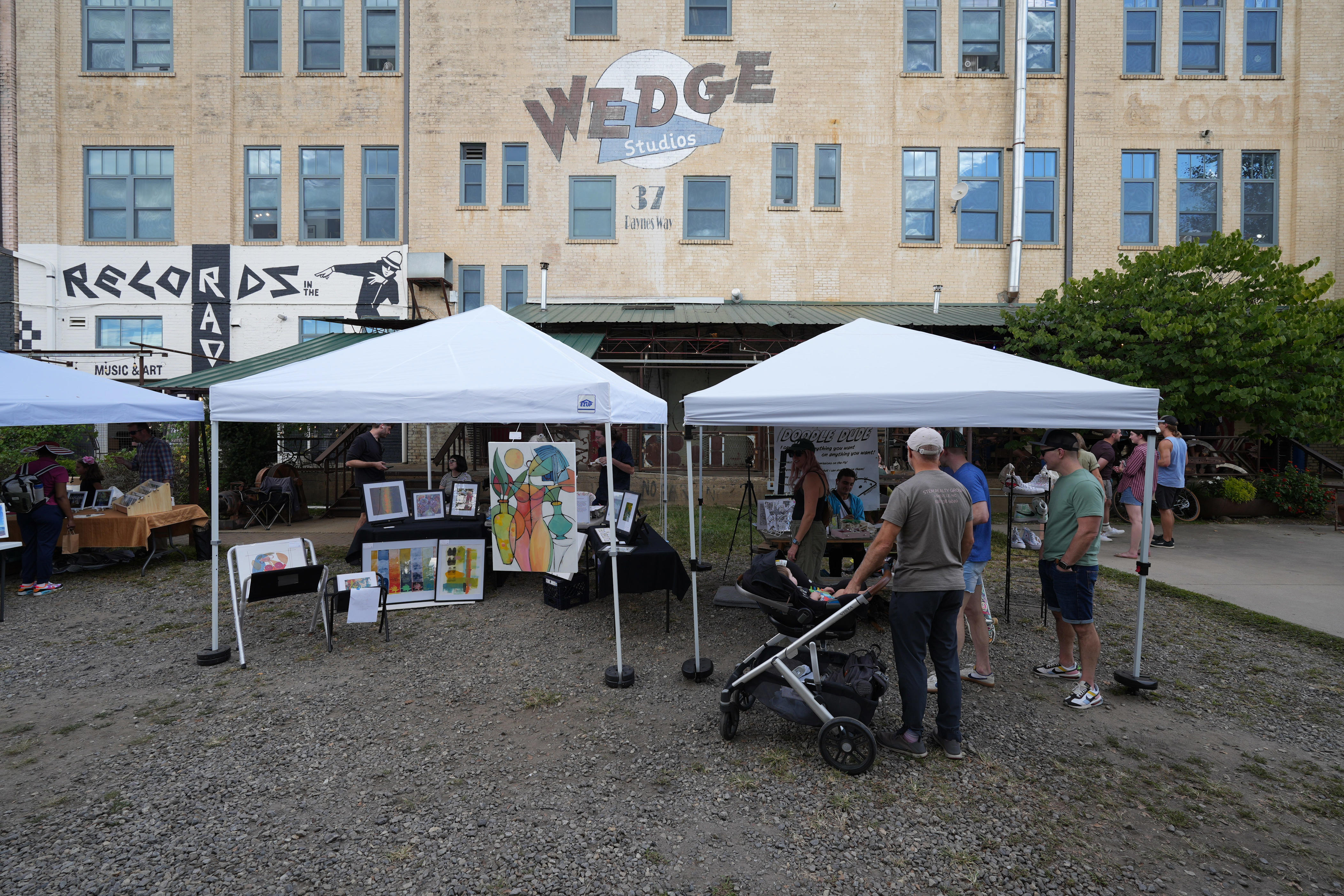
Caroline Renée Woolard stood in the September heat, still selling a table of pottery salvaged from the Village Potters Clay Center in Riverview Station. Near Wedge Studios, Woolard's collection of bowls, mugs and vases act as conversation starters and memories from the flood — reminders of what the River Arts District has been through since Tropical Storm Helene pummeled it.
“I feel like everyone is feeling hopeful and excited to get back to creating,” said Woolard, who was displaced for eight months after the storm and returned to Asheville in May. “Artists in the district have been working tirelessly to rebuild.”
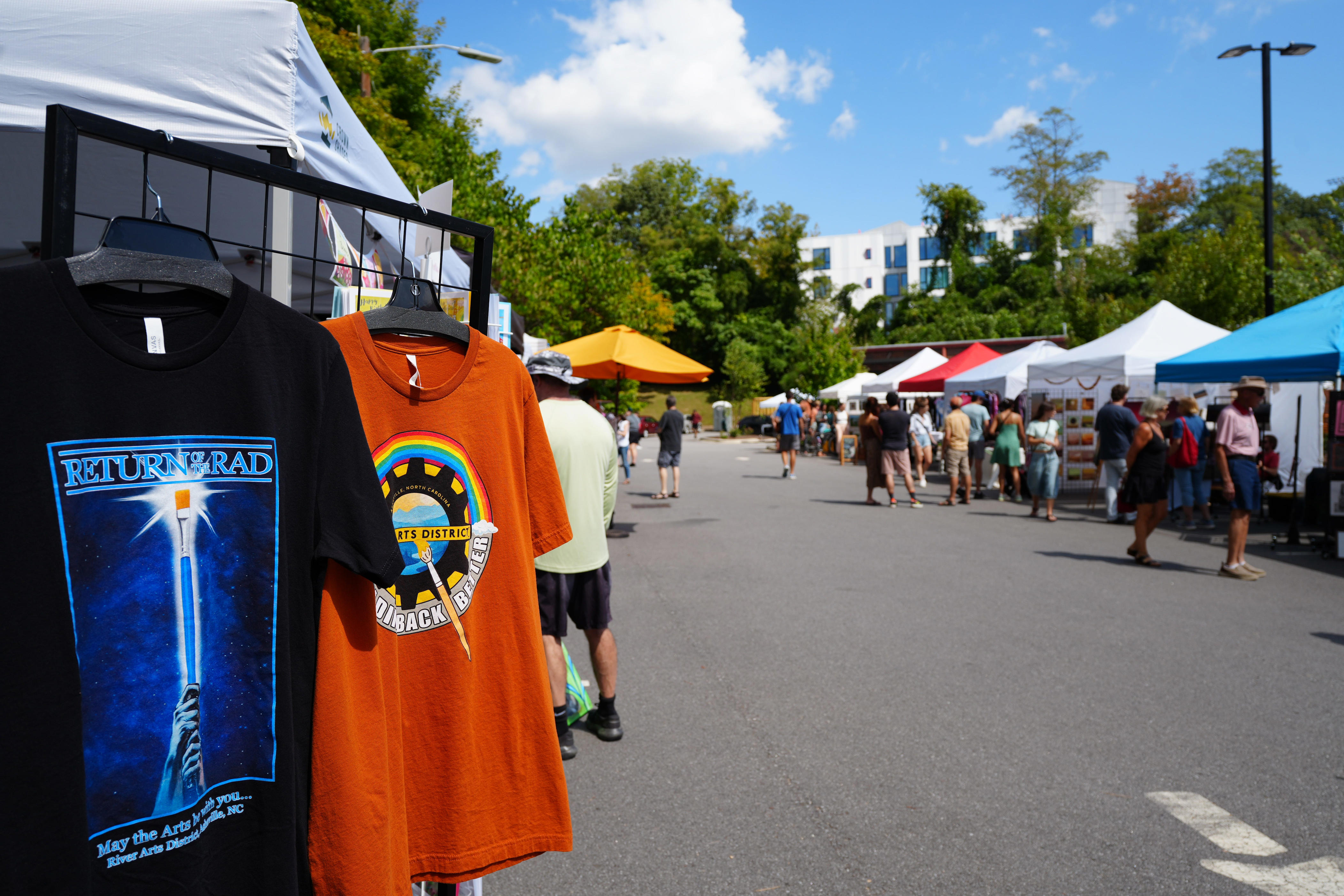 The pieces have slowly been put back together in Asheville’s River Arts District in the year since Helene, the United States deadliest inland storm since Hurricane Katrina. Once covered in mud, businesses in and near Wedge Studios — several galleries, restaurants, a brewery and a record store — bustle with customers on weekends. Skaters and bikers pump across the city’s nearby greenways, though some buildings along Foundy Street are still vacant, partially collapsed from the storm. Rebuilding is still in motion — and divergent visions of its future have come to the forefront.
 In August, the Urban Land Institute, a national land use nonprofit, recommended Asheville “relocate and reimagine” its creative hub. At the same time, a group of River Arts District artists, businesses, residents and nonprofits have opposed the idea they should move from the river. They’ve formed Unified RAD, a new organization leading the district's post-Helene planning effort. Focusing on resilient infrastructure and development, the organization has sought to find long-term solutions guided by artists and businesses as Asheville navigates rebuilding a historic district known for devastating floods.
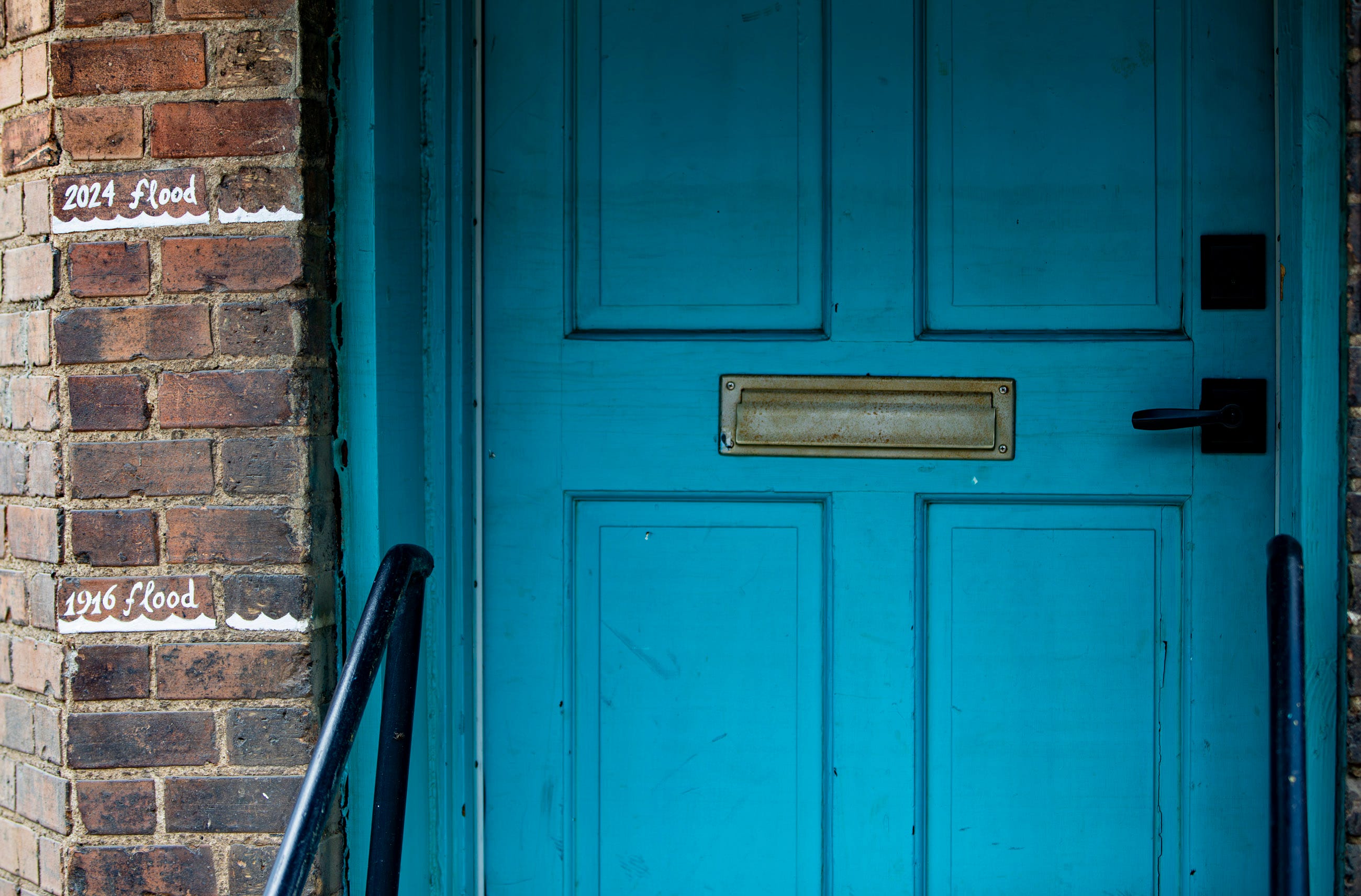
Anyone planning to do business in the district should be thinking about the river first, said Lisa Raleigh, the executive director for RiverLink, which works out of a historic building that survived both the 1916 and 2024 floods — flood lines are marked near the nonprofit's front door.
"Prepare to get wet and manage your risk accordingly. Build to the moment. Invest up front," Raleigh said.
A growing river community, pressured by affordability
Small "nuisance" floods have long posed problems for the district, Raleigh said, and historic floods have proved devastating. According to the National Oceanic and Atmospheric Administration, the French Broad has breached flood stage 29 times at the Pearson Road Bridge since 1900, located just down the road from the district’s densely built core. Seven floods have reached moderate or major stage, inundating buildings in the district in 1916, 1928, 1945, 1952, 1976, 2004 and 2024.
“History has shown us the Swannanoa and the French Broad will routinely flood small-to-medium and they can flood moderate-to-biblical. It's on us to recognize that,” Raleigh said. But after Helene, which damaged approximately 80% of the district, how — and whether — to rebuild the district has been a source of tension.
In early August, a small crowd gathered in Harrah’s Cherokee Center to discuss a forthcoming study conducted by the Urban Land Institute, which partnered with the city of Asheville to examine real estate and land use in the city after Helene. The RAD was a chief concern.
"We propose making a new RAD — a new ecosystem — RAD 2.0," said David Mazzuca, the lead instructor for Columbia University's National Center for Disaster Preparedness, during the August presentation to the city. Funding provided by the Federal Emergency Management Agency would be put toward the "relocation of Asheville's creative hub," he said.
Raleigh called the recommendation to relocate “out of context and nuance," reflecting many artists' delicate position in the floodplain but not recognizing their history in the district and not imagining what a future in the district could look like. The city, rushing to answer artists questions, sent a press release to local media: “To be clear, the City of Asheville has made no decision to relocate the River Arts District.”
The relocation recommendation frustrated many in the district, said Kim Hundertmark, executive director of the River Arts District Artists Foundation. Artists were already facing a growing problem: affordability. Moving them is unlikely to solve the problem.
“Where are you going to move 700 artists in Asheville? Where is cheaper?” said Hundertmark, a stained glass artist in the district.
New development, growing success, rising rents
For most of the River Arts District’s existence, long-term redevelopment has been pioneered by RiverLink, which was founded by Karen Cragnolin to develop the district into a destination that keeps tourists “one more day” in Asheville, presumably after they've visited the Biltmore Estate.
Over several decades, hundreds of millions in public and private investment transformed the RAD from a collection of auto graveyards, abandoned buildings and factories into a bastion of flourishing art spaces, with cheap commercial studio space in reused industrial buildings. Developers proposed larger projects; more businesses moved in.
By 2024, the RAD had become a key asset to Buncombe County’s $3 billion tourism industry, said Vic Isley, president & CEO of Explore Asheville and the Buncombe County Tourism Development Authority. Between 2022 and 2023, spending in the RAD increased by 30%, outpacing a smaller, just 5% spending increase in Buncombe County that year, according to a 2024 study by Zartico Location Data. Anecdotally, many in the district get their best business from tourists, Isley said.
Then Helene hit, flooding most studios and galleries.
“The big thing we lost and have not yet regained is affordable studio space,” Hundertmark said of the district’s problems after Helene. “That is the biggest need.”
 A new plan, guided by artists
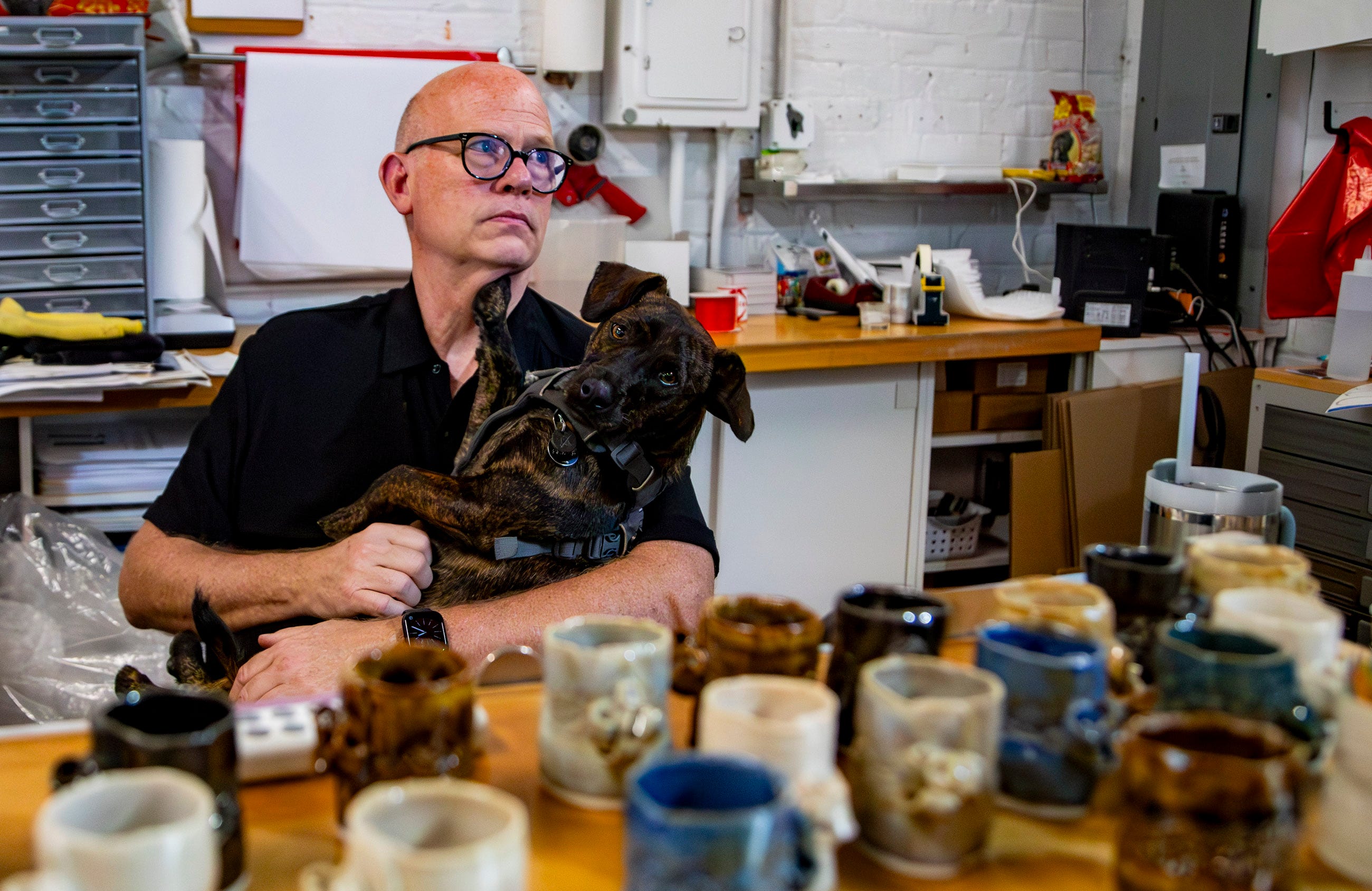
After the storm, Hundertmark helped lead Unified RAD, a group of businesses, artists and property owners working to develop a long-term plan for the district after Helene. Hundertmark helped organize RADfest 1.0 — an event celebrating the soft-reopening of businesses in the "upper RAD" — and other artist pop-up events that have heralded recovery from Helene.
RiverLink has provided Unified RAD with a $100,000 grant to hire Boston-based urban planning firm Sasaki Associates to guide long-term redevelopment. Sasaki is also the official firm hired by the city of Asheville to help redevelop riverfront parks.
 Fear that the district's struggle with affordability could continue is shared by some. Michael Hofman, a porcelain potter who has lived in Asheville since 2002, said it still wasn’t clear whether Helene was the district’s “savior or demise." He worries the district could still get swallowed up by development; that Asheville could become “like every other city in the country.” Either way, rebuilding is going to require some change.
“We’re going to have to rebuild differently. We can’t have a million of dollars worth of ceramic equipment in the floodplain,” Hundertmark said, referencing the potters who lost kilns in the flood.
Development in the RAD has changed before. After Hurricanes Ivan and Frances battered the district in 2004, the city set new building standards in the floodplain. And in 2009, Asheville developed a riverfront redevelopment commission.
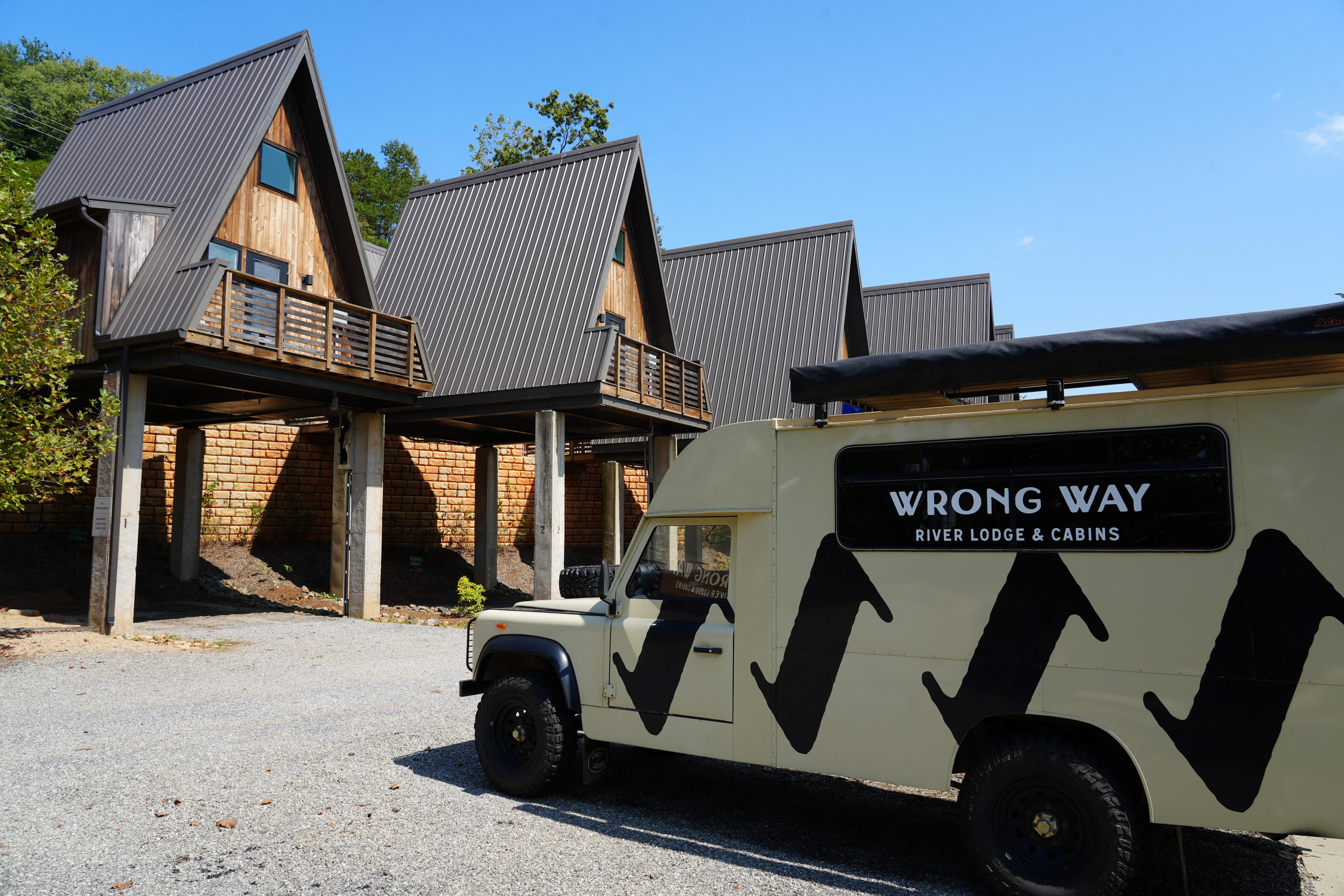
 As a result, developers had to find new ways to build. Among the district's relatively new businesses, Wrong Way River Cabins might be considered a regulatory success, owner Joe Balcken said, who is also a member of Unified RAD. Perched on concrete pillars above the floodplain along Amboy Road — a measure required by law — some of the A-frame cabins flooded, despite their height. But instead of waiting for long-term repairs, they mucked out the buildings and were able to reopen by the end of 2024.
“When you are talking about resiliency — that’s on a spectrum. It doesn’t always mean that there’s zero impact to your structures. It means that you’re able to bounce back quickly,” Balcken said.
 A future near the river
New development regulations have been suggested by Unified RAD, which submitted a funding request to the city of Asheville in February. The proposal includes development guidelines for mixed-use buildings, which would be built with "flood-proofed, easily evacuable commercial" spaces on the bottom floor. But development of these flood-resilient projects is expensive, said Heid, the ULI chair, which could make maintaining affordability difficult.
The city has set aside $30 million in federal recovery funds for district level redevelopment. And some of the plans for the RAD already have general support. Both Unified RAD and ULI pitched similar flood mitigation projects.
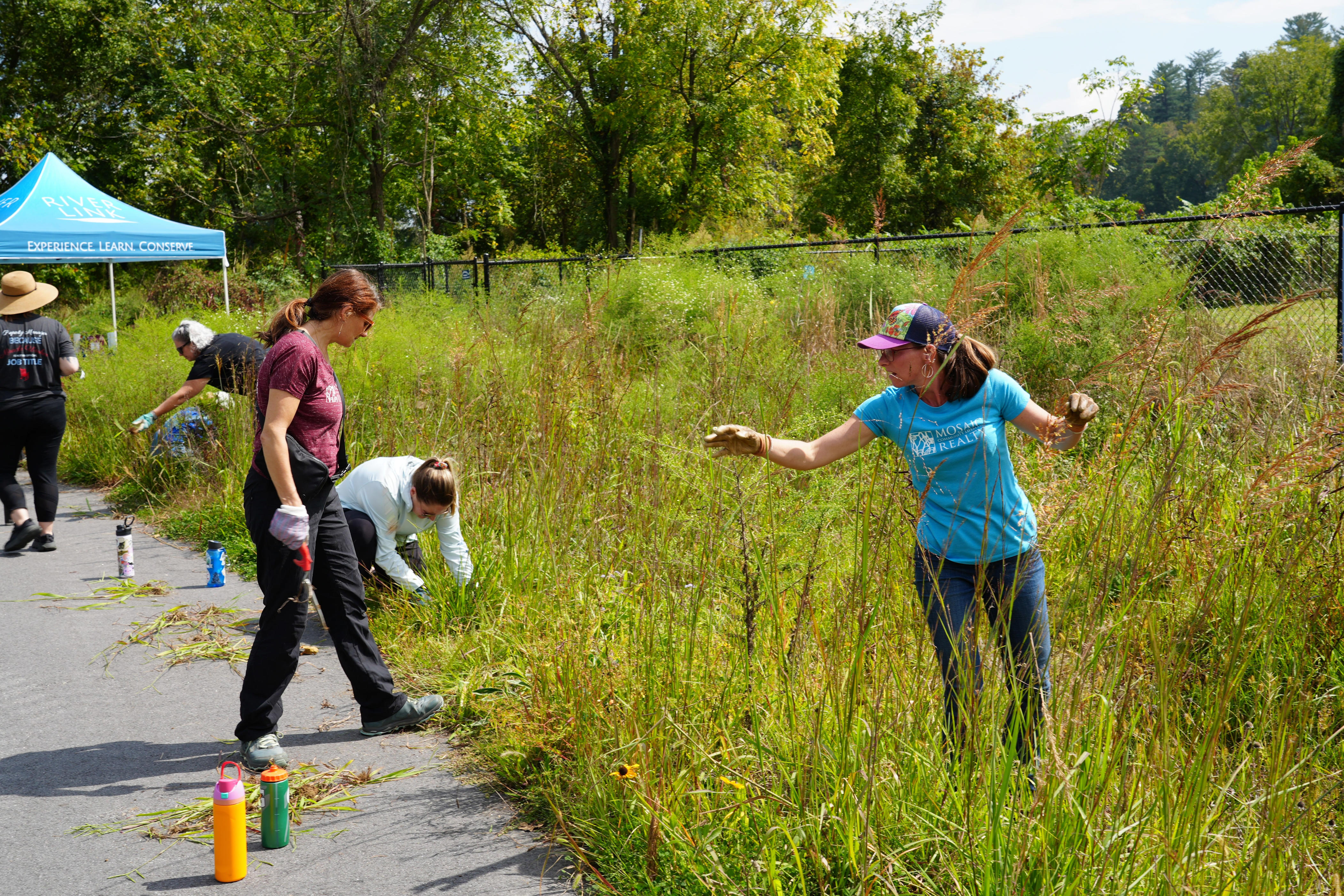
Some ideas already have a home in the district, Raleigh said. Karen Cragnolin Park, with its elegant prairie grasses and native plants — opened along the district’s greenway in 2023 — was practically unscathed by Helene. It could serve as a template for future parks.
 But other ideas pitched by Unified RAD are ambitious: an outdoor amphitheater; a rail depot for an Amtrak line that is still in the development stage; and a cultural arts museum.
As for artists, Hundertmark floated subsidizing the district’s studio space to keep them in town — a plan that has not yet been fully formed.
“We have to really think and focus on how we protect the 'Art' in the River Arts,” Hundertmark said.

Post a Comment for "Asheville's River Arts District Seeks Resilience Without Relocation After Helene"
Post a Comment