
Chevron's El Segundo Refinery: A History of Safety and Environmental Violations
A Devastating Explosion at Chevron's Refinery
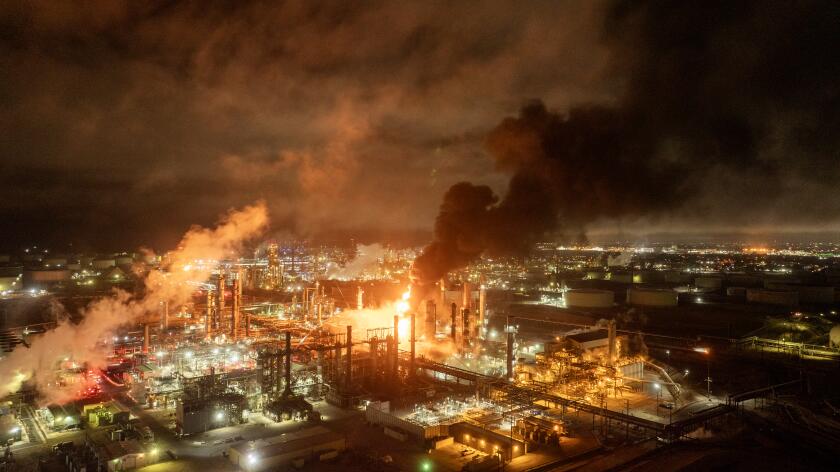
A massive explosion and subsequent fire at Chevron’s refinery in El Segundo on Thursday night sent shockwaves through the South Bay community. The incident not only injured at least one worker but also disturbed residents up to a mile away. A towering 100-foot pillar of fire illuminated the night sky, while thick plumes of smoke and a strong acrid odor drifted eastward with the onshore winds.
The event has raised serious concerns about safety and environmental risks, especially given the refinery's long history of violations. According to public records reviewed by The Times, this was one of the most dangerous incidents in the facility's 114-year history.
Federal Agencies Are Not Available for Investigation
Despite the severity of the explosion, local regulators are currently the only ones investigating the cause. Environmental advocates are worried that federal safety agencies may not be involved due to ongoing issues.
The Occupational Safety and Health Administration (OSHA), which is responsible for workplace safety investigations, is currently understaffed because of the federal government shutdown. Additionally, the U.S. Chemical Safety and Hazard Mitigation Board, which determines the root causes of chemical releases, is also furloughed and faces potential budget cuts from the Trump administration.
Joe Lyou, president of the Coalition for Clean Air, expressed his concern: "The Trump administration has defunded the Chemical Safety board, and the federal government is shut down right now. So there is a very good possibility we are never going to know what really caused this, because the experts in figuring this stuff out are no longer there to do that."
Fear of Future Disasters
Without clear answers, labor unions are worried that similar disasters could endanger thousands of workers at California's 15 refineries, many of which are located in Southern California and the Bay Area.
Joe Uehlein, board president of the Labor Network for Sustainability, stated, "Companies are making billions in profits and still are making it nearly impossible to make sure we’re safe from terrible disasters." He added, "In California, we’ve seen horrific injuries to workers and tens of thousands of residents have had to seek medical attention in refinery accidents. This time, we got lucky."
Lessons from Past Incidents
The Chemical Safety Board has investigated numerous refinery incidents over the years, including the 2015 explosion at the ExxonMobil refinery in Torrance, which led to multiple safety failures. However, for the Chevron refinery explosion, such an investigation is uncertain.
The Trump administration proposed eliminating the budget for the Chemical Safety Board this fiscal year, starting Oct. 1, potentially sunsetting the 27-year-old agency. Environmental advocates argue that this move undermines efforts to prevent future accidents.
"They're undermining our ability to prevent these accidents by taking away the accountability mechanisms in the federal government," said Lyou. "That's a huge concern. It's not politics. Democrats and Republicans live around the Chevron refinery, and they both want to make sure that the refinery is operating safely."
Local Investigations and Ongoing Concerns
In the absence of federal regulators, the South Coast Air Quality Management District is investigating potential violations of air quality rules and permit conditions. The refinery will also need to submit a report analyzing potential causes and equipment breakdowns within 30 days.
So far, the air district has identified the fire originated in the refinery's ISOMAX hydocracking unit. While air monitors detected a spike in airborne chemicals after the fire, conditions returned to normal levels after a few hours.
Julia May, senior scientist for Communities for a Better Environment, noted, "I was very surprised that the air district reported they weren't seeing terribly high levels of pollution." She added, "Sometimes in a big refinery fire like this, it goes straight up. But then the smoke comes down in other areas. And that's a lot of pollution that's going someplace."
A History of Violations
Chevron's facility has been cited numerous times for environmental and safety violations, according to local and federal records. Over the last 12 months, the South Coast Air Quality Management District issued 13 notices of violations, and 46 in the last five years.
In September 2023, OSHA issued citations related to heat illness prevention requirements, ladderway guardrails, and a failure to conduct a thorough hazard analysis. In October 2022, the agency identified a “serious” violation of an agency standard requiring employers to develop safe work practices.
During the government shutdown, it's unclear if OSHA's reduced staff will investigate the refinery fire. An OSHA media office phone number went straight to a recorded message stating that the line is not being monitored and "due to a loss of funding, certain government activities have been suspended and I'm unable to respond to your message at this time."
Calls for Transitioning Away from Fossil Fuels
For some environmentalists, the Chevron refinery fire has highlighted the need to transition away from fossil fuels altogether. Julia May said, "They [the refineries] have great workers and great fire departments to respond, but this is an inherently dangerous operation that handles hundreds of thousands of barrels per day of flammable explosive materials under high temperature and high pressure."
"When something goes wrong, you can have a runaway fire. They did a great job at getting it under control. But do we really want antiquated dirty energy in our communities?"

Post a Comment for "Chevron's El Segundo Refinery: A History of Safety and Environmental Violations"
Post a Comment