
China's Soybean Purchase Decline: What Happens to U.S. Crops?
The Impact of Trade Wars on U.S. Soybean Farmers
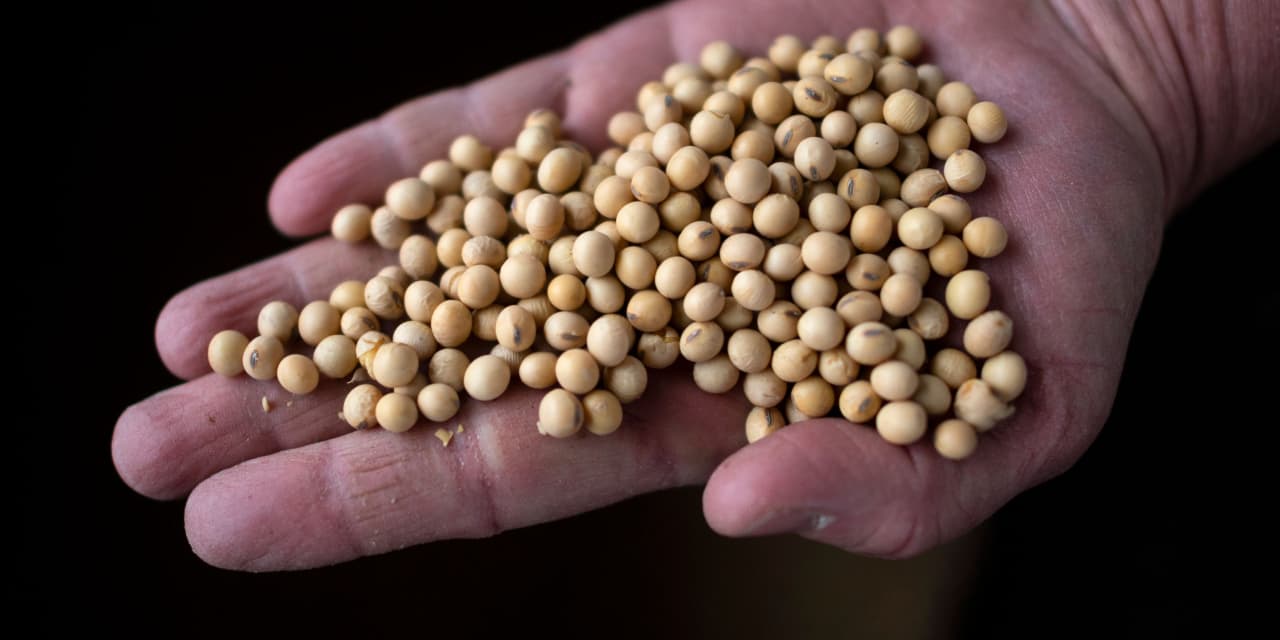
For U.S. farmers, abundant rains that could lead to a bumper crop might seem like good news — but this year, it may not matter if China, the world’s largest buyer of soybeans, doesn’t purchase any of it. The ongoing trade wars initiated by the Trump administration have placed U.S. soybean farmers in a precarious position, with fears of losing market share to South America, possibly permanently.
Ed Hodgson, a farmer from Rice County, Kansas, who has been farming since 1967, shared his concerns about the situation. “This theory of short-term pain for gain down the road — that’s just not working, and it won’t work,” he said. For Hodgson, who dedicates around one-fourth of his 1,500 acres to growing soybeans, the impact is tangible.
Market Shifts and Tariff Challenges
The U.S. has traditionally relied heavily on China as a key export market for soybeans. In the last five years, China accounted for approximately 52% of U.S. soybean exports. However, this year, China has not purchased a single bushel of U.S. soybeans due to tariffs and the ongoing trade war. This loss has significantly depressed prices, according to Hodgson.
According to data from the U.S. Agriculture Department, China has not made any purchases for the 2025-26 marketing year. Last year, as of Sept. 18, China had bought 6.8 million metric tons of soybeans. Ryan Urie, director and global head of crops and proteins at S&P Global Commodity Insights, highlighted this decline.
Retaliatory Tariffs and Economic Factors
The American Soybean Association noted that retaliatory tariffs, along with value-added taxes (VAT) and most favored nation (MFN) taxes, have pushed China’s overall duty rate on U.S. soybeans to 34% in 2025. As a result, U.S. soybean prices for overseas buyers have become prohibitively expensive compared to South American supplies.
China has increasingly turned to Brazil and Argentina because of the lower prices, leading to a loss of market share that Hodgson believes may be permanent. Arlan Suderman, chief commodities economist at StoneX, explained that over the past 15 years, China has shifted its soybean purchases to Brazil due to economic factors. When Brazil’s real currency weakened, it spurred expansion of the country’s soybean production, making it cheaper to buy than U.S. soybeans.
Infrastructure and Strategic Moves
China has also invested billions into building Brazil’s agricultural infrastructure, ensuring more efficient soybean production and transportation. Darin Newsom, senior market analyst at Barchart, noted that this investment allows China to potentially move away from U.S. soybeans entirely if it chooses.
However, even with these changes, the U.S. cannot fully compensate for lost demand from China, given the ongoing trade conflicts with other countries. “The U.S. cannot make up for lost demand from China,” Newsom said.
Alternative Demand Sources
One potential source of alternative demand is the U.S. biofuel program. According to Suderman, the U.S. biomass-diesel production under the Renewable Fuel Standard has increased significantly over the past decade, offering some relief to soybean farmers.
Soybean oil is used in biodiesel production, and the American Soybean Association reported that U.S. biomass-diesel production reached 4,292.4 million gallons in 2023, a significant increase from 1,471.7 million gallons a decade earlier. However, Suderman emphasized that while this may help, it will not fully offset the loss of Chinese demand.
No Immediate Solution in Sight
For now, the losses for farmers are difficult to quantify, but they are expected to be substantial. Suderman warned that if China does not buy another bushel of U.S. soybeans, it could create storage problems across the Midwest, particularly in the northwestern region where soybeans are typically shipped to the Pacific Northwest ports.
New farm-program payments under the Trump administration’s One Big Beautiful Bill Act may offer some relief, but they are not expected until 2026 and 2027. Congress is considering a “stopgap payout” to support farmers in the interim.
Price Volatility and Financial Strain
Soybean prices have already been low, with November delivery settling at $10.13 a bushel. Despite a modest 0.25% increase so far this year, prices have fallen significantly over the past few years. Hodgson, who sees prices around $9 a bushel, believes that $14 to $15 would be a profitable level.
Suppliers have also increased input costs, including fertilizer, chemicals, seeds, and equipment, adding to the financial strain on farmers. “There’s a lot of reasons why food is not cheap — and it’s not because farmers are making any money,” Hodgson said.

Post a Comment for "China's Soybean Purchase Decline: What Happens to U.S. Crops?"
Post a Comment