
Does AI Threaten or Strengthen Faith Communities?

If you call the Rev. Justin Lester in the middle of the night, there’s a good chance you’ll hear his voice on the other end. Well, it’s sort of his. The voice is coming from an AI responder trained on hundreds of his sermons, writings and speaking style, programmed to sound like the California pastor.
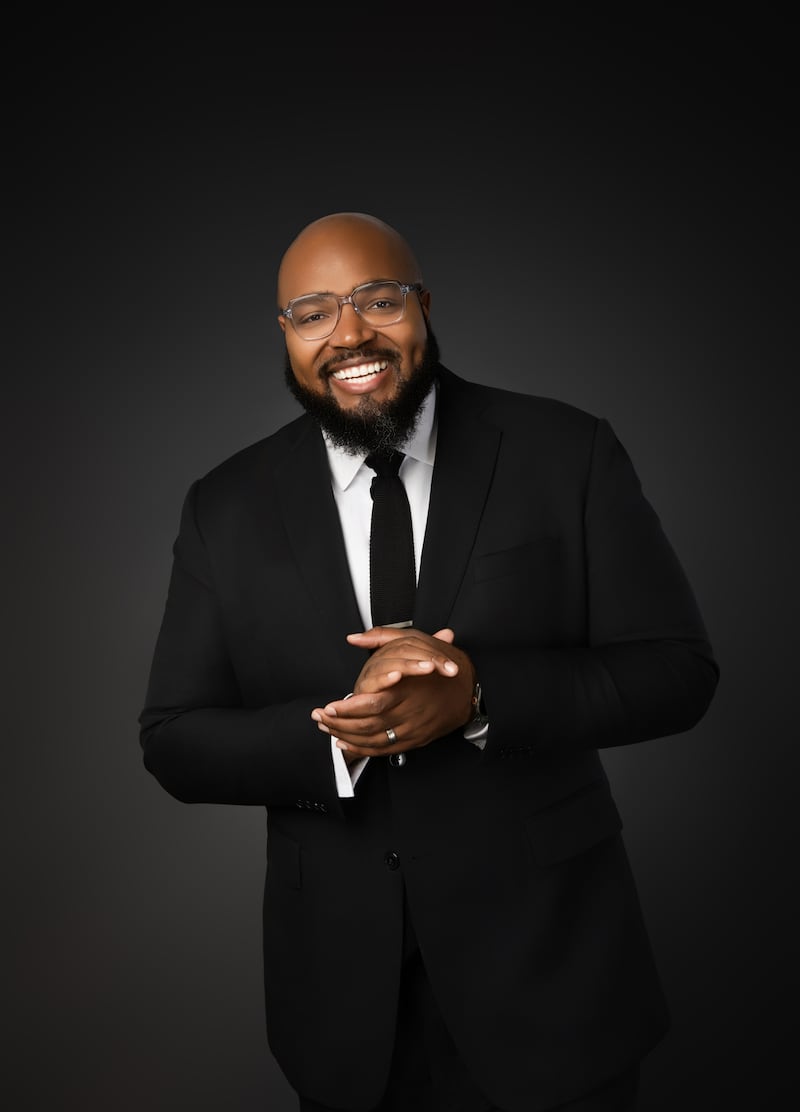
The Rev. Lester, who leads Friendship Baptist Church-Vallejo in California, uses AI to respond to emails, directly schedule meetings and tend to myriad administrative tasks that take hours — all without him doing a thing. “It just automatically knows what I would say,” he said. Using AI freed the Rev. Lester up to do what he as a pastor had been trained to do — preach the gospel and shepherd his community by visiting hospitals, retirement centers and building relationships. By offloading tasks to AI, he got about five hours of his week back.
“I didn’t go to school for emailing, communication or financial balancing,” said the Rev. Lester, who gets about 70 to 80 emails a day. “I went to school to preach the gospel, to care for people and to lead God’s people.” He will say without hesitation that AI made him a better pastor. He is, however, skeptical about what AI can do for the spiritual side of life, like using it to write a sermon or relying on a chatbot to seek an answer to a morally complex question.
“I would not say by any stretch of the imagination that AI has made me deeper in the heart of God,” the Rev. Lester said. As AI seeps into nearly every corner of life — including faith and worship — leaders like the Rev. Lester are wrestling with where to draw the line: which tasks to delegate, which questions to leave human, and how these tools shape both their own spiritual practice and the well-being of their congregations.
The issue is global. Last week, religious leaders from across the world gathered at the Vatican to discuss the impact of AI on religion. The same technology that eases administrative burdens — especially in small churches — also prompts unsettling questions: If answers to life’s deepest dilemmas are only a prompt away, what becomes of the pastor as teacher, guide and shepherd? The challenge is no longer whether churches adopt AI, but how they use it with discernment, so that it enriches faith rather than hollowing it out.
Churches Embracing AI
Back in 2023, just as ChatGPT was beginning to spread into everyday life, many religious leaders expressed skepticism about AI. One survey at the time found that 43% of church leaders said they were uncomfortable with the idea of using AI in church settings, and more than half voiced concern about the ethical and moral implications of these tools. But attitudes have shifted.
By 2025, nearly 90% of faith leaders surveyed now say they support using AI in some form of ministry, according to The State of AI in the Church 2025 survey, conducted by Exponential, a community of faith leaders, and ChurchTechToday.com. The study polled more than 600 pastors and church staff from over 20 denominations. Usage is climbing fast, too. Today, 61% of church leaders report using AI tools daily or weekly — that’s up from 43% just a year ago. A majority of preachers, 64%, now say they use AI for sermon preparation, marking a nearly 20-point increase in one year.
The “faith tech” industry has been booming with chatbot apps like Bible Chat and Hallow soaring in the App Store charts, as The New York Times recently reported. “You’d think the churches are laggards in technology, but they’re embracing this,” said Kenny Jahng, editor-in-chief of ChurchTechToday.com and founder of AiForChurchLeaders.com, who spearheaded the survey.
Concerns Over the ‘Moral Compass’ of AI
Yet, amid the optimism, church leaders across faiths have also been sounding the alarm about the dangers of AI crossing into the domain of the sacred. Pope Leo XIV recently refused to create an AI version of himself, calling the technology “an empty, cold shell” and pointed out the risk of losing humanity as wealthy people invest in this technology. He said that it’s “very difficult to discover the presence of God” in AI.
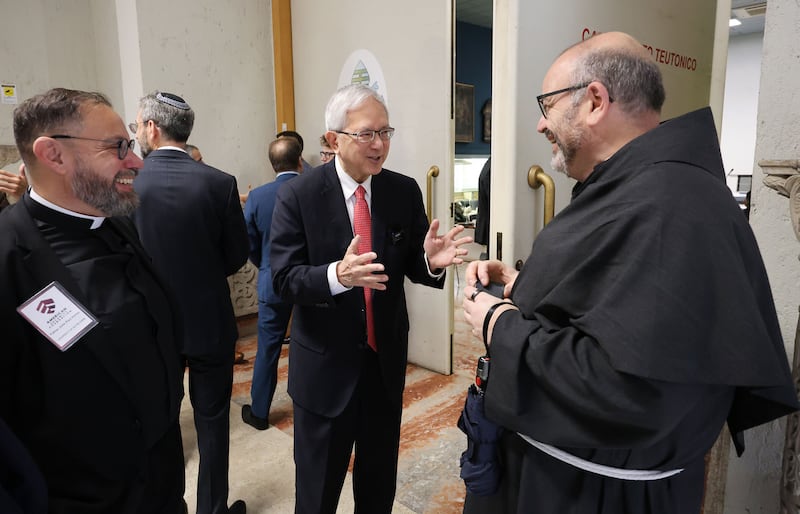
Speaking at the Rome Summit on Ethics and Artificial Intelligence in Vatican City earlier this week, Elder Gerrit W. Gong, a member of the Quorum of the Twelve Apostles of The Church of Jesus Christ of Latter-day Saints, said those gathering share a “deep commitment that AI’s moral compass not be dictated solely by technology or the small group developing the technology.” He announced the launch of a multifaith task force charged with developing a tool that will evaluate how accurately various AI programs portray faith.
“When we promote human-centric, accurate and respectful, ethical and faith-based standards for artificial intelligence and embed within AI moral grounding and moral compass,” he said, “we embrace our divine identity and purpose and promote human flourishing for the common good.”
In August, while speaking at Brigham Young University, Elder Gong cautioned that “AI cannot provide inspired divine truth or independent moral guidance.” He continued: “As a creation of God, man can create AI, but AI cannot create God.”
‘Wild, Wild World’
One of the biggest concerns for some leaders is what Jahng calls “theological misalignment,” which could result as congregants look up different interpretations of teachings and scriptures that may clash with their pastor’s ideas. “If the pastor knows that their congregation is just Googling or YouTubing things — that might get interpretations or guidance or answers that are completely in conflict,” he said.
The State of AI in the Church survey also revealed widespread concerns about safety of personal data that is processed by AI. Beyond doctrinal concerns, there is a more existential worry among experts: Can we preserve humanity in the face of AI?
“The coming AI revolution is an assault on human dignity,” said Neylan McBaine, adviser at AI and Faith. McBaine has also led interfaith and policy partnerships at Project Liberty. “It’s an assault on what it means to be an independent thinker, and the essence of agency is kind of at risk,” she said. She recently launched a podcast with venture capital attorney James Wigginton to help faith leaders from different traditions better understand AI and how to talk to their communities about it.
Most churches have yet to establish clear policies or theological guidelines for how AI should be integrated into congregational life, the survey found. But some groups are thinking ahead. At its 2023 annual meeting, the Southern Baptist Convention adopted a resolution on artificial intelligence, urging “utmost care and discernment, upholding the unique nature of humanity as the crowning achievement of God’s creation” in its use. The statement underscored both the promise of AI as a tool and the risks of treating it as anything more than that.
Practical vs. Spiritual
The Rev. Lester’s turn to AI at church was spurred by necessity rather than following the latest trend. Coming out of COVID with a sparse budget, he needed a do-it-yourself solution for ministry resources. So he got help writing discussion guides for his church’s small group studies. “It was honestly survival,” he said. “We couldn’t afford to buy a bunch of stuff.”
Increasingly he began relying on AI for more complex tasks and eventually it was doing “the heavy lift” for the church in planning events, fundraising, writing and sending volunteer follow-up emails. The Rev. Lester’s team added a Spanish online “campus” — 30% of his congregation are Spanish-speaking — by having AI translate all his sermons in Spanish. That shift freed up resources for different priorities.
“I don’t have to hire another preacher, but a counselor and a care person to care for people as they join our church,” the Rev. Lester said. He also has a robotic dog at church that can chat with visitors, a way to spark curiosity and engagement with attendees. Recently, the Rev. Lester built his own AI avatar, trained on his sermons and writings, that can be summoned by the members of his church at any time, although some functions are behind a paywall.
The avatar has taken on a life of its own, the Rev. Lester said recently, and started getting a bit too “churchy,” serving up ample scripture references when he asked the avatar to share a budget with his team. “It’s weird, but yet cool,” he said.
But when it comes to deepening his spiritual life and relationship with the divine, the Rev. Lester is skeptical. “I would not say by any stretch of the imagination that AI is helping me understand God.” He added, “It’s not helping me speak truth to power.” For him, the moments of real spiritual transformation still come the old-fashioned way — through prayer and quiet solitude, where his humanity and connection with the divine are unmediated by technology.

Post a Comment for "Does AI Threaten or Strengthen Faith Communities?"
Post a Comment