
Food Stamps Ending Sparks Fear Among Recipients
Millions of Americans are facing an uncertain future as the U.S. government shutdown threatens to cut off food assistance for nearly 42 million people. The Supplemental Nutrition Assistance Program (SNAP), commonly known as food stamps, provides monthly aid through electronic benefit transfer cards. However, on November 1, this critical support is set to stop, leaving families in a difficult position.
Kasey McBlais, a 42-year-old single mother from Buckfield, Maine, shared her concerns with CBS News. She works in social services and receives about $600 per month in SNAP benefits. With the program's payments at risk, she's preparing to delay paying her electric and credit card bills to ensure her two children have enough to eat.
"Right now, we'll have to prioritize which bills we can pay and which can wait," McBlais said. "My children won't go hungry."
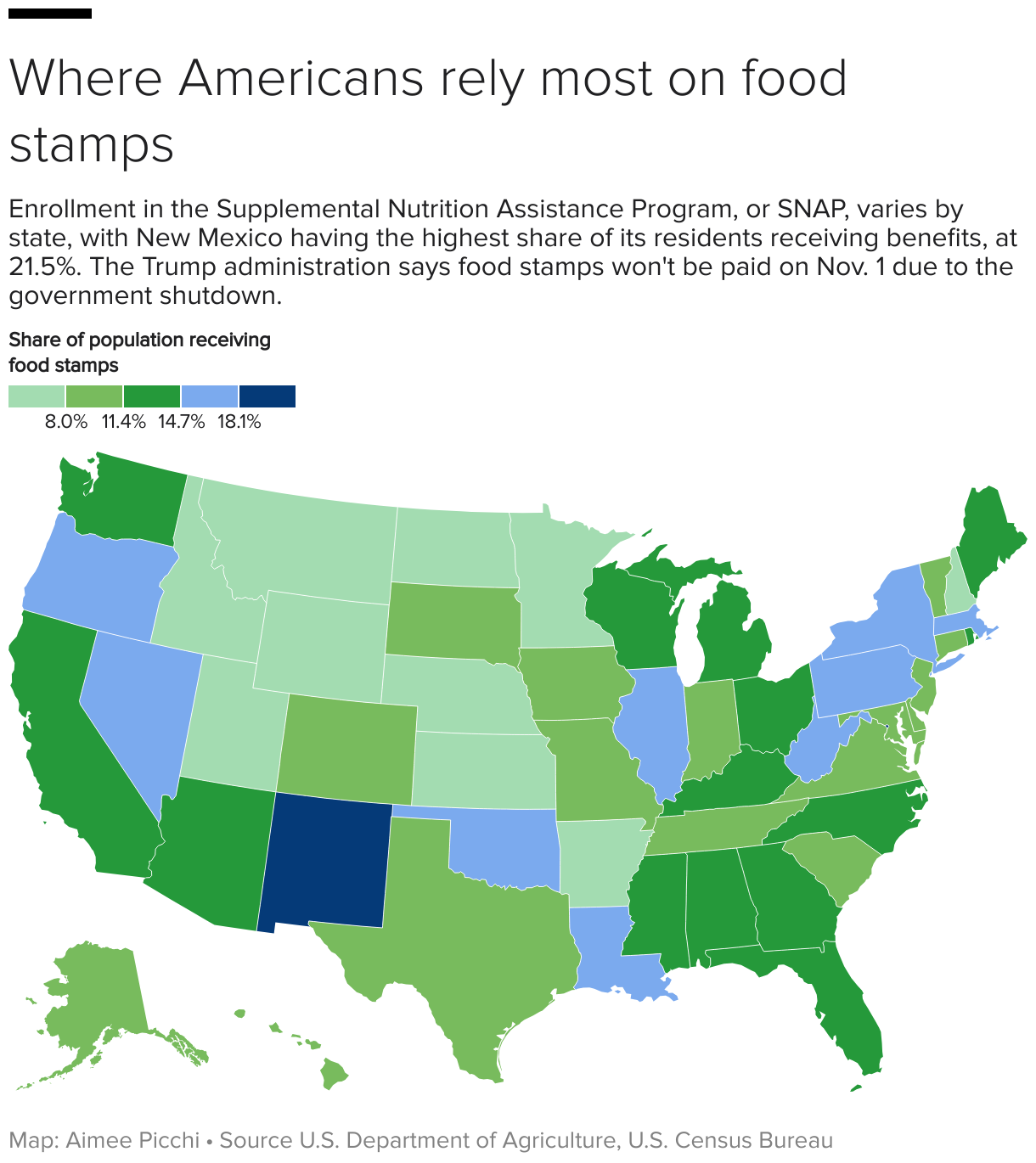
The suspension of food aid comes amid ongoing political disputes between Democratic and Republican lawmakers over the government shutdown, which has now become the second-longest funding lapse in U.S. history. The U.S. Department of Agriculture (USDA) warned that there may not be enough funds to cover full November benefits if the shutdown continues. As a result, local governments have started posting notices about the potential interruption in payments.
In a memo posted on its website, the USDA stated, "Bottom line, the well has run dry." It added, "At this time, there will be no benefits issued November 01."
Democratic lawmakers have urged the USDA to use contingency funds to cover most of next month’s SNAP benefits. However, a recent agency memo clarified that these funds are not legally available for regular benefits. Instead, they are reserved for disaster relief efforts.
This means that starting November 1, the government will halt approximately $8 billion in monthly SNAP payments, cutting off food assistance for one in eight Americans. Recipients typically receive around $187 per month on a prepaid card to help with grocery costs.
Unused benefits on recipients’ cards will roll over into November. Mackenzie Libbey, a staff attorney with Community Legal Services, explained that this money has already been allocated. “We definitely do not want people rushing out to try to use up their benefits at the end of October thinking they're not going to be able to buy anything in November.”
The USDA has called on Democrats in Congress to end the government shutdown. In a statement to CBS News, it said, "We are approaching an inflection point for Senate Democrats. Continue to hold out for the Far-Left wing of the party or reopen the government so mothers, babies and the most vulnerable among us can receive timely SNAP benefits and other federal food aid."
Some U.S. states have pledged to continue disbursing SNAP benefits even if the federal government suspends payments. For example, Louisiana, Vermont, and Virginia have vowed to keep providing aid. New York has committed $30 million in emergency food assistance and has also pledged more support for food banks. However, the USDA memo notes that states will not be reimbursed for temporarily providing food aid, raising questions about the long-term viability of this approach.
Other states are taking legal action. A coalition of 25 states and the District of Columbia has sued the Trump administration, alleging that the suspension of food stamps is unlawful and threatens the health of millions. They are asking a federal judge in Massachusetts to order the USDA to provide SNAP benefits in November by tapping into a contingency fund, which is estimated to hold around $5 billion.
Sharlene Sutton, a 45-year-old single mother of four in Dorchester, Massachusetts, expressed her anxiety about the potential loss of SNAP benefits. She relies on the $549 she receives each month to feed her family. “I was freaking out because I'm like, 'Oh my god, now I don't have a job,'" she told CBS News. "It's about the kids. Like, where am I going to get food from?"
Experts warn that non-profit organizations alone cannot fill the $8 billion monthly gap left by the SNAP suspension. John Sayles, CEO of Vermont Foodbank, noted that the charitable food system and food banks don’t have the resources to replace all those food dollars.
Food banks across the country are already experiencing increased demand. Katy Anderson, vice president of strategy, partnerships, and advocacy at Albuquerque’s Roadrunner Food Bank, said the organization is seeing panic among residents due to the SNAP halt. George Matysik, executive director of the Share Food Program in Philadelphia, has also noticed a surge in requests for help.
Even before this new wave of demand, food banks were struggling with rising numbers of people seeking assistance, exacerbated by persistent inflation and funding constraints. In March, the USDA announced it would cut $420 million in funding for a program that allows food banks to purchase food directly from local farms and producers.
Broader economic impact
A temporary halt in $8 billion in monthly food aid could also affect local businesses, from grocers to farm stands. According to Sayles of Vermont Foodbank, each $1 in SNAP benefits generates an additional $1.60 in economic activity, thanks to the multiplier effect.
Kate Bauer, an associate professor of nutritional services at the University of Michigan, emphasized that SNAP is a vital source of economic support for many small businesses. “SNAP is the foundation of economic support for a lot of food retailers, like those smaller places in rural areas and the corner store in our cities,” she said.
For some families, SNAP is not just supplemental but essential. Experts note that even a short disruption in benefits can have immediate consequences for those living paycheck to paycheck.
The loss of SNAP funding threatens some of the most vulnerable people in the U.S., including children, seniors, and individuals with disabilities. Kasey McBlais, the single mother, sees the issue as more than political. “Everybody needs food — SNAP recipients are Democratic, Republicans and everything in between,” she said.

Post a Comment for "Food Stamps Ending Sparks Fear Among Recipients"
Post a Comment