
How IFS Says Rachel Reeves Can Raise Taxes Without Breaking Promises
The Chancellor's Tax Dilemma
The Chancellor may face the challenge of finding up to £30 billion in tax increases or spending cuts in the upcoming Autumn Budget. This comes as the Office for Budget Responsibility is expected to lower its forecasts for future productivity growth, which could force Rachel Reeves to adjust her fiscal strategy to meet her borrowing rules.
Reeves has reaffirmed her commitment to not raising income tax, National Insurance, or VAT—three of the Treasury’s main revenue sources. However, this leaves other taxes at risk of being increased. Critics argue that short-term fixes to existing taxes could harm economic growth, and there are calls for a more comprehensive approach.
A Path Forward
A leading think tank, the Institute for Fiscal Studies (IFS), suggests that Reeves can raise tens of billions of pounds in additional revenue without violating Labour’s election promises. The IFS proposes a reform of the tax system rather than quick, superficial changes. This would involve addressing inefficiencies and unfairness in the current system to minimize economic damage while increasing tax collection.
The IFS warns that if Reeves focuses only on collecting more revenue, she will fall short of what is needed. While most discussions about tax rises center on how much revenue they can generate, the IFS emphasizes that the focus should also be on the outcomes. Poorly designed taxes can have unintended consequences, such as discouraging investment or reducing economic growth.
Property Taxes
Economists and commentators have welcomed Conservative leader Kemi Badenoch’s proposal to scrap stamp duty on main homes if elected in 2029. While this change is unlikely to appear in the next budget, the IFS argues that property taxation needs urgent reform.
The think tank advises against increasing stamp duty rates, as it could discourage people from moving for job opportunities. It also notes that council tax, while in need of reform, should not be raised on more expensive properties, as this would benefit local authorities rather than the Treasury.
The IFS estimates that introducing a new council tax surcharge that doubles rates on the top two bands could raise £4.4 billion. However, it advocates for a more comprehensive overhaul, including abolishing stamp duty and the current council tax system in favor of updated property value-based bands.
Inheritance Tax
Inheritance tax (IHT) remains a contentious issue, especially with recent changes that include pensions in estates for IHT purposes starting in April 2027. The IFS suggests that raising the 40% IHT rate by 1 percentage point could generate £0.3 billion, or reducing the threshold could bring more estates into the tax net.
Currently, individuals can pass on up to £325,000 tax-free, with an additional £175,000 if passing on a primary residence. Couples can potentially pass on up to £1 million tax-free. Abolishing the residence nil-rate band could raise £6 billion, according to the IFS.
The think tank also recommends reviewing gifting rules, extending the seven-year rule, or taxing gifts across people’s entire lives.
Pensions
Experts believe pensions will be a target in the next Budget. One option is to reduce tax relief on pension contributions. This relief allows basic-rate taxpayers to get £100 for every £80 they contribute. If the relief were capped at 20%, it could raise £22 billion but would be seen as unfair and difficult to implement.
Instead, the IFS proposes levying national insurance on employer pension contributions, which currently escape both employer and employee NICs. A 1% employer NIC charge on all contributions could raise £1.5 billion. The think tank also suggests replacing the 25% lump sum withdrawal allowance with a taxable cash top-up on pension withdrawals.

Capital Gains Tax
There have been calls for an annual wealth tax, but the IFS warns that it would pose significant practical challenges and could encourage wealthy individuals to leave the UK. Instead, the IFS suggests reforming existing wealth-related taxes, such as capital gains tax (CGT).
CGT applies when people sell assets like second homes or stocks and make a profit. A 1% increase in the higher CGT rate could raise £30 million, but a 10% increase could reduce revenue by £3.7 billion. The IFS argues that increasing taxes on returns to capital without reform could do more economic damage than necessary.
It proposes full deductions for savings and investments, more generous treatment of losses, and removing the forgiveness of CGT at death. With a reformed base, tax rates could be increased without deterring investment.
Corporation Tax
Corporation tax accounted for 2.4% of national income in the 2010s and is expected to reach 3.3% in the current tax year. Raising the main rate by 1% to 26% could generate £4.1 billion but risks deterring investment.
Labour has stated it will not raise corporation tax or change associated reliefs, but there are plans to shift some business rates from small retail properties to larger ones. The IFS suggests a land value tax for commercial property as a better alternative.
Income Tax and NICs Remain Key
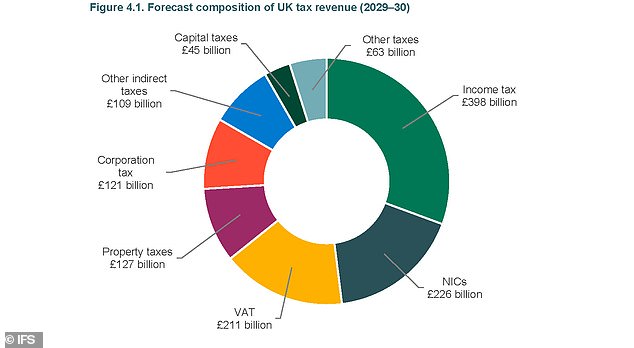
While there are ways to raise revenue outside the "big three" taxes—income tax, NICs, and VAT—the IFS warns that these options could have damaging effects on growth and welfare. These taxes have the largest bases, so raising them could be necessary to avoid tinkering with smaller taxes.
Raising all income tax rates by 1% could generate £10.9 billion annually, but it risks discouraging investment. Similarly, increasing NICs or VAT could lead to distortions in the economy. The IFS says extending the freeze on income tax rates is unsatisfactory.
One potential solution is introducing a new tax, such as a 'defence and security levy' or 'national health charge,' which could effectively increase income tax or NICs without breaking election promises. However, this could complicate the tax system further.

Post a Comment for "How IFS Says Rachel Reeves Can Raise Taxes Without Breaking Promises"
Post a Comment