
JPL's Turbulent Path: Can California's Space Science Gem Rebound?
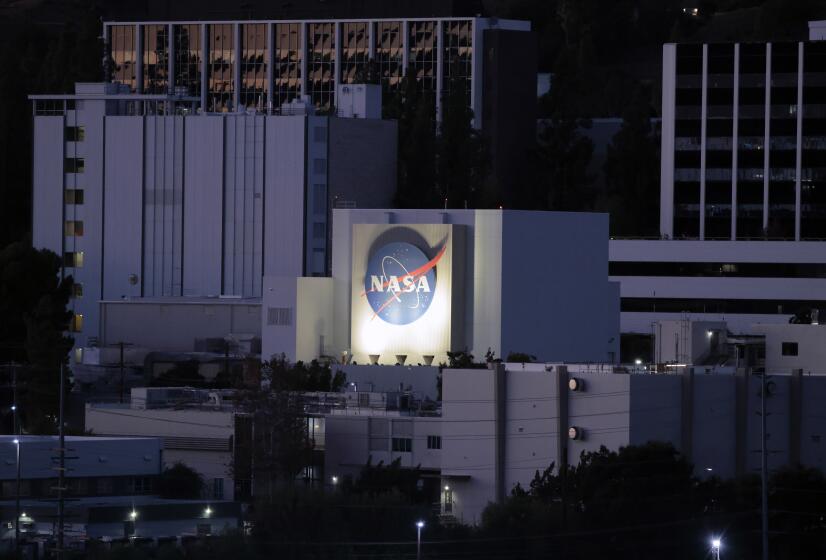
A Legacy in Peril: The Struggles of NASA's Jet Propulsion Laboratory
Designing a system to bring a piece of Mars back to Earth at NASA’s Jet Propulsion Laboratory (JPL) was once the dream job of a mechanical engineer. Located in Southern California, JPL has been the birthplace of American rocketry and space exploration, pioneering missions that have captured the imagination of the world. For this engineer, working on the Mars Sample Return Mission was the culmination of years of dedication and passion. However, her journey took an unexpected turn when she became one of the 550 employees laid off from the lab — a staggering 10% of the workforce.
This marked the fourth round of layoffs in two years, driven by funding cuts for the Mars Sample Return mission due to budget overruns and delays. The situation has led to a significant drop in morale, with staff members feeling increasingly disconnected from leadership as they follow budget discussions in the news while receiving little communication from the lab itself.
“There's been this creeping dread in anticipation,” said the engineer, who requested anonymity. “The boot was once again raised to stomp on us, but we didn't know when it was going to drop.”
JPL, which has a storied history of solving complex problems in space, now faces a critical challenge on Earth: reclaiming its position as a leader in scientific and technological innovation.
A Historical Perspective
Fraser MacDonald, a senior lecturer in historical geography at the University of Edinburgh and author of "Escape From Earth," describes JPL as “a major scientific and technological anchor in Southern California.” Founded in the 1940s, JPL began as a project by Caltech rocket scientists whose experiments caught the attention of the U.S. military. Over time, the lab evolved into a cornerstone of space exploration, playing a pivotal role in the development of the first successful U.S. satellite, Explorer 1, in 1958.
After NASA was established, JPL found a new home and became central to many high-profile missions. However, recent years have seen a shift in focus toward human spaceflight, particularly to the moon and Mars, leading to fewer contracts for ambitious planetary science missions.
Challenges and Setbacks
Casey Dreier, chief of space policy at the Planetary Society, notes that rising costs — from supply chain issues to employee living expenses — have placed additional pressure on missions like the Mars Sample Return. These financial strains, combined with management challenges, have further complicated JPL's efforts.
In 2022, the Psyche mission faced delays, prompting an independent review that highlighted internal reorganizations and burnout among staff. A subsequent review in 2023 found a “near zero probability” of meeting the proposed 2028 launch date for the Mars Sample Return mission, with no credible plan to stay within budget.
These setbacks forced NASA to cut spending on the mission, leading to funding reductions for JPL. As a result, the lab had to seek alternative plans from other NASA centers and private companies, placing it in a difficult position of competing for its own projects.
Layoffs and Uncertainty
JPL had expanded its workforce from around 5,000 in the early 2010s to approximately 6,500 to support key missions such as Europa Clipper and Mars Sample Return. However, with these missions now either completed or delayed, many employees found themselves without clear roles.
“I struggled with balancing the passion that I had for the work with the knowledge that I could be moved off of projects anytime,” said the engineer. “Why should I pour my heart and soul into it? ... A lot of the stuff that we're doing might never go anywhere.”
Layoffs have continued throughout 2024, with 100 contractors let go in January, followed by 530 employees and 40 contractors in February. Additional cuts were made after it became clear that NASA’s funding for JPL would not change significantly in 2025.
Despite the uncertainty, some remain hopeful. The engineer believes JPL can weather the storm, though the path forward is unclear. With the government facing a potential shutdown in 2025, JPL’s 2026 budget remains uncertain, and the lab may need to pivot toward defense and national security projects.
A New Era?
Dreier suggests that JPL could leverage its expertise in robotics and Mars exploration to support NASA’s goals for human missions to the moon and Mars. While the lab has successfully landed on Mars nine times since 1976, the current climate presents new challenges for its signature planetary science missions.
As JPL navigates these changes, it must find a way to balance its legacy with the demands of a rapidly evolving space industry. The future of the lab remains uncertain, but its history of innovation and resilience offers a glimmer of hope for what lies ahead.

Post a Comment for "JPL's Turbulent Path: Can California's Space Science Gem Rebound?"
Post a Comment