
Millions March Against Trump in 'No Kings' Protest — What's Next?
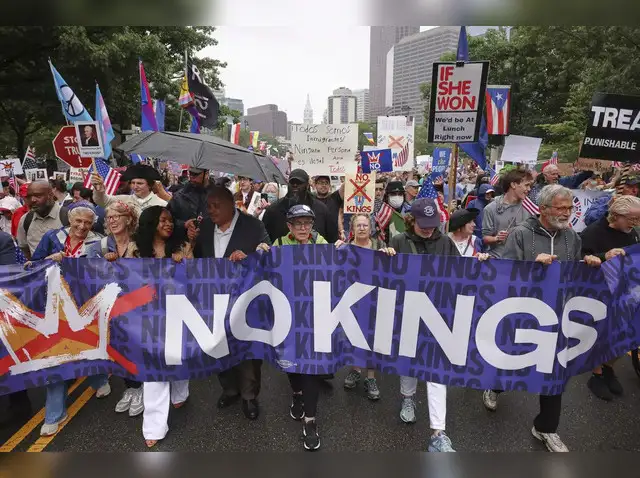
In various locations across the United States, progressive activists have taken part in a range of activities to support their cause. In Cave Creek, Arizona, they organized a happy hour and food drive following the "No Kings" rallies. In Chattanooga, Tennessee, a Halloween-themed protest was held near the offices of local members of Congress. Meanwhile, in Lexington, Kentucky, residents participated in an "introduction to grassroots organizing" course.
On October 18, millions of Americans took to the streets for over 2,700 "No Kings" rallies to express their opposition to President Donald Trump's policies. Despite the record-breaking turnout, organizers acknowledged that a single day of protests is not enough to bring about significant political change. Instead, they emphasized the importance of sustained activism and consistent public engagement across the country.
According to Lisa Gilbert, copresident of Public Citizen, a nonprofit consumer rights advocacy group, the key to saving democracy lies in achieving a level of civic activation and understanding that goes beyond previous efforts. She described this as an unparalleled civic moment that the movement aims to achieve.
Critics have dismissed the mid-October rallies as pointless, downplaying the number of participants and suggesting that those who attended harbor anti-American sentiments. A White House spokeswoman responded dismissively when asked about the protests by USA TODAY.
Activists, however, are focused on maintaining public interest and involvement. Ezra Levin, cofounder of the progressive group Indivisible, which helped organize the rallies, mentioned that a third round of "No Kings" protests is already being planned. While large city protests may grab headlines, the emphasis is on building a network of engaged activists within communities.
"You've got to get people to start thinking of themselves as active participants in democracy," Levin said. He warned that if individuals remain isolated under the threat of the current regime, they risk losing the fight. The only hope, he believes, is for people to find community and organize together.
Protests have drawn massive crowds across the country, with millions participating in multiple cities since Trump's second term began. University of Connecticut Professor Jeremy Pressman, an expert on public activism, noted the intensity of these large-scale protests.
Public activism has played a significant role in national politics in recent years. From the tea party movement in 2010 to the Women's March in 2017 and the Black Lives Matter protests in 2020, these movements have had a profound impact on elections and policy. Pressman's research indicates a higher baseline for consistent activism in 2025 compared to 2017, suggesting a stronger and deeper foundation for the anti-Trump movement.
Early estimates suggest that around 7 million people attended the October 18 protests, potentially making it one of the largest demonstrations in recent U.S. history. The Crowd Counting Consortium, which includes Pressman, will provide an independent estimate in the coming weeks.
Small protests were intentionally designed to spread activism across many communities rather than focusing on a few large cities. The goal is to build a wide base of people ready to mobilize. Gilbert explained that this approach aims to empower individuals to continue fighting for their rights.
This does not necessarily mean constant street protests, but rather encouraging people to engage with their representatives and use social media to voice concerns. Such efforts may not attract national media attention, but they foster a network of engaged citizens concerned about the Trump administration.
"No Kings isn't the end all be all of protesting. It's actually exactly the opposite," said Hunter Dunn, spokesperson for the anti-Trump organization 50501. He emphasized that the movement is about education, recruitment, and bringing communities together.
Billie Murray, an expert in civic engagement, highlighted the importance of steady local activism alongside large protests. She stressed the need for a consistent message of resistance and solidarity, showing that people care about their communities.
National efforts continue through the "No Kings Alliance," which encourages people to call their senators and share health care stories. Political consultant Jiggy Geronimo urged activists to amplify stories of resistance by sharing articles, photos, and videos to inspire others.
Criticism from the right has been largely dismissive. Former Trump adviser Steve Bannon mocked the age and effectiveness of protesters, calling them "desperate." However, Senator Ted Cruz warned Republicans not to underestimate the power of public opposition, noting the potential impact of angry, energized voters.
While 3.5% of the population actively involved in peaceful protests can signal a government's downfall, it is not a magic number. Activists continue working toward this goal, emphasizing long-term engagement and widespread defiance.

Post a Comment for "Millions March Against Trump in 'No Kings' Protest — What's Next?"
Post a Comment