
"No Kings" Protest: Trump March Returns Nationwide
A Nationwide Movement Against Trump's Leadership
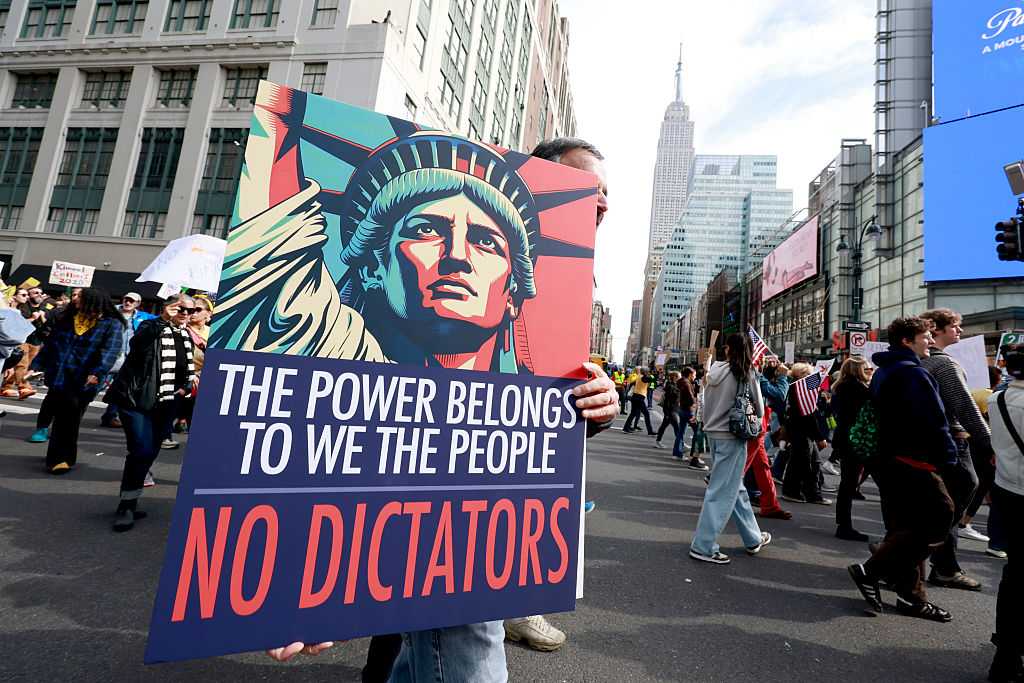
Protesting the direction of the country under President Donald Trump, millions of people gathered Saturday in the nation’s capital and communities across the U.S. for “No Kings” demonstrations — what the president's Republican Party is calling “Hate America” rallies. These protests featured a wide range of messages, from “Nothing is more patriotic than protesting” to “Resist Fascism.” In many places, the atmosphere felt more like a street party, with marching bands, large banners displaying the U.S. Constitution’s “We The People” preamble, and protesters in creative costumes such as frog outfits, which have become symbols of resistance in Portland, Oregon.
This is the third mass mobilization since Trump's return to the White House and comes against the backdrop of a government shutdown that has closed federal programs and services, testing the balance of power as an aggressive executive confronts Congress and the courts. Organizers warn that these actions represent a slide toward American authoritarianism.
Demonstrations Across Major Cities
Demonstrators packed iconic locations such as New York City's Times Square, Boston Commons, Chicago's Grant Park, and Washington, D.C., as well as hundreds of smaller public spaces. In Washington, Brian Reymann expressed frustration over being called a terrorist by Republicans, calling it “pathetic.” He emphasized that while he disagrees with their politics, he believes they are misguided and power-hungry.
Trump himself was spending the weekend at his Mar-a-Lago home in Florida. During a Fox News interview, he dismissed the protests, saying, “I’m not a king,” before attending a $1 million-per-plate MAGA Inc. fundraiser at his club. Later, a Trump campaign social media account mocked the protests by posting a computer-generated video of the president dressed as a monarch, wearing a crown and waving from a balcony.
Nationwide Participation
More than 2,600 rallies were planned on the day, with organizers expecting participation across the country. In Birmingham, Alabama, over 1,500 people gathered, drawing on the city's history of protests and its role in the Civil Rights Movement. Jessica Yother, a mother of four, said the event felt like a gathering of her people, despite Trump winning nearly 65% of the vote in the state.
In San Francisco, hundreds of people formed the words “No Kings” and other phrases using their bodies on Ocean Beach. Salt Lake City demonstrators gathered outside the Utah State Capitol to share messages of hope and healing after a protester was fatally shot during the city's first “No Kings” march in June.
Building a Unified Opposition
Organizers hope this movement will build a stronger opposition to Trump's policies. Democratic U.S. Sen. Chris Murphy noted that big rallies give confidence to those who have been sitting on the sidelines but are ready to speak up. Top Democrats, including Senate Leader Chuck Schumer and Independent Sen. Bernie Sanders, are joining in what organizers see as an antidote to Trump's actions, from the administration's clampdown on free speech to its military-style immigration raids.
Ezra Levin, a co-founder of Indivisible, said, “There is no greater threat to an authoritarian regime than patriotic people-power.” The number of registered locations for the “No Kings” movement has grown from 1,300 in April to 2,100 in June, showing increasing support.
Responses From Protesters and Critics
Before noon, several thousand people had gathered in Times Square, chanting “Trump must go now,” and waving signs that insulted the president and condemned his immigration crackdown. Retired family doctor Terence McCormally was heading to Arlington National Cemetery to join others walking across the Memorial Bridge that enters Washington directly in front of the Lincoln Memorial. He expressed concern about the recent deployment of the National Guard and the impact on police relations.
Republicans have criticized the protests, calling them “Hate America” rallies and blaming them for the government shutdown. House Speaker Mike Johnson, R-La., claimed the rallies would feature “antifa types” and “Marxists.” However, some protesters responded with humor, noting that Trump often uses theatrics, such as claiming cities he sends troops to are war zones.
Democrats' Stance on the Government Shutdown
Democrats have refused to vote on legislation that would reopen the government unless funding for health care is included. Republicans say they are willing to discuss the issue later, only after the government reopens. For many Democrats, the shutdown is also a way to stand up to Trump and push the presidency back to its place as a co-equal branch of government. Senator Murphy said, “Trump does think that he’s a king,” and that he cannot act more corruptly when the government is shut down.
Coverage of the Protests Across the Nation
The “No Kings” protests took place in various cities across the U.S., including:
- Alabama: Protesters marched in Birmingham during the second round of nationwide "No Kings" protests.
- Baltimore, Maryland: Several "No Kings" rallies made their mark throughout the Baltimore area.
- Boston, Massachusetts: Demonstrators gathered in Boston for the protests.
- California: Thousands rallied at the California Capitol as part of the nationwide "No Kings" protests.
- Florida: Coverage of the events in Florida.
- Georgia: "No Kings Day" returned to downtown Savannah, with about 5,000 marching.
- Iowa: Thousands in Iowa rallied against the Trump administration with "No Kings" protests.
- Kansas City, Kansas: Thousands gathered across the metro for "No Kings 2.0" rallies.
- Kentucky: Thousands came together in downtown Louisville for the second "No Kings" rally.
- New Mexico: A "No Kings" demonstration in Albuquerque drew thousands.
- Ohio: Demonstrators attended "No Kings" protests across the Greater Cincinnati region.
- Oklahoma: Thousands in Oklahoma City joined "No Kings" protests against the Trump administration.
- Pittsburgh, Pennsylvania: "No Kings" protests took place throughout Western Pa.
- Washington, D.C.: Coverage of the protests in the nation's capital.
- Wisconsin: Southeast Wisconsin joined the nationwide "No Kings" protests.
Conclusion
The “No Kings” protests reflect a growing movement across the U.S., with participants united in their opposition to Trump's leadership and policies. As the demonstrations continue, they highlight the deep divisions within the country and the ongoing struggle for democratic values.

Post a Comment for ""No Kings" Protest: Trump March Returns Nationwide"
Post a Comment