
Nobel Prize Honors Breakthrough in Ultracold Electronics and Quantum Tech
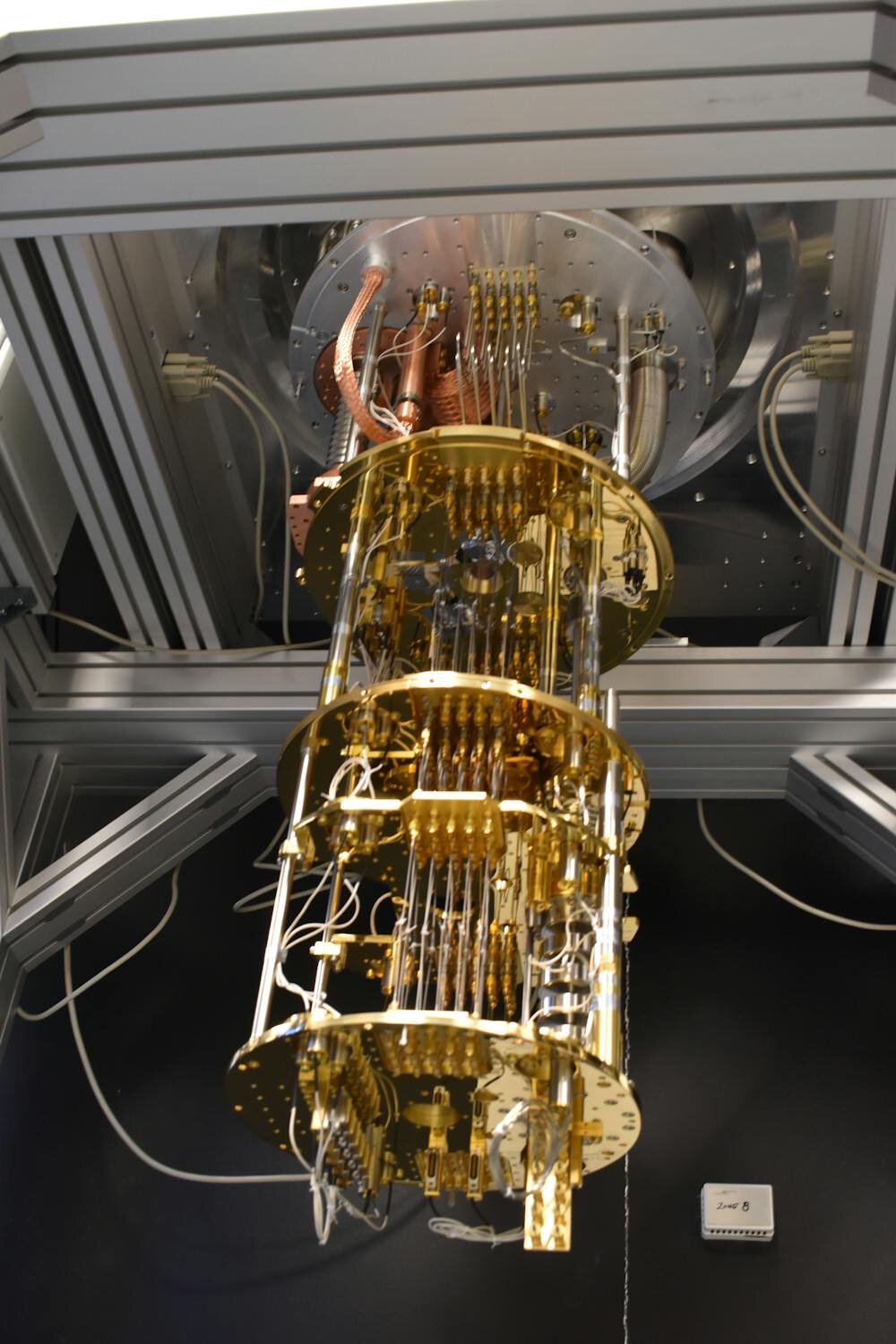
Quantum mechanics is a branch of physics that explains the strange and counterintuitive behavior of particles at the smallest scales. These microscopic entities follow rules that are fundamentally different from the everyday world we experience. By harnessing quantum systems for computation, scientists hope to tackle complex problems in fields like chemistry and cryptography—challenges that even the most advanced classical computers cannot handle due to their immense complexity.
The field of quantum computing relies on the development of practical quantum technologies. One such technology involves superconducting electrical circuits, which have shown great potential. However, not long ago, it was uncertain whether these circuits could exhibit quantum behavior. The 2025 Nobel Prize in Physics recognized three scientists for their groundbreaking work in proving that quantum effects can indeed persist in large-scale electrical circuits, paving the way for the creation of real-world quantum technologies.
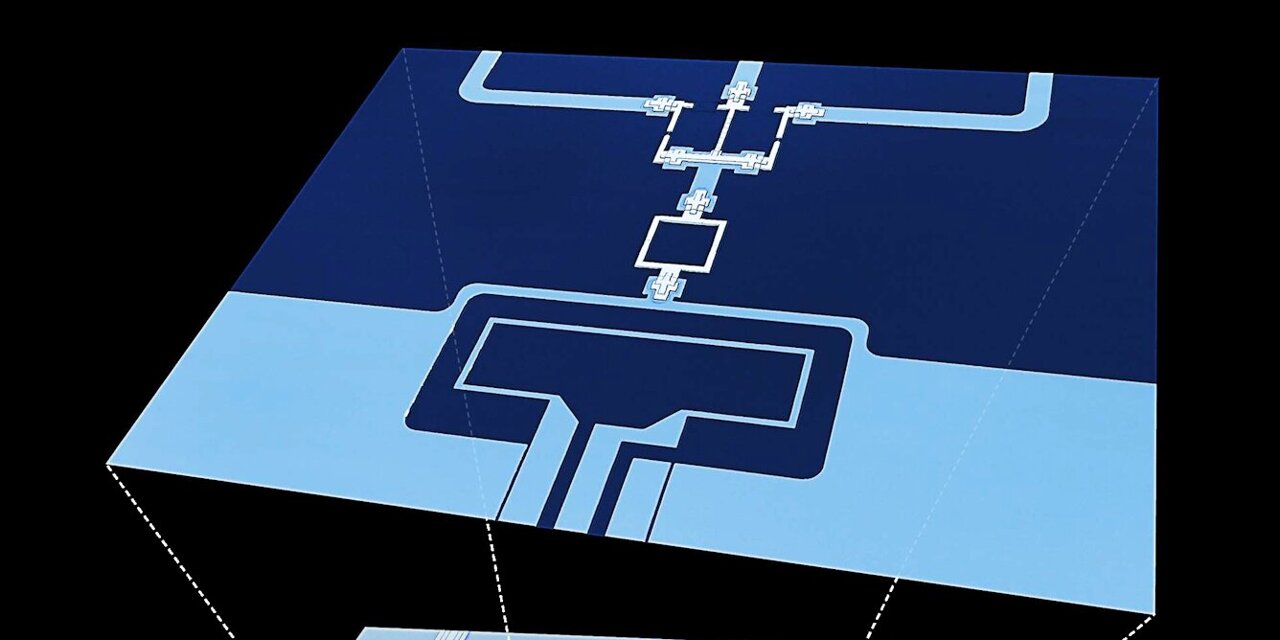
As a physicist who studies superconducting circuits for quantum computing and other applications, I am deeply influenced by the research conducted by the Nobel laureates. Their work laid the foundation for much of what we now understand about superconducting circuits and their role in quantum technology.
Big, cold, quantum
In the 1980s, John Martinis, Michel Devoret, and John Clarke conducted experiments that demonstrated how large electrical circuits could display quantum properties. They used a circuit made from niobium and lead, materials that become superconductors when cooled to just a few degrees above absolute zero. Superconductors allow electric current to flow without resistance or heat loss.
Martinis, Devoret, and Clarke showed that in such superconducting materials, voltages and currents obey the laws of quantum mechanics. This means that energy levels in the circuit are quantized—discrete and indivisible—and the system can exist in superpositions of multiple states. In quantum mechanics, a system's state describes everything about it. A quantum system can have specific, measurable values, such as energy levels. For example, a system might have energy level 1 or energy level 2, but not anything in between.
Moreover, a quantum system can be in a superposition of multiple states, similar to how different combinations of red, green, and blue light create any color in an image. The Nobel laureates proved that superconducting circuits can be treated as if they were single quantum particles, making them incredibly useful for technological applications.
Today, superconducting circuits are used to explore fundamental quantum physics, simulate complex physical systems, and test advanced sensing techniques. For instance, the Devoret group recently developed a near-perfect microwave amplifier based on superconducting circuits. These amplifiers are essential in communications, radar, and scientific instruments.
The Martinis group has used superconducting circuits to model groups of electron-like particles, a technique crucial for studying fundamental physics. In my own research, we've employed superconducting circuits to create a protocol for measuring magnetic fields with greater sensitivity than traditional methods. Quantum sensors offer extreme precision, useful for detecting biological activity or gravitational anomalies.
However, the most significant application of superconducting circuits is as a platform for quantum computing.
Superconducting quantum computers
Quantum computers leverage the unique properties of quantum systems, such as superposition and entanglement. When multiple quantum systems interact, they can become entangled, acting as a single system. This combination of quantization, superposition, and entanglement gives quantum computers their power.
In quantum computing, researchers use qubits—quantum bits that can exist in two states. Qubits must be coherent, meaning they maintain their state over time. They also need to be controllable, allowing researchers to manipulate them and interact with other qubits. Scalability is another key requirement, as quantum computers need many qubits to perform complex tasks.
Various technologies show promise, including arrays of atoms, trapped ions, and photons controlled by optical circuits. However, each approach involves trade-offs between coherence, controllability, and scalability.
Superconducting circuits offer a unique advantage: they are simple and flexible. By adjusting the design of the circuit, researchers can achieve almost any desired qubit behavior, which is easy to predict. This makes them ideal for building quantum computers. Unlike smaller quantum systems, superconducting qubits are large enough to be easily controlled and reliable enough to function effectively.
Today, academic research groups continue to develop new types of superconducting qubits, improve their coherence, refine control mechanisms, and explore ways to scale up the technology. Companies and government labs then take these advancements and apply them through engineering efforts to build large-scale quantum processors for practical use.
Superconductor pioneers
The Nobel laureates have made lasting contributions beyond their 1980s work. Martinis led Google’s quantum processor initiative and now runs his own company, while Devoret continues to support Google’s quantum efforts. Clarke, now retired, also contributed significantly to quantum circuit research later in his career.
Their influence extends far beyond their scientific achievements. I had the opportunity to participate in a panel discussion with Devoret in May 2025, where he humorously noted that choosing an academic adviser can be more impactful than choosing a spouse, as "you can't divorce your adviser."
It's often joked that half the researchers in quantum superconductors trace their academic lineage back to Clarke. I can say that twice: My Ph.D. adviser, Irfan Siddiqi, was advised by Devoret, and Clarke was my secondary adviser. One of my proudest moments as a graduate student was remaining calm when Martinis grilled me after I gave a talk.
Today, these pioneers are celebrated for their work, and tomorrow, I and others they have trained will strive to carry forward their legacy.

Post a Comment for "Nobel Prize Honors Breakthrough in Ultracold Electronics and Quantum Tech"
Post a Comment