
Sanctions Suffocate Syria's Emerging Economy
A City Divided: The Struggles of Post-War Damascus
DAMASCUS, SYRIA — The Old City of Damascus pulses with life. On any given night, thousands of Syrians can be seen walking through streets lined with countless shops. Diners gather in ornate Ottoman-era courtyards, where they enjoy meals around elegant black-and-white stone fountains until the early hours of the morning.
But just a short walk east reveals a stark contrast. The neighborhood of Jobar, once a rebel stronghold with a prewar population of 300,000, now lies in ruins. Crumbling apartment buildings and mangled cars stretch for miles, a testament to the devastation wrought by years of conflict. “When I was in Syria in January, I was shocked at the level of destruction,” said Robert Ford, who served as U.S. ambassador to Syria from 2011 to 2014 and has visited the country several times in recent years. “It looked like films I'd seen of cities in World War Two.”
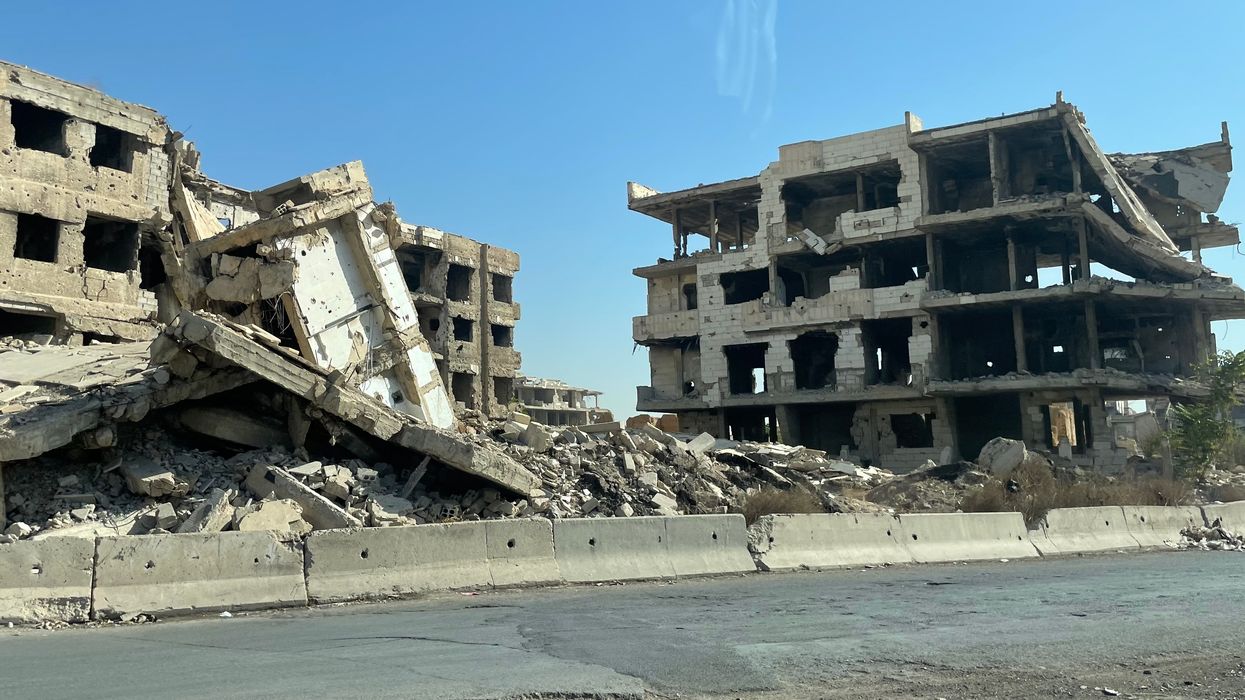
Streets full of destroyed buildings, believed to be littered with unexploded ordnance, stretch for miles in the Jobar neighborhood of Damascus. (Connor Echols/Responsible Statecraft)
In places like Jobar, the challenges facing Syria’s new government are evident. The visible scars of war are only one part of the story. Years of conflict and sanctions have left the economy in dire straits. Rolling blackouts are common, reflecting the sorry state of the electrical grid. Syrian banks, after years of isolation, are struggling to meet international standards to rejoin the global financial system. Gas stations are in disrepair, and many drivers rely on roadside stops where fuel is dispensed from thin plastic water jugs. Supply chains for most industries must be rebuilt from scratch.
Nine months after the fall of the Assad regime, Syria is working hard to overcome these challenges. Syrians from all walks of life are supporting reconstruction efforts, with some contributing millions of dollars and others giving their time and energy. Many of the 14 million people who fled during the conflict have returned to visit, and some have even decided to move back home permanently.
However, a looming threat remains: Western sanctions. Despite President Donald Trump’s efforts to waive or suspend many U.S. sanctions on Syria, Congress has not yet removed the crippling measures initially imposed to pressure the Assad regime. Lawmakers, particularly in the House, have instead pushed for additional conditions for the removal of sanctions, casting doubt on the future of the Syrian economy and slowing the flow of the estimated $400 billion in investment needed to rebuild a country where 90% of people now live in poverty.
The Impact of Sanctions on Syria's Reconstruction
To better understand the impact of sanctions and assess the possibility of their removal, RS visited various cities in Syria and spoke with people on the ground, as well as experts on sanctions and congressional staffers. The picture that emerged is bleak.
Sanctions represent a key barrier to the program of Syrian President Ahmed al-Sharaa, who has focused on technocratic policies following the fall of the Assad regime. “He is genuine when he says the priority has to be reconstruction,” said Ford, who has spoken with Sharaa several times since he took power. Back in 2023, when Ford first met Sharaa, the future president was particularly concerned about job creation in Idlib, the city his militant group had held since 2017.
Sharaa’s logic was that, “if young people don’t have jobs, they migrate towards the most extreme Islamist movements,” Ford recalled.
Experts on Syria’s economy share Sharaa’s concerns. As Syria continues its fragile transition to a post-Assad system, they argue that the continued imposition of sanctions will threaten more than just Syrians’ pocketbooks. “If the country remains economically isolated, institutionally hollow, and unable to meet humanitarian needs, it risks descending into state failure and triggering new migration waves, drug trafficking, terrorism, and chaos that various regional and domestic actors could quickly exploit,” a recent report from Karam Shaar Advisory, a consulting firm focused on Syria, said.
One Syrian man put it more bluntly. “The sanctions aren’t against the government,” he said. “They’re against the people.”
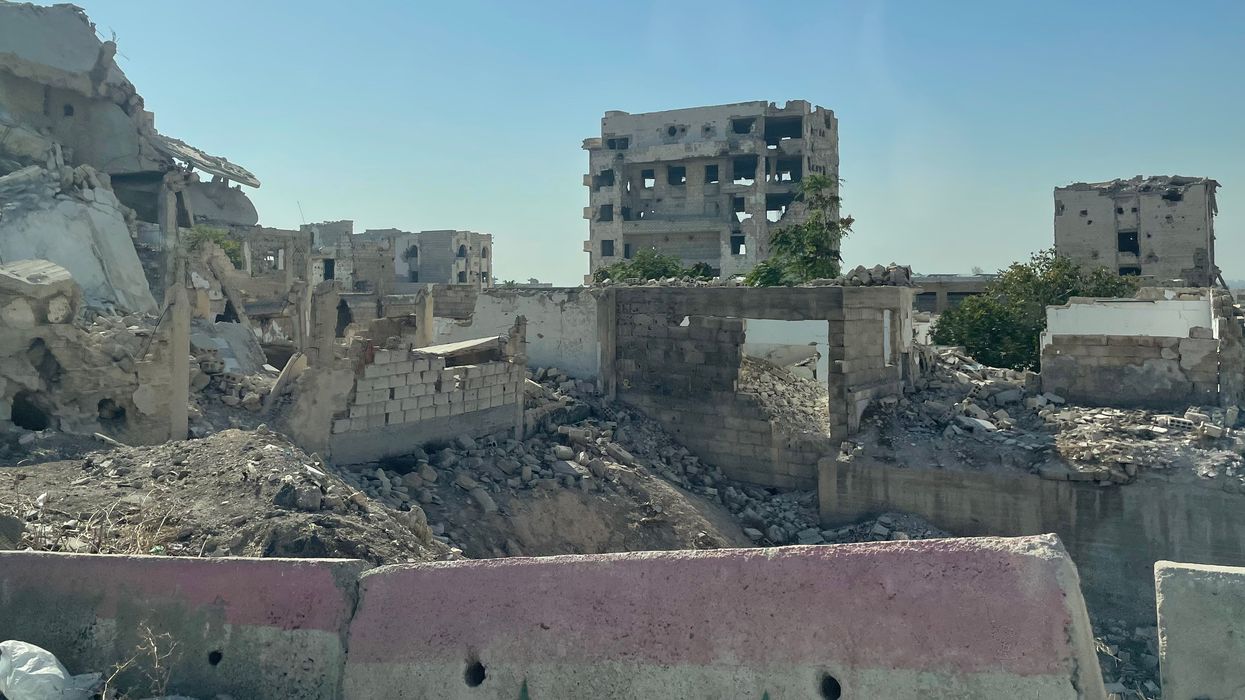
Streets full of destroyed buildings, believed to be littered with unexploded ordnance, stretch for miles in the Jobar neighborhood of Damascus. (Connor Echols/Responsible Statecraft)
The Long Arm of Sanctions
Syria is no stranger to sanctions. In 1979, the U.S. designated the Syrian government as a state sponsor of terrorism, largely due to its support for Palestinian armed groups. U.S.-Syrian relations experienced a series of ebbs and flows in the ensuing decades, but the designation remained.
President Clinton met multiple times with President Hafez al-Assad in the 1990s as the U.S. sought normalization between Syria and Israel. In the early days of the war on terror, Syria even lent the U.S. a hand by alerting Washington of a planned al-Qaeda attack on an American base in Bahrain. But that cooperation unraveled following Syria’s opposition to the 2003 Iraq War, which led the U.S. to impose new sanctions on the Assad regime.
Eight years later, the government’s brutal crackdown on Arab Spring protestors erased any possibility for a cooling of tensions between the U.S. and Syria.
Both the Obama and Trump administrations used executive orders to impose additional sanctions on Syria as the country descended into a brutal civil war. Then, in 2019, Congress made the fateful decision to impose a package of restrictions known as the Caesar sanctions in response to atrocities committed by the Assad regime. These unusually harsh measures, which included secondary sanctions against foreign entities doing business in most sectors of the Syrian economy, left the country in near complete economic isolation.
“Sanctions were having an impact on a 360 degree level,” recalled Vittorio Maresca di Serracapriola, an expert in sanctions on Syria and an economic analyst at Karam Shaar Advisory.
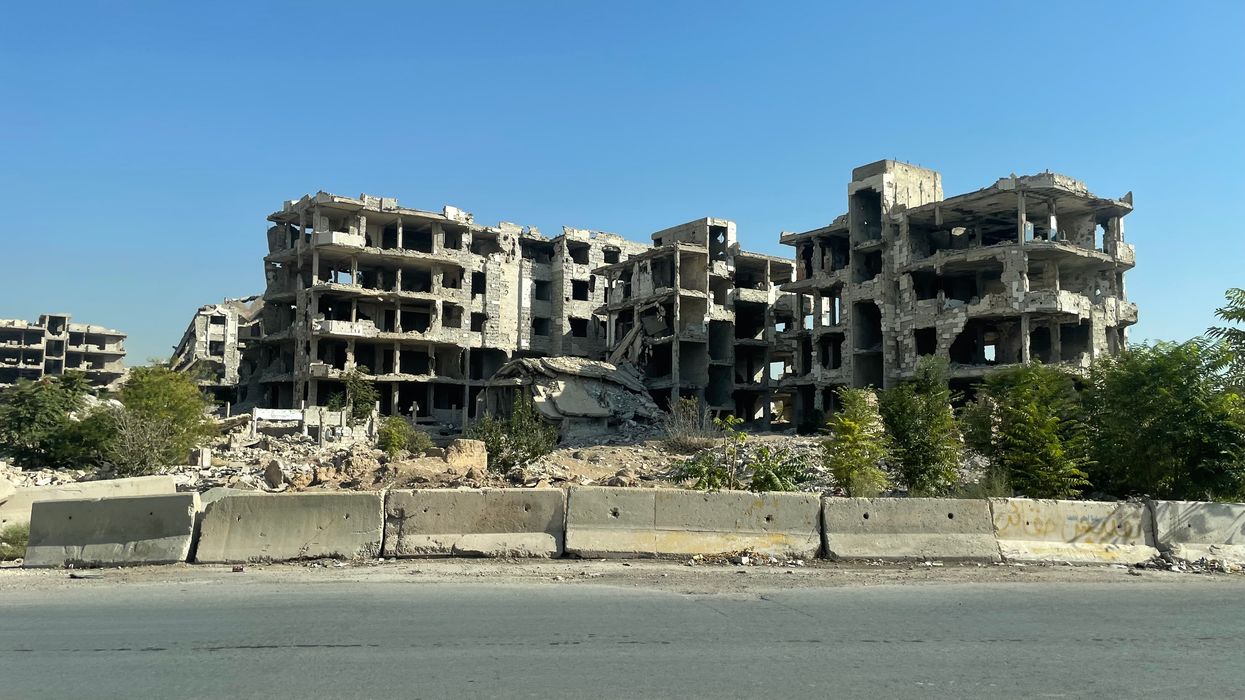
Streets full of destroyed buildings, believed to be littered with unexploded ordnance, stretch for miles in the Jobar neighborhood of Damascus. (Connor Echols/Responsible Statecraft)
The Fight for Sanctions Relief
When President Bashar al-Assad finally fled in December 2024, many hoped that the sanctions would go with him. President Trump fed these hopes in May when he promised an end to the measures, which he followed up in June with a sweeping executive order that suspended or waived the vast majority of sanctions.
But Congress has had other plans. In the House, some lawmakers have pushed for the full elimination of the Caesar sanctions, but others have advocated instead for imposing additional conditions. The pro-sanctions camp remains skeptical of Sharaa, a one-time al-Qaeda fighter who claims to have moderated his views. And so far, these skeptics are winning. A bill that would maintain the Caesar sanctions for at least two more years, sponsored by Rep. Mike Lawler (R-N.Y.), advanced out of the House Financial Services Committee in July.
Efforts to secure a clean repeal, meanwhile, have yet to even get a committee markup.
Debate in the Senate has been more complex. Senate Democrats, led by Sen. Jeanne Shaheen (D-N.H.), have argued in favor of a straight repeal. “The financial services industry has made clear that, absent a clean repeal, it is very unlikely that they will be able to extend financing to any kind of major projects in Syria,” a Democratic congressional aide told RS, adding that this would kill any hopes for a full reconstruction.
Sen. Lindsey Graham (R-S.C.), for his part, initially pushed to maintain the sanctions with strict conditions for their removal. But, after negotiations with Democrats including Shaheen and Sen. Chris Van Hollen (D-Md.), Graham signed onto a compromise proposal. The new version would provide immediate sanctions relief and simply require the president to regularly update Congress on Syria’s compliance with various requirements related to fighting terrorism and ensuring accountability for atrocities. This proposal is likely to be included in a “manager’s package” of amendments to the annual defense policy bill, meaning that its chances of passing the Senate are high, according to the Democratic staffer.
Van Hollen praised the compromise proposal in a statement to RS. “Failure to lift the sanctions would be a big missed opportunity and would hamstring vital reconstruction efforts,” he said. “That being said, given the past history of members of this interim government, it’s critical that we also have an insurance policy to safeguard our interests.”
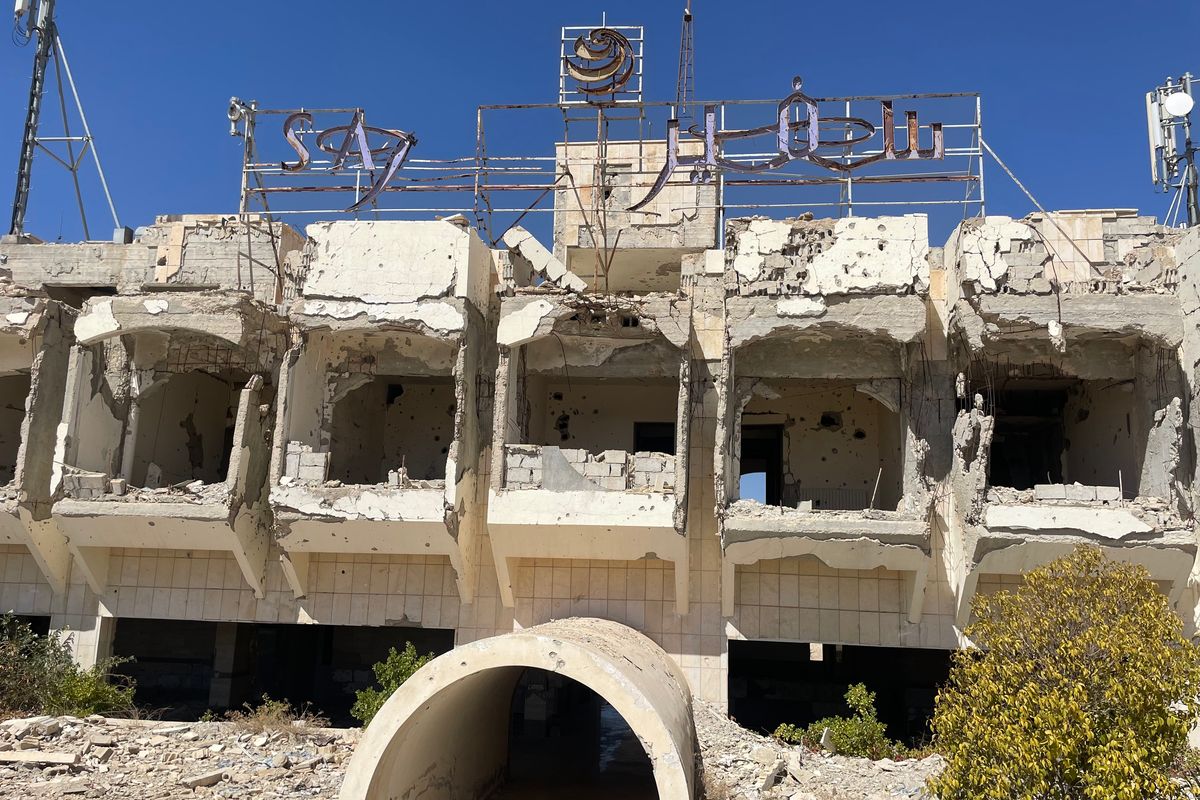
Once a luxury resort, the Safir hotel in Maaloula, Syria, was all but destroyed in fighting during the civil war. The property's Kuwaiti owners have yet to begin reconstruction. (Connor Echols/Responsible Statecraft)
The Path Forward
It remains unclear whether this compromise will be enough to persuade Western banks to take the risk of investing in a new Syria. After all, even with a clean withdrawal of sanctions, Syria’s problems go far deeper than kitchen table issues. Clashes continue between the central government and the Kurdish-led Syrian Democratic Forces, and soldiers affiliated with Sharaa’s government have been accused of committing massacres against both Alawite and Druze Syrians in recent months.
Meanwhile, efforts to secure some form of transitional justice and move toward a more democratic system of government have been halting at best, and terror groups like ISIS have tried to take advantage of the transition to reconstitute their forces. But Sharaa’s bet is that these problems can only be dealt with properly if the country’s economy is placed on a clear path to recovery.
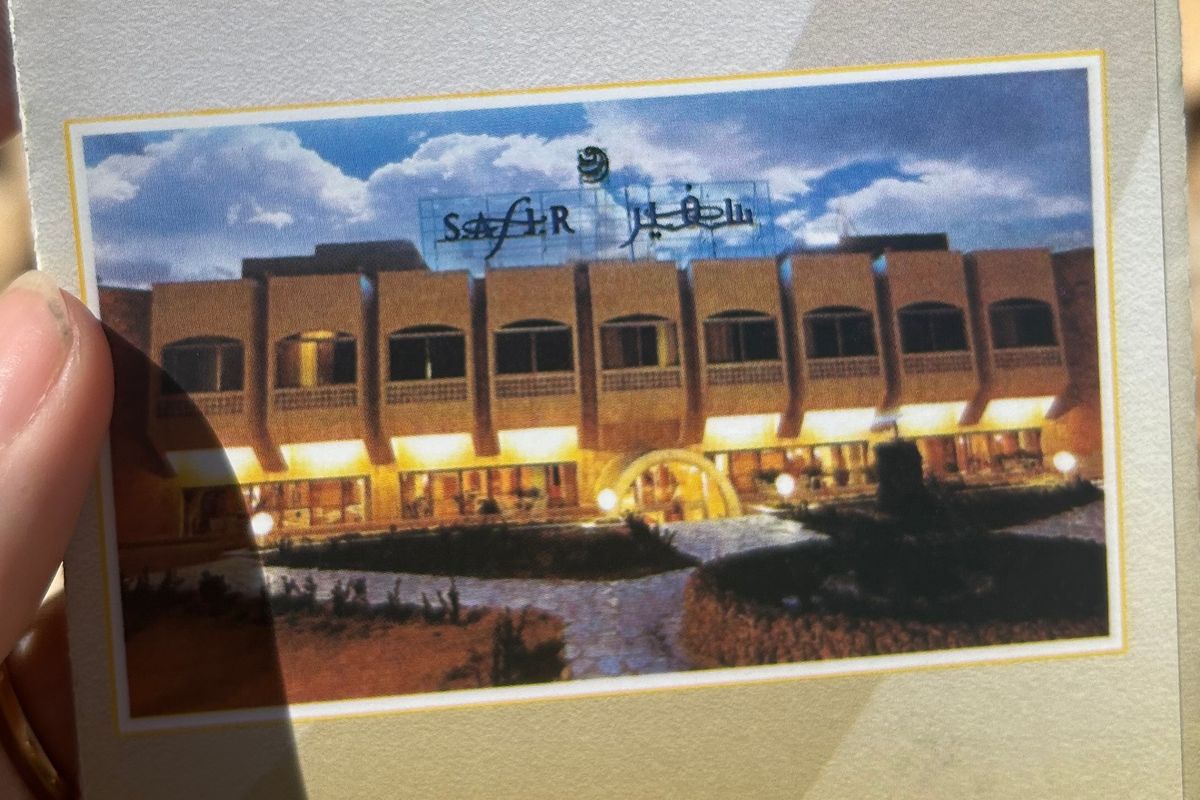
A brochure shows how the Safir hotel in Maaloula, Syria, looked prior to the war. (Connor Echols/Responsible Statecraft)
A Call for Change
In September, Sharaa brought this argument to the United Nations, where he became the first Syrian president to address the General Assembly in more than 50 years. “Syria is reclaiming its rightful place among the nations of the world,” he said. “We call now for the complete lifting of sanctions, so that they no longer shackle the Syrian people.”
Trump appears to agree with Sharaa about the need for sanctions relief, which, as Ford noted, will be necessary in order to secure any form of long-term investment. But without support from Congress, the administration can only do so much to calm the nerves of investors. So it is that the Caesar sanctions, first designed to bring the Assad regime to heel, are now poised to cripple its successor.
“We could do everything possible to help the Syrians and it could still not work out,” the Democratic aide said. “But I think if we don't do everything possible, like removing these shackles off the economy, that it definitely won't work out.”
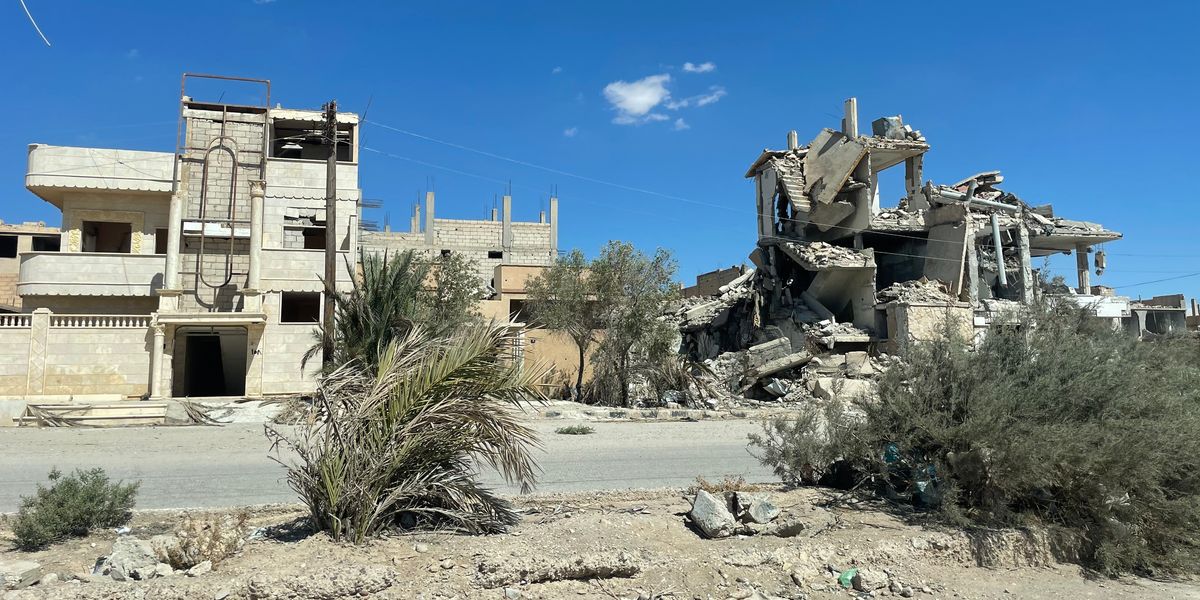
Palmyra, which once had a population of at least 70,000 people, is among the most destroyed cities in Syria. A small portion of the pre-war population has begun to return. (Connor Echols/Responsible Statecraft)
A Fragile Hope
This story originally appeared on Responsible Statecraft
Lifting sanctions on Syria exposes their cruel intent
Trump lifted sanctions on Syria. Now do Cuba.
Like our content? Follow us for more.
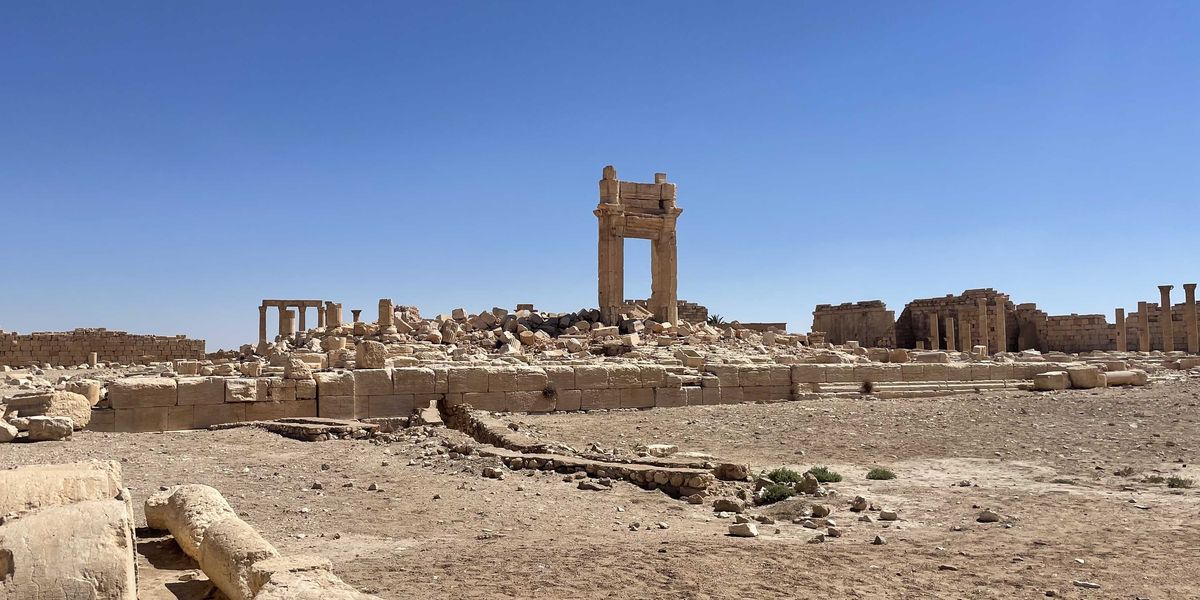
Only the front gate remains of Palmyra's ancient Temple of Baalshamin, which was largely demolished by ISIS in 2015. Researchers hope to one day rebuild the temple using the stones seen here. (Connor Echols/Responsible Statecraft)
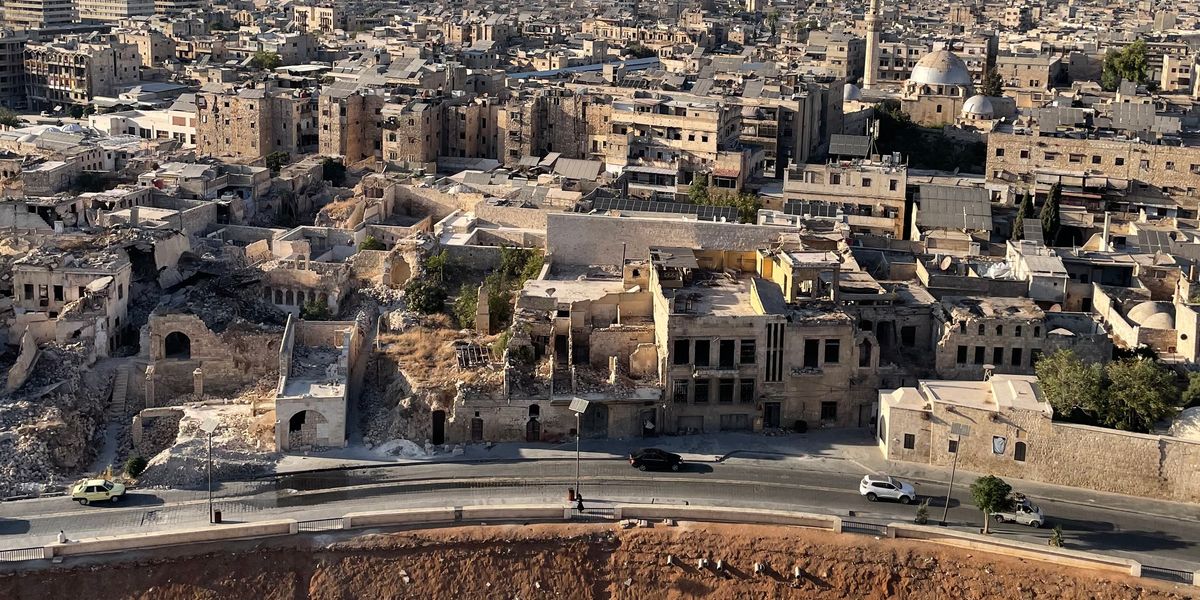
Damaged facades surround the ancient Citadel of Aleppo, which was used as a military base by various factions during the civil war. (Connor Echols/Responsible Statecraft)

Post a Comment for "Sanctions Suffocate Syria's Emerging Economy"
Post a Comment