
Sand Flies: Appearance and Identification Tips
What Can You See at the Beach?
At the beach, you might spot sunsets, crashing waves, shells, and sea turtles. But there's another creature that often goes unnoticed: sand fleas. While many of these tiny pests are harmless, some species can cause serious health issues. A recent study published in the Journal of Biomedical Science examined a parasitic skin disease called tungiasis, caused by the sand flea Tunga penetrans. The research focused on infections in domestic pigs in sub-Saharan Africa during a dry season. Over five weeks, researchers monitored 35 pigs, tracking flea lesions and assessing disease severity. The results showed an increase in infection prevalence from 57% to 71%, with disease severity scores tripling over time. This suggests that sand flea populations grow throughout the dry season, increasing the risk of transmission to humans and other animals.
Although sand fleas outside the U.S. can pose problems, most North American sand fleas are not harmful. However, they still don’t make the cut for beach-party guest lists. Despite their small size, these little pests don’t need an invitation to show up. Sand fleas are common along coastlines, and many people have seen them hopping around the shoreline. They’re fast, but what do they look like up close? This article will explore North American sand fleas, also known as "sand hoppers," and touch on tropical chigoe sand fleas, such as those infecting pigs in Africa.
What Does a Sand Flea Look Like?
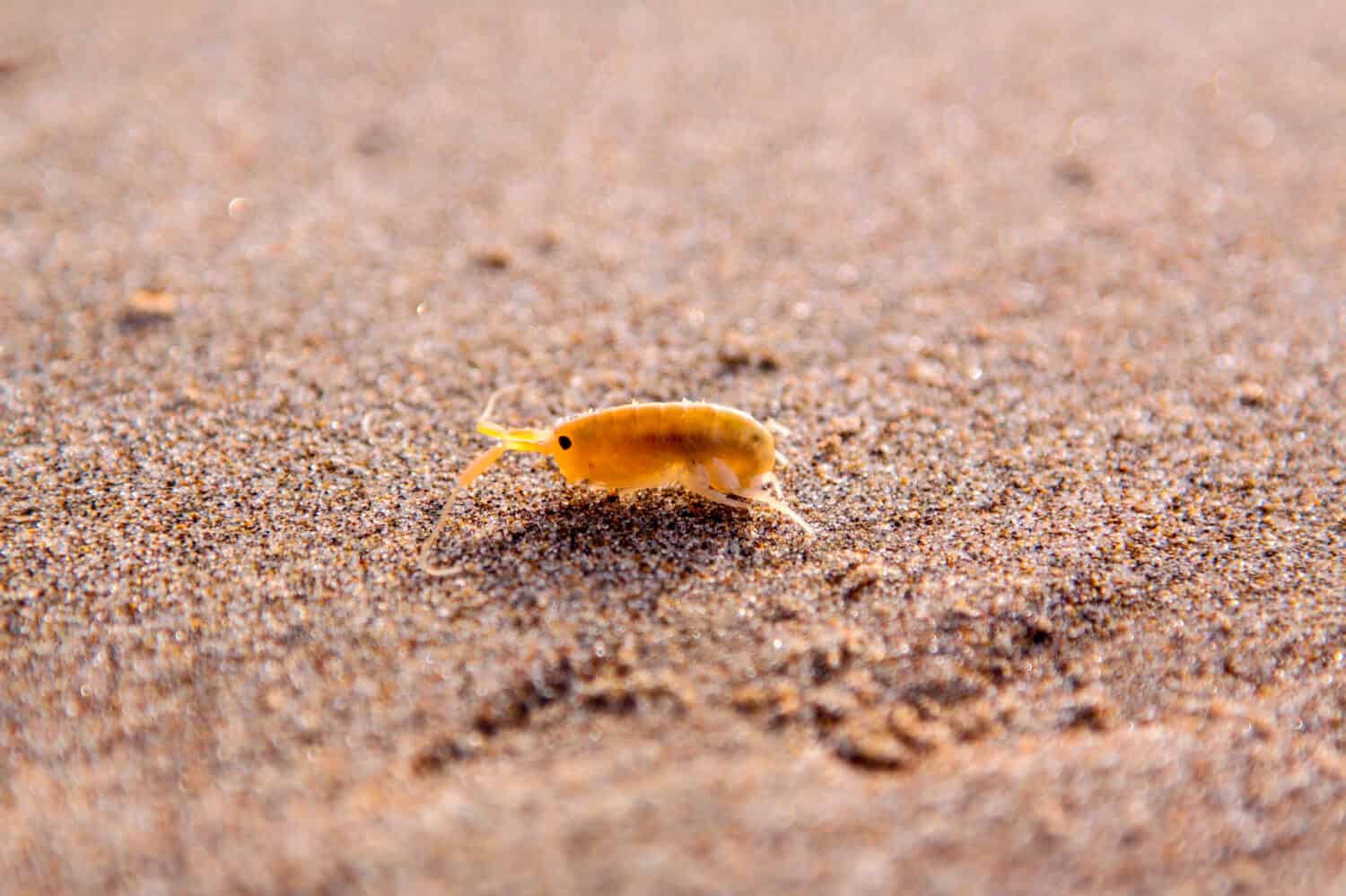
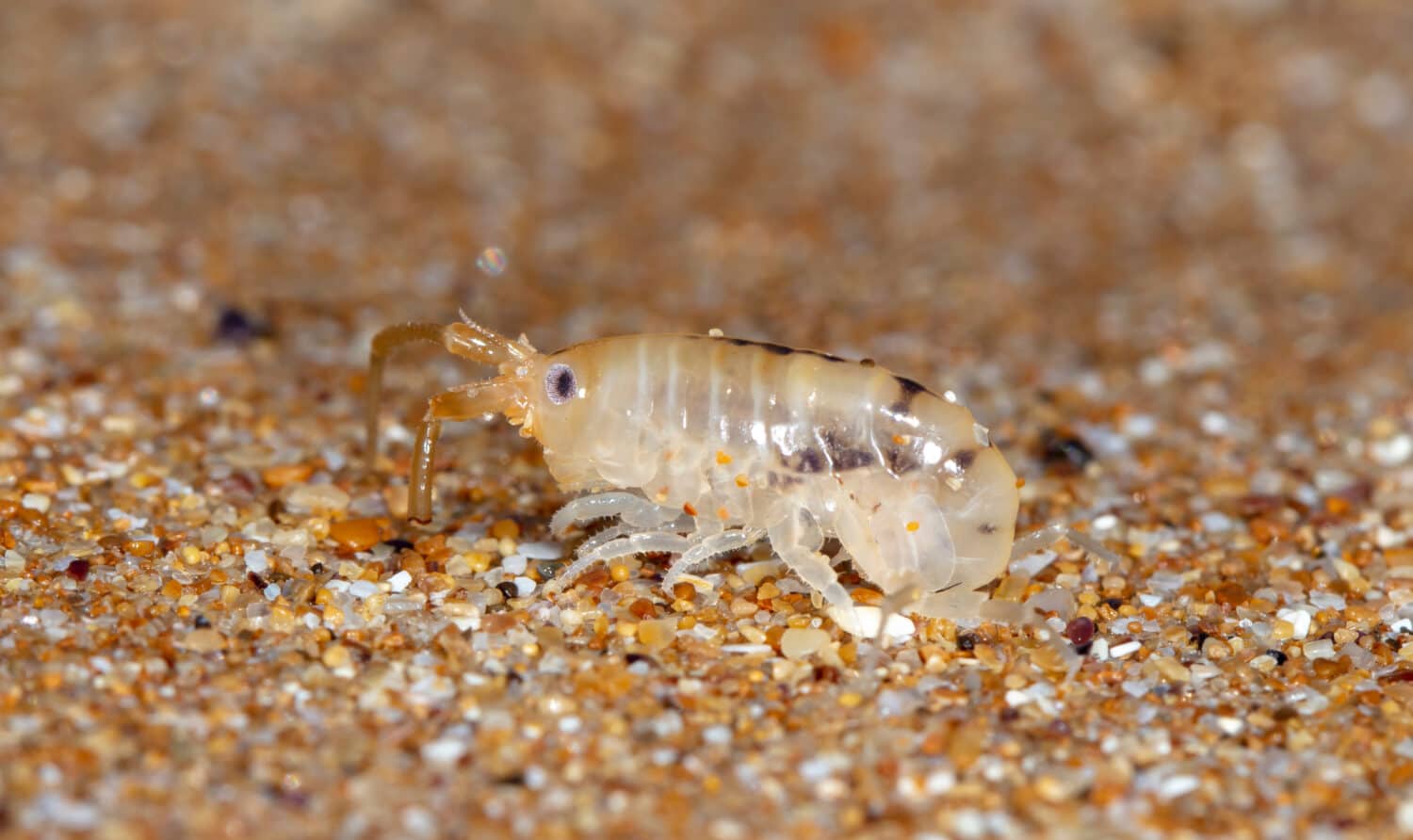
Sand fleas are typically between a quarter of an inch to an inch long and come in colors like tan, gray, green, or brown to blend into sandy environments. Experts believe they use camouflage and may even change color to match their surroundings. Over 90 species exist in the U.S., and they are commonly found along coasts. Female sand fleas are larger than males, but it’s hard to tell them apart since we usually see them mid-jump when their movement catches our eye.
Sand fleas have five pairs of long legs, long, thick reddish antennae (one longer than the other), and tiny black eyes on top of their heads. They use gills to breathe oxygenated water and have hard exoskeletons, similar to crustaceans, to protect themselves from predators and harsh coastal conditions. Their common names, "beach hopper" or "sand hopper," reflect their environment and quick jumping motion. To jump, a sand hopper tucks its tail under its body and flicks it out, propelling itself into the air.
Do Sand Fleas Look Like Pet Fleas?
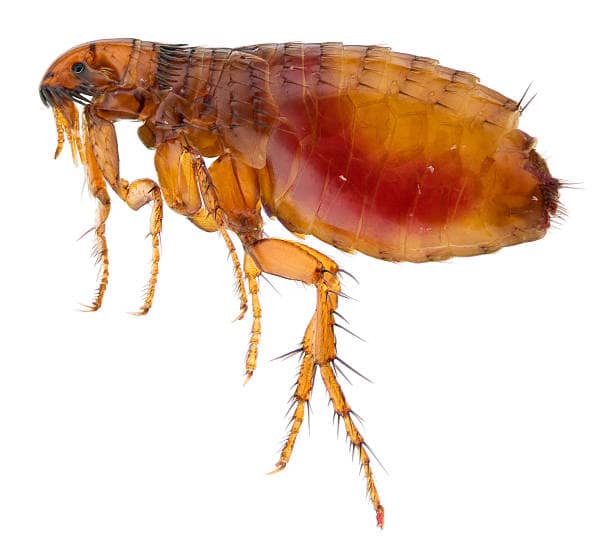
No, sand fleas are not fleas or insects. They are tiny crustaceans in the Amphipod order. Although they jump like dog or cat fleas, they are not the same. Brown fleas that live on mammals and birds belong to the Siphonaptera order, which includes 2,500 external parasite insects. These fleas feed on host blood and grow to about three millimeters. They bite people, though they prefer to hide in feathers and fur.
Are Sand Fleas Harmful to Humans?
Sand fleas are not harmful to humans. Since they jump like fleas, it's easy to confuse them with the itchy, stinging bites of cat fleas. At the beach, stings and bites are more likely from gnats, midges, or blood-feeding sandflies that leave welts and red bumps. However, in tropical regions like Central and South America, parts of Africa and Asia, and the Caribbean, a creature called the chigoe flea (Tunga penetrans), sometimes called the jigger flea, does bite humans. Female chigoe fleas bore into human feet, and these minute parasitic fleas can cause a condition called tungiasis, leading to lesions and severe inflammation.
What About Dogs?
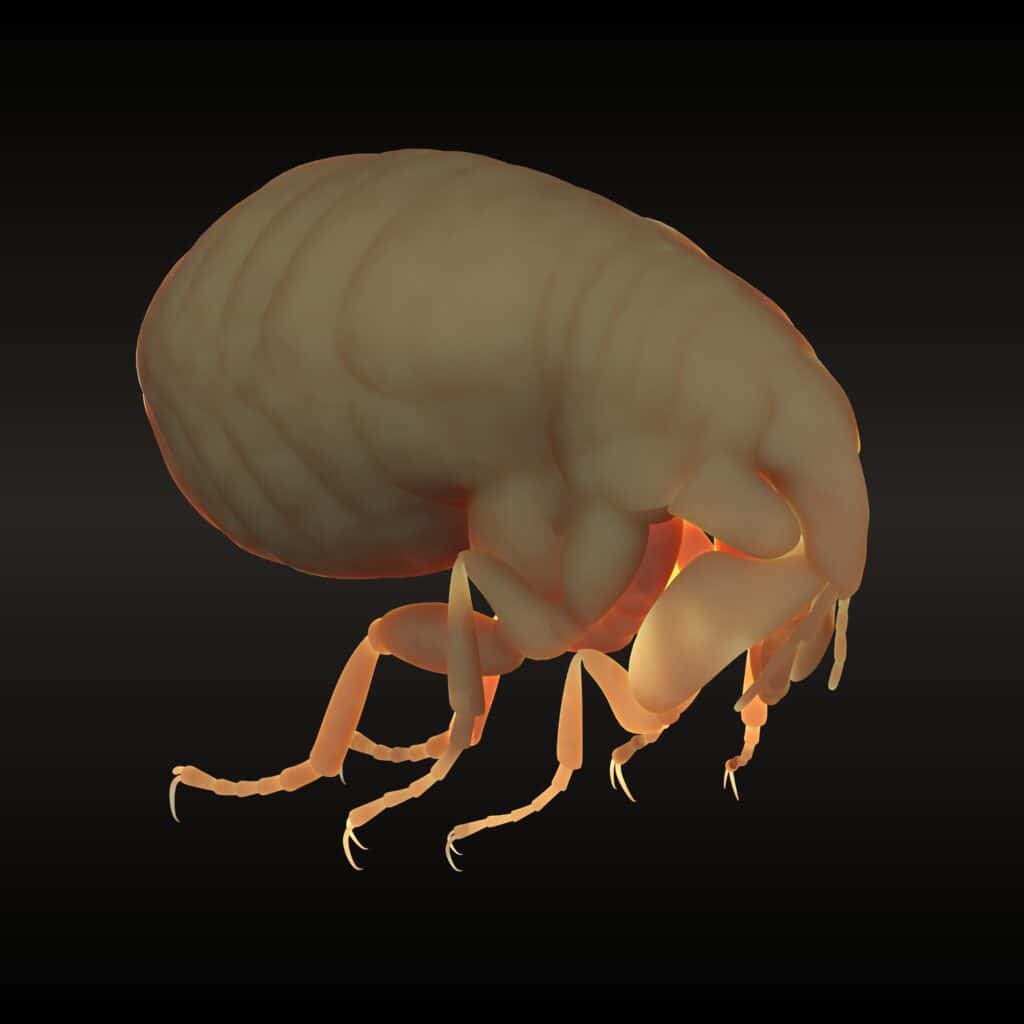
North American sand fleas don’t live on or harm dogs, but tropical chigoe sand fleas do feed from and lay eggs in mammals, similar to the pigs discussed earlier.
Do Sand Fleas Leave the Beach?
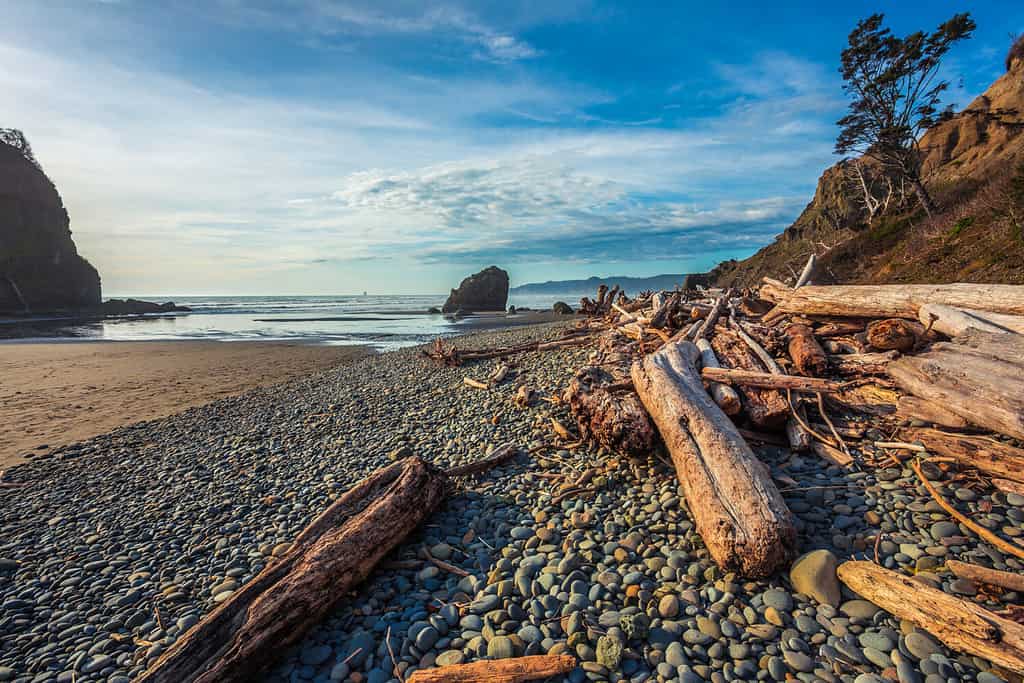
Sand fleas live on sandy beaches, usually under rocks or vegetation, on the high tide line. They generally hide, buried up to 12 inches in the sand, then emerge at night to forage. If you lift seaweed, you might spot them jumping back to the sand. Sand fleas can swim back to shore using their tail flips if a wave washes them out. One or two might get stuck in your towels or belongings, but they don’t hitch a ride intentionally. A sand flea will dry out and die in your home since their damp bodies must stay moist at all times.
Common North American sand flea species live along the Atlantic coastline, while some live on the Pacific or Gulf coast. Inland coastal marshes are also popular habitats. Although most sand fleas live near water, a few terrestrial species live in moist areas. During winter, most adult species remain dormant in the damp sand above the spring tide mark.
Do They Bite?
Sand fleas on North American coastlines and inland coastal marshes don’t tend to bite, but the tropical chigoe sand flea does. The chigoe sand flea feeds on mammals, biting and penetrating the skin to suck blood. Females may burrow under the skin to lay eggs. An embedded chigoe is very painful and causes difficulty walking. After four to six weeks, the chigoes fall out, leaving open wounds and painful inflammation.
Symptoms of chigoe sand flea bites include: - Inflamed wounds - Trouble walking - Peeling skin - Nail loss - Thick or hardened skin - Thick or hardened nails
This condition is more common in underdeveloped rural areas where people go barefoot around farms, dirt floors, and beaches. Most bites and infections occur from August to September. If you're traveling to tropical areas, wear shoes to protect your feet.
Common sand fleas found on North American beaches might bite if they get trapped against your skin, but bites are rarely noticeable and tend to clear up after a few days. On rare occasions, you might receive a sand flea bite on the feet, ankles, or lower legs because sand fleas can only jump eight to ten inches. Sand flea bites look like regular flea bites, with red bumps in small clusters.
Standard North American sand fleas do not burrow into skin, and chigoes are extremely rare. The World Health Organization states that tungiasis occurs in resource-poor populations in the Caribbean, South America, and sub-Saharan Africa.
Treating Sand Flea Bites
A small, itchy bite received at the beach is most likely from a midge or sand fly. Treat it with over-the-counter antiseptic cream or aloe vera to reduce itchiness. If it doesn’t clear up in a few days, seek medical advice.

Sand Flea Life Cycle
Female sand fleas brood their young in a pouch attached to their underbellies. From here, eggs mature over one to three weeks and hatch as juveniles that resemble adults but are smaller and often translucent. Common sand fleas can live up to 21 months but typically live for a year. Male sand fleas fight other males for the right to mate with females in colonies beneath the sandy shoreline, but this shifting environment can change daily. A male may find his harem gone after the tide retreats.
What Do Sand Fleas Eat?
Sand fleas primarily eat organic debris, including plant or animal matter, or detritus in decaying seaweed. Human junk food is also a target, as leftover sandwiches entangled in seaweed may look like fair game if seabirds don’t snatch them first.
Sand Flea Predators
Intertidal foraging shorebirds, such as sandpipers and avocets, feast on sand fleas. Sand fleas are an important food source for fish and crabs who swallow any they come across. In some countries, such as Indonesia, people even eat large sand fleas, frying them up with spices.
What Do Sand Fleas Look Like? How to Identify One
So, what do sand fleas look like? Let’s recap. Common sand fleas, also called sand or beach hoppers, are pretty small, and most of the time, we see them jumping. It’s easiest to identify a sand flea from its eight-inch jump. Move a rock or seaweed on the tide line, and whatever pings out is most likely a sand flea.
If your eyesight is good, or you manage to get a photo to enlarge, you’ll see sand fleas have gray, brown, tan, or green bodies depending on the sand’s color, two reddish antennae, and five sets of legs. Their bodies curl down at the back like a roly-poly, and minuscule black eyes sit atop their heads.

Post a Comment for "Sand Flies: Appearance and Identification Tips"
Post a Comment