
Starship's 11th Flight Signals New Era for SpaceX
A New Chapter for Starship
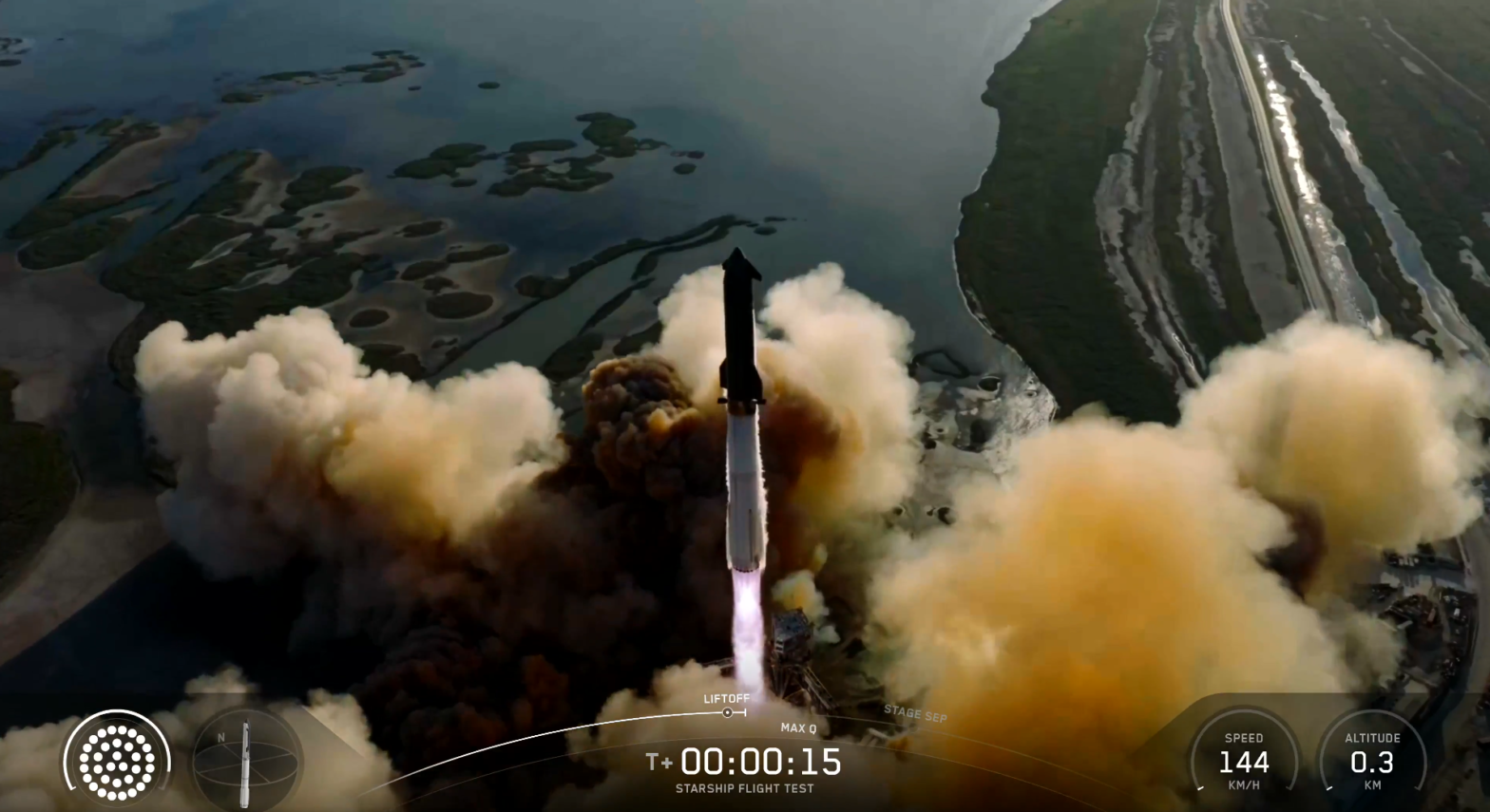
SpaceX's Starship rocket achieved a significant milestone on Monday, completing its 11th test flight and marking the end of a challenging year for the massive vehicle. The successful mission represents a return to form for the rocket, which has faced numerous setbacks in recent months. This flight also marks the final test of the Version 2 (V2) configuration, paving the way for an upgraded Version 3 (V3) that is set to debut in early 2026.
The Flight 11 mission met all of SpaceX’s objectives, providing critical data as the company prepares for the next generation of Starship and its Super Heavy booster. The V3 version is expected to enable orbital missions, rapid reuse, and in-orbit propellant transfer between spacecraft—key capabilities for the Starship human landing system (HLS), which could potentially send NASA astronauts to the moon by mid-2027.
Jake Berkowitz, a lead propulsion engineer at SpaceX, mentioned during the Flight 11 livestream that multiple V3 Starships are currently being assembled, with testing on the horizon. He also highlighted the completion of a second launch pad at SpaceX's Starbase facility in Texas, designed to accommodate the larger and more powerful V3 rocket. The new pad includes a flame trench, allowing for more efficient launches.
Preparing for the Future
SpaceX plans to modify the existing Starbase launch pad for V3, creating two pads that could significantly increase the launch cadence of Starship from months to weeks—or even days. This is crucial for future lunar missions, which will require multiple launches in quick succession to stock an orbital fuel tank. Before this can happen, SpaceX must first demonstrate these capabilities through rigorous testing.
Despite the challenges faced in 2025, SpaceX appears to be learning from its failures. The year began with explosive incidents during flights in January and March, causing disruptions and diverting air traffic. However, progress was made in May with Flight 9, where Starship avoided issues during ascent. Despite this, it failed to reach reentry and splashdown, a phase critical for gathering heat shield data.
In June, another incident occurred when a Starship intended for Flight 10 exploded on the test stand. SpaceX analyzed these anomalies and implemented improvements ahead of Flight 10 in late August, leading to the successful deployment of dummy Starlink satellites and achieving splashdown for the first time in 2025.
Flight 11 continued this upward trend. The rocket lifted off from Starbase around 6:23 p.m. EDT, with Starship jettisoning the booster, which completed a boostback burn and returned to Earth. The Super Heavy booster ignited 13 of its 33 Raptor engines before shifting down to five, then three, hovering over the ocean before engine cutoff.
Testing for the Future
Starship reached its suborbital trajectory, opened its payload bay, and released another batch of Starlink simulators. These were designed to mimic SpaceX's next-generation Starlink modules, which can only be launched on Starship. The rocket also relit one of its six Raptor engines on orbit for the third time, a capability essential for maintaining orbital control in future missions.
One of Starship's most significant achievements was surviving a reentry profile designed to push the rocket to its limits. For this test, SpaceX removed some of the heat shield tiles to stress-test vulnerable areas that experience temperatures exceeding 2,600 degrees Fahrenheit. The ship successfully navigated reentry without visible damage, providing valuable data. It also performed a "dynamic banking maneuver" that mimicked the trajectory it would take for a catch attempt at Starbase.
Following the maneuver, Starship floated down to Earth on its side, performing a landing flip and burn before splashing down in the Indian Ocean.
Challenges and Opportunities
Mishaps during previous test flights have placed SpaceX under pressure to meet deadlines. According to a Government Accountability Office assessment, NASA predicts a 70% confidence level that Starship HLS will be ready by February 2028—months after its scheduled role in the Artemis III lunar landing.
Kathy Lueders, general manager of Starbase, previously expressed hope that Starship could be caught as early as May. However, this is unlikely to happen until SpaceX completes several V3 launches. The more robust V3 rocket has the potential to unlock reusability, a key goal for SpaceX CEO Elon Musk.
What’s New with V3?
Starship V2 debuted on Flight 7 in January, introducing new capabilities and complexities. Now, with a few months to refine its design, SpaceX is preparing to usher in what could be the rocket’s operational era.
V3 will feature larger propellant tanks, upgraded Raptor engines, and a larger payload fairing. It is projected to carry up to 150 metric tons of payload, surpassing NASA’s Apollo-era Saturn V. The rocket will also offer longer distances and lower costs than the Falcon 9.
Another key upgrade is the installation of docking adapters for on-orbit cryogenic propellant transfer between ships. SpaceX aims to demonstrate this maneuver next year, launching two Starships weeks apart. In the future, Starship tankers will restock an orbital propellant depot used for missions to the moon and Mars.
Beyond V3, SpaceX is preparing for mass production of Starship. Development, manufacturing, and testing occur at Starbase, where the Starfactory hub is being built to produce up to 1,000 Starships per year.
At the same time, SpaceX is constructing two Starship integration buildings called Gigabays—one near Starfactory and another at NASA’s Kennedy Space Center (KSC) in Florida. Both are expected to be completed in 2026, enabling launches from both Starbase and Florida’s Space Coast.
Ultimately, the goal is to launch hundreds of Starships annually from multiple pads. But first, SpaceX must solve the heat shield dilemma.

Post a Comment for "Starship's 11th Flight Signals New Era for SpaceX"
Post a Comment