
Unprecedented: All News Outlets Reject Pentagon's New Press Rules
The Pentagon's New Policy Sparks Outrage Among Journalists
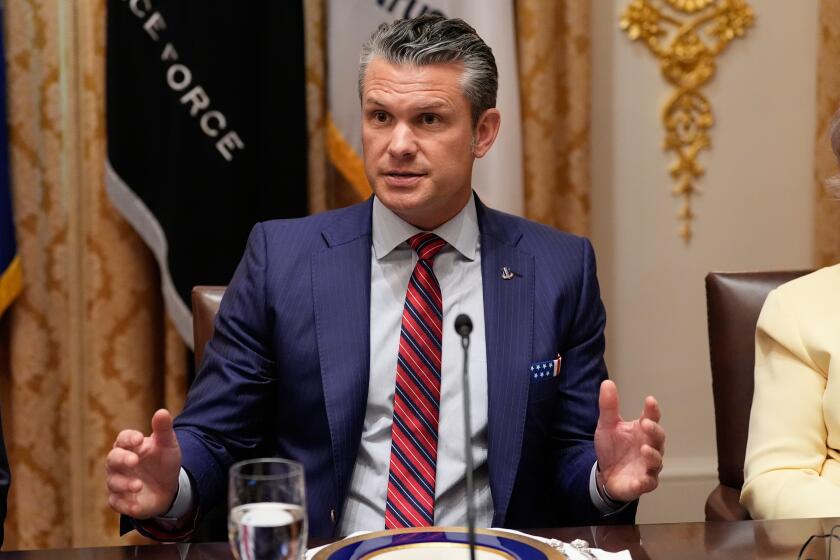
A groundbreaking and controversial policy introduced by the U.S. Department of Defense has ignited a fierce backlash from military journalists, potentially leaving the country’s largest government agency without a press corps. The new policy, announced by Defense Secretary Pete Hegseth, redefines standard reporting practices as potential criminal acts, marking a sharp departure from previous norms.
Previously, credentialed reporters were required to sign a brief, one-page document outlining safety procedures. Now, this has been replaced with a 21-page agreement that prohibits journalists from "soliciting" information—both classified and unclassified—without explicit approval from the Pentagon. This move is seen by legal experts as a direct violation of First Amendment rights, which protect free speech and the press.
Major news organizations such as the New York Times, Washington Post, and Wall Street Journal have refused to comply with the new requirements. Similarly, right-leaning outlets like Newsmax and the Washington Times have also declined to sign the document. Only One American News, a far-right cable channel, has agreed to the terms. The Los Angeles Times, under the leadership of Executive Editor Terry Tang, will not sign either.
In a rare joint statement, ABC, CBS, CNN, Fox News, and NBC condemned the policy, calling it unprecedented and a threat to journalistic freedoms. “We will continue to cover the U.S. military as each of our organizations has done for many decades, upholding the principles of a free and independent press,” the networks stated.
Defense Secretary Hegseth, known for his aggressive stance against leaks and unfavorable media coverage, has doubled down on the policy. He recently shared emojis on social media, signaling a farewell to media outlets that have criticized the new rules. Reporters were given a strict deadline of 2 p.m. PDT on Tuesday to either sign the document or surrender their credentials.
The implications of this policy are still unclear. It remains uncertain whether the Pentagon can sustain the measure, especially since it could leave the secretary without a traveling press corps to accompany him during official duties or public events. Additionally, it is unknown if President Trump supports this extreme approach.
At a White House event, Hegseth defended the policy, calling it “common sense” and expressing pride in its implementation. He argued that credentials should not be issued to reporters who might encourage officials to break the law by leaking classified information. However, Trump previously stated that he does not believe the Pentagon should control what reporters gather and write.
“I don't think so,” Trump said, adding: “Nothing stops reporters.” Yet, he later expressed understanding of Hegseth’s motivations. “I think he finds the press to be very destructive in terms of world peace and maybe security for our nation,” Trump remarked. “The press is very dishonest.”
The widespread opposition has drawn support from the White House and State Department correspondents associations. In a joint statement, they called the Pentagon policy an attack on freedom of the press. “Access inside the Pentagon has never been about convenience to reporters,” the statement read. “The public has a right to know how the government is conducting the people’s business. Unfettered reporting on the U.S. military and its civilian leadership provides a service to those in uniform, veterans, their families, and all Americans.”
Beyond the restrictions on media, the Pentagon has taken other steps this year to identify officials deemed disloyal or who share information with reporters. In April, three former top officials were dismissed following an investigation into potential leaks related to military operational plans. That same month, Hegseth’s team began subjecting officials to random polygraph tests, a practice temporarily halted after the White House intervened.
In October, the Pentagon drafted plans to renew the use of polygraphs and require thousands of personnel to sign strict nondisclosure agreements. These agreements include language similar to what reporters are being asked to sign by Tuesday.
Notably, many of Hegseth’s efforts to target leaks have themselves been leaked to news outlets, fueling his suspicions about whom he can trust. The timing of these actions is significant, as they gained momentum after Hegseth shared sensitive details about upcoming strikes in Yemen through a private Signal group chat that mistakenly included a reporter from The Atlantic. He also shared information about the attacks in another Signal chat that included his wife, a former Fox News producer.
Hegseth denied any classified information was shared in the chat, but the incident led to an internal review of whether the disclosures violated Department of Defense policies.
The Pentagon has taken a more aggressive approach to restricting reporters’ access than the White House itself, which had previously taken control over press operations from the White House Correspondents Association. Despite this, the White House has avoided implementing changes to the briefing room seating chart or evicting outlets from workspaces within the White House complex, due to legal challenges over attempts to bar major outlets like the Associated Press from covering presidential events.
Meanwhile, Trump continues to criticize specific media outlets. On Tuesday, he refused to take questions from ABC News, claiming he disliked how a news anchor treated Vice President JD Vance. “You're ABC Fake News,” Trump said at a public appearance in the White House. “I don't take questions from ABC fake news!”

Post a Comment for "Unprecedented: All News Outlets Reject Pentagon's New Press Rules"
Post a Comment