
What You Need to Know About SNAP as Emergency Funding is Ordered
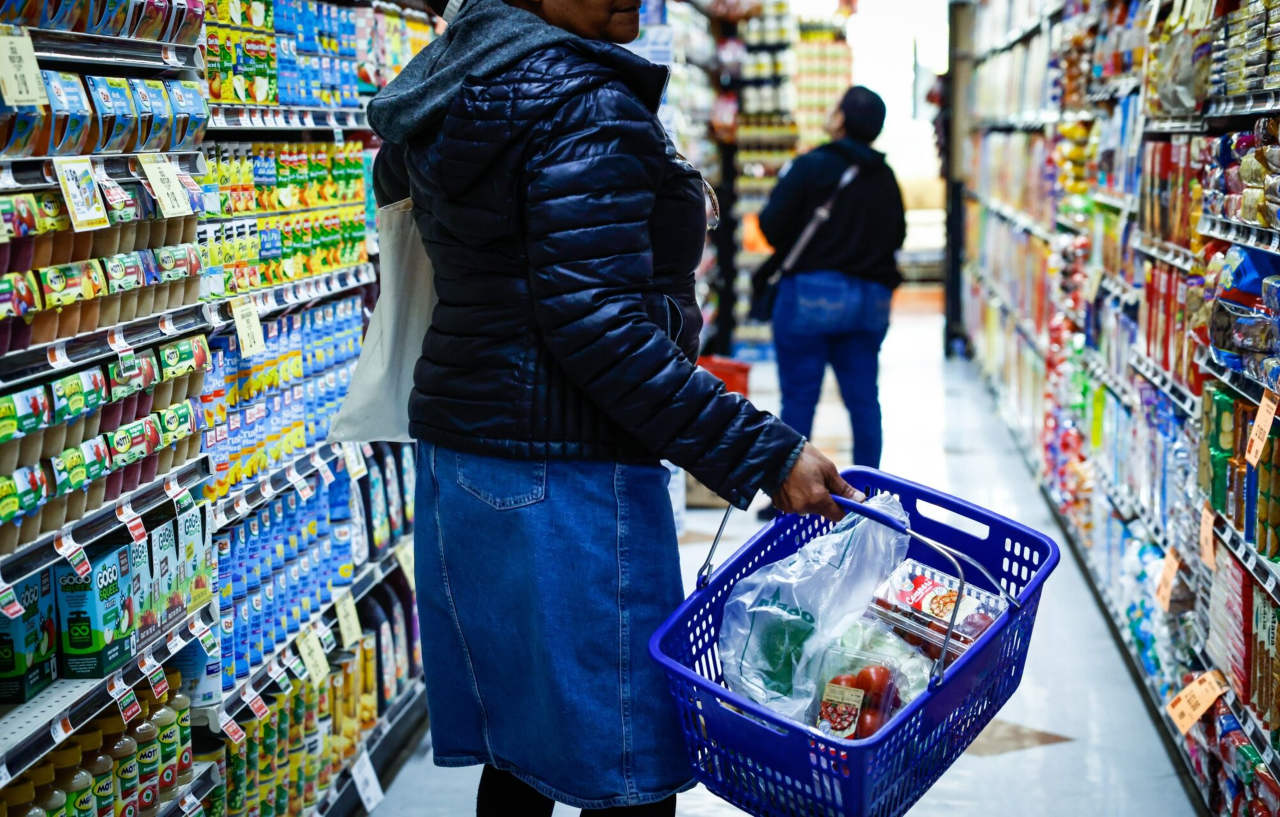
The federal government allocates $100 billion annually in food assistance to 42 million Americans through the Supplemental Nutrition Assistance Program (SNAP). These funds were set to expire on Saturday for the first time ever, due to a government shutdown, until a federal judge on Friday ordered the Trump administration to utilize emergency funds to continue the benefits.
The potential suspension or delay of payments has triggered a scramble among recipients, retailers, and food banks. In total, U.S. retailers rely on SNAP for approximately 9% of non-restaurant food spending.
“It’s definitely panic,” said Chelsea Delahanty, a stay-at-home mother of five whose family depends on about $950 per month in federal food assistance in addition to her husband's landscaping job. The payments have kept her family fed, she explained, adding that she resides in Greene County, Ohio.
Here’s what you need to know about the program:
What are the origins of SNAP?
The U.S. first introduced federal food aid in 1939 during the Great Depression to feed hungry Americans and to match surplus agricultural crops with those in need. The program, originally known as food stamps, has undergone several transformations over time and was later renamed the Supplemental Nutrition Assistance Program, or SNAP.
Who is eligible for SNAP?
Eligibility criteria vary by state. Typically, a family of four qualifies for benefits if their gross income is less than about $3,400 a month. Some eligibility requirements have changed recently due to the One Big Beautiful Bill Act, the expansive tax-and-spending bill signed into law by President Trump. Previously, able-bodied adults between the ages of 18 and 54 without dependents had to work or participate in job training to qualify for SNAP benefits. This requirement now extends to age 64 and to parents with children over 13 years old. Otherwise, they are limited to three months of benefits within a three-year period.
Approximately 12.3% of U.S. residents received SNAP benefits last year, primarily households with children, according to the Department of Agriculture. In 2023, around 28% of households that received SNAP benefits also had earned income, with this figure rising to 55% in homes with children.
More than a third of participants identify as white, while nearly 26% are Black and about 16% are Hispanic.
Where do SNAP beneficiaries live?
The states with the highest proportion of people receiving SNAP last year were Oregon, New Mexico, Oklahoma, and Louisiana, according to the USDA. In these states, along with Washington, D.C., more than 16% of the population received benefits. In states with the lowest SNAP participation—Utah, Wyoming, New Hampshire, and North Dakota—less than 6.2% of the population received benefits.
How much money do SNAP beneficiaries get?
Individuals receive an average of around $190 per month through the program on a prepaid card, according to the USDA. States distribute SNAP benefits on different schedules, which means regions will experience funding cuts at varying times.
Trump’s One Big Beautiful Bill has led to some benefit reductions. Previously, many immigrants were eligible for SNAP support, including refugees resettled by the U.S. government. Under the new budget bill, access is more limited and primarily reserved for green-card holders after five years of permanent residence.
What can SNAP pay for?
Most staple foods, such as meat, produce, grains, snacks, and nonalcoholic beverages, are considered eligible purchases. Households are not allowed to use the benefits to purchase alcohol, tobacco products, vitamins, medicines, supplements, or other nonfood items. Some states, including Arkansas, Nebraska, and Texas, have also restricted purchases of soda or other processed foods like candy.
Is federal funding bipartisan?
Funding for the program has historically received bipartisan support, with Democrats being its most ardent defenders. Trump’s recent tax-and-spending law included roughly $187 billion in cuts to SNAP over the next decade. In recent weeks, lawmakers from both parties have raised alarms about the lapse in funding and have proposed one-off bills to pay for SNAP even while the government shutdown continues, but such measures are unlikely to pass given opposition from Trump and party leaders.
Democrats argue that the Trump administration is choosing not to tap emergency funds that could keep SNAP funded. On Friday, a federal judge in Rhode Island directed the USDA to use contingency funds to make payments after dozens of blue-led states sued the administration last weekend. Congress has approved nearly $6 billion in emergency funds, which is less than the roughly $8 billion typically spent each month. It remains unclear when or if the funds will be released.
Will states step in if federal funding lapses?
Some states have plans to temporarily fund federal SNAP payments, including Louisiana and New Mexico. However, it is unclear whether the federal government will reimburse states for those payments, which often total millions each month, making some states hesitant to use their own funds. States such as New York and West Virginia are also allocating emergency funds to support food banks and other meal distribution efforts.
What does this mean for grocery stores and food companies?
Retailers and food manufacturers are preparing for a potential hit to sales and operations. Overall, U.S. retailers count on SNAP for about 9% of non-restaurant food spending. Walmart, the country’s largest grocer and retailer by annual revenue, earns the largest share of this spending, according to data from Numerator, a market research firm. A Walmart spokesperson declined to comment. Dollar chains and other discount retailers that cater to low-income shoppers also rely on this type of spending for revenue.
Consumers may prioritize necessary food purchases, which could lead to less spending on nonfood items and pricier food, such as prepared meals, in favor of less-expensive options like private-label brands, said Alexia Howard, senior food analyst at research firm Bernstein.
Retailers might reduce product orders, which could translate to lower food manufacturer sales, she said. Still, any mitigation efforts by states or emergency funding from the federal government could soften the impact, she added.
“If I had a little more clarity on what’s going on with the government shutdown, I’d be doing better,” said Tom Charley, co-owner of Charley Family Shop N’ Save, three independent grocery stores in western Pennsylvania. Charley estimates that about 10% of his annual revenue comes through SNAP spending. It is also part of how his stores plan to staff registers and the deli counter each month. As the funding cut hits his region, he plans to re-evaluate staffing needs, he said.
Awareness of the funding cut has already led to an uptick in theft, Charley said.
What are impacts on food banks?
Food banks report they are preparing for a surge in demand but warn that they won’t have enough resources to meet a sharp increase in need. “Inevitably, we will have to do more of what we are already being forced to do, which is turn people away,” said Claire Babineaux-Fontenot, CEO of Feeding America, a nonprofit network of 200 food banks.
Katy Anderson, the vice president of strategy, partnerships, and advocacy at RoadRunner Food Bank of New Mexico, said her organization is doing what it can to scale up supply and expand distribution hours and sites. But, Anderson said, “Food banks and food pantry partners across the state are not going to be able to fill the hole that a lack of SNAP benefits is going to create.”

Post a Comment for "What You Need to Know About SNAP as Emergency Funding is Ordered"
Post a Comment