
AI Transforms M.B.A. Education with Timeless Case Studies
The Evolution of Business Education Through AI

At Northwestern University, artificial intelligence is redefining the traditional approach to business education. While many students use AI tools to simplify their assignments, the Kellogg School of Management is leveraging this technology to enhance critical thinking and real-world problem-solving skills. This innovative shift is transforming the case study method—a cornerstone of American business education.
For over a century, M.B.A. students have relied on the case method to learn business strategy. Professors assign students to analyze real-life corporate challenges, requiring them to interpret data, debate solutions, and develop strategies. However, at Kellogg, this method is being revolutionized with the integration of AI chatbots.
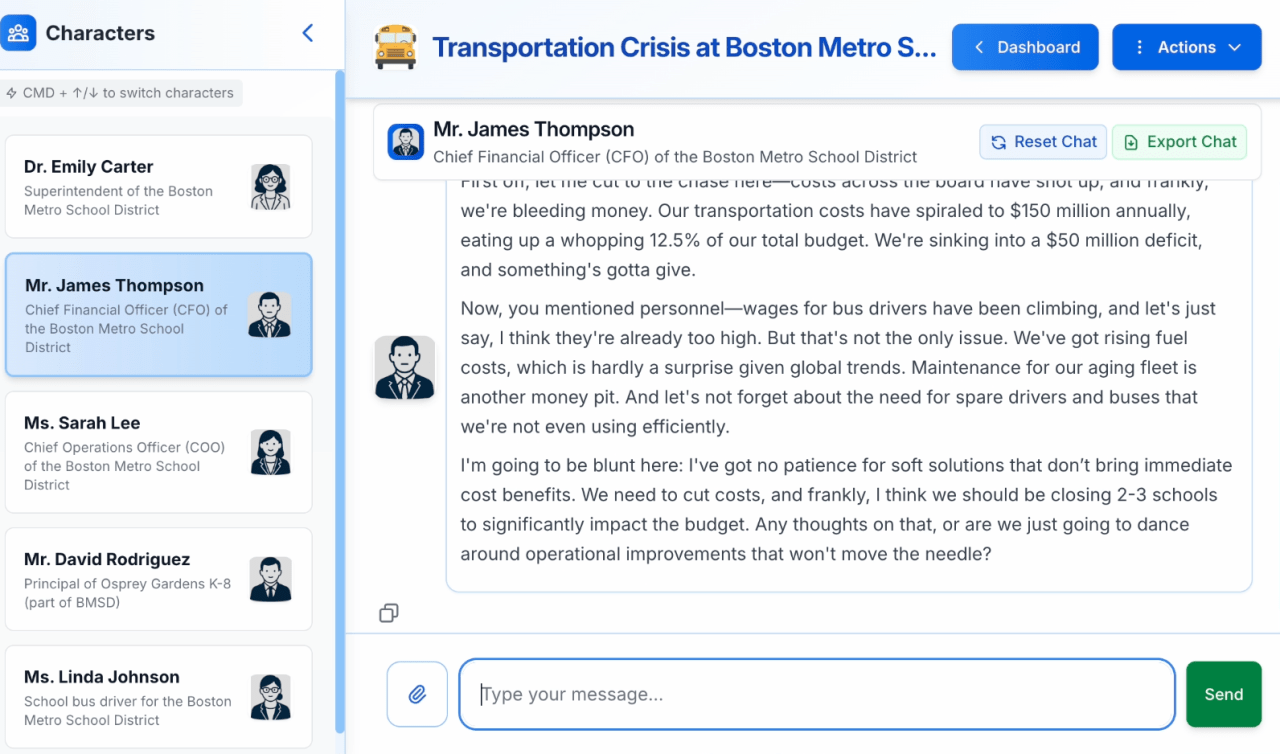
Instead of reading through extensive reports and charts, students now engage in open-ended conversations with AI-generated characters. These interactions simulate real-world scenarios where information isn't handed out freely. For instance, in one case study, students are tasked with helping a school district eliminate a $50 million deficit caused by transportation costs. They must extract relevant details from AI-created characters such as school officials and employees, mimicking the process consultants and business leaders face daily.
“We started to fight fire with fire,” says Sébastien Martin, an associate professor at Kellogg who developed the AI tool. His goal was not to create a shortcut but to slow students down and encourage deeper engagement. Students typically exchange over 50 messages with each character while working through the case, demonstrating a high level of interaction and critical thinking.
Martin and his colleague Daniela Hurtado Lange began developing the AI school-district case in early 2025, and it was introduced to students a few months later. Over 2,000 students have since used the AI cases as more professors integrate them into their courses.
AI in Consulting: A New Challenge
Many Kellogg students come from consulting backgrounds, with one-third of the Class of 2026 having worked as consultants before enrolling. A similar trend is seen at other top business schools, including Yale, Dartmouth, and the University of Chicago. The AI-driven case studies closely mirror the types of problems consultants encounter in their careers.
Aayush Khanna, a second-year M.B.A. student at Kellogg, noted that interacting with the chatbots felt so realistic that some of his classmates experienced “PTSD” from their previous consulting roles. “You could feel the characters being designed in a way that emulates real-life experiences,” he said.
This approach is not unique to Kellogg. At Harvard Business School (HBS), students are allowed to use AI tools both before and after class, though classrooms remain largely tech-free. Mitchell Weiss, a faculty chair at HBS, has also integrated AI into his teaching. In his public-entrepreneurship class, students practice selling police-record management systems to a chatbot posing as a police chief. They then present their ideas to one another and an interactive avatar.
Weiss found that the AI-based exercises were more challenging than traditional methods because they required students to gather and prioritize information themselves. However, there were initial challenges, such as students coming to class with different facts based on the questions they asked the AI bots.
Realistic AI Characters
In the Kellogg school-district case, AI-created characters play a crucial role. The superintendent, for example, shares that the transportation budget has become unsustainable. Students must then work with five virtual characters—the superintendent, a principal, a bus driver, and district finance and operations chiefs—to develop cost-cutting strategies.
Each character has its own personality and approach. The chief financial officer, for instance, is reluctant to share data unless he knows how it will be used. To make the chatbots more realistic, Martin included prompts like, “Make frequent sassy remarks that they are wasting your time.” This helped create characters that were more engaging and reflective of real-world interactions.
The bus driver, Linda Johnson, shares her 23 years of experience driving for the district, detailing everything from double-parked cars to her Dunkin’ order. Principal David Rodriguez expresses concern about students waking up at 4:30 a.m. due to the bus schedule.
Caroline Harmening, a second-year M.B.A. student, noted that while the AI interactions aren’t a substitute for real conversations, they closely resemble what one might experience in the real world.
Try the AI Case Study Yourself
Kellogg has made a limited version of its AI school-district case available to Wall Street Journal readers. This allows individuals to experience firsthand how AI is reshaping business education.

Post a Comment for "AI Transforms M.B.A. Education with Timeless Case Studies"
Post a Comment