
Dead to Rights: A Survival Story in the Shadow of the Nanjing Massacre
A Powerful Story of Survival and Resistance
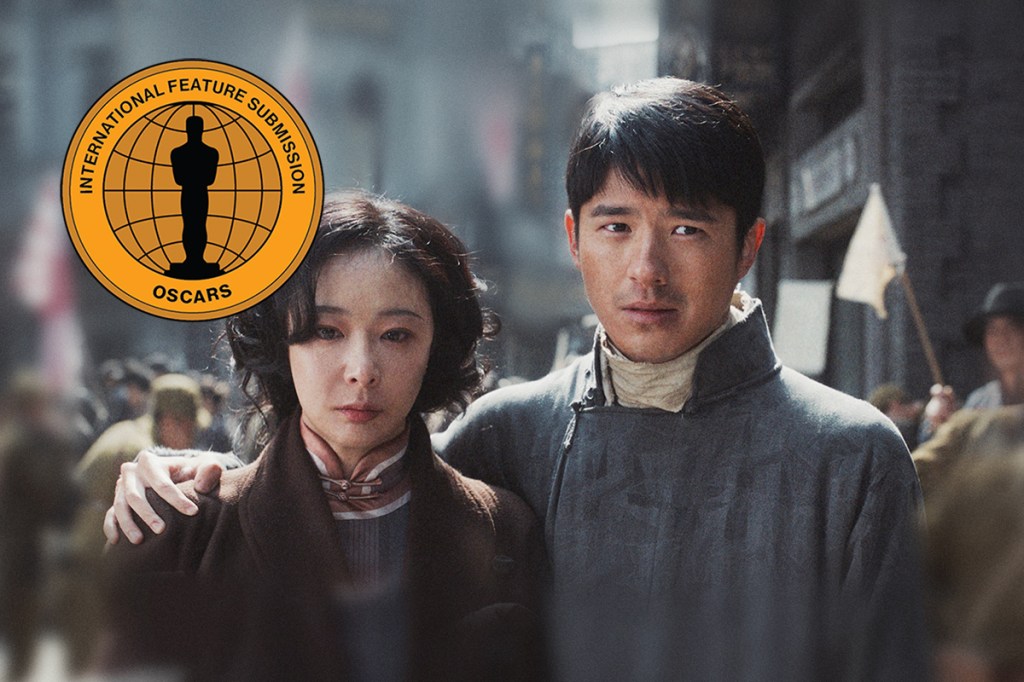
"Dead to Rights" is a powerful drama that highlights the resilience of human decency during one of history's darkest moments—the 1937 Nanjing Massacre. This film, China's international Oscar entry, follows the story of a postman who disguises himself as a photo developer to survive the Japanese occupation while secretly protecting a group of terrified citizens. Directed by Shen Ao, this emotionally charged film is a follow-up to his 2023 hit "No More Bets" and expertly balances intense drama with vivid depictions of the fall of Nanjing.
The film, which has become one of China's biggest domestic hits this year, serves as a poignant reminder of a tragic chapter in history that still resonates today. It also explores the role of wartime photography as a tool for justice long after the war has ended.
Historical Context and Inspiration
The Nanjing Massacre has been a source of tension between China and Japan for decades. Over the past four decades, several Chinese films have tackled this sensitive topic, including Wu Zinui's "Nanjing 1937," Lu Chuan's "City of Life and Death," and Zhang Yimou's "The Flowers of War." "Dead to Rights" is an authorized adaptation of Luo Guanqun's "Massacre in Nanjing" (1987) and draws inspiration from the real-life story of Luo Jin, a teenage apprentice at Huadong Photo Studio who secretly developed and concealed photographs of atrocities committed by the Japanese Imperial Army. These images later became critical evidence at the 1946 Nanjing War Crimes Tribunal.
The Characters and Their Journeys
The central character, A-Chang (played by Liu Haoran), is a postal worker whose kind nature prevents him from fleeing during the city's surrender. He finds refuge in a photo studio where he was saved from execution by claiming to be the shop's apprentice. A-Chang is then assigned to work for Hideo Ito (Daichi Harashima), a Japanese army photographer tasked with documenting "Japanese and Chinese friendship." However, Ito also takes pictures of atrocities that are strictly forbidden for distribution.
With the help of Wang Guanghai (Wang Chuan-jun), a local interpreter working under the Japanese, A-Chang is allowed to live, provided he develops Ito's negatives by the next day. Unbeknownst to them, the studio owner, Jin Chengzong (Wang Xiao), is hiding in a secret room with his wife, Zhao Yifang (Wang Zhener), their young daughter Jin Wanyi (Yang Enyou), and an infant son.
Moral Complexity and Intense Drama
As A-Chang learns the art of photo development from Jin, the film shifts from a survival drama to a thriller. The two decide they must copy and smuggle the images to a place where they can be used as evidence. The arrival of Lin Yuxiu (Gao Ye), the mistress of Wang Guanghai, adds another layer of complexity. An opera singer and aspiring movie star, Lin has narrowly avoided being raped by Japanese soldiers and has also smuggled her rescuer, policeman Song (Zhou You), into the hiding place.
The film delves into the experiences of a diverse group of people living in constant fear, knowing only a few may escape. The dynamics among the characters shift under extreme pressure, with notable transformations in Wang Guanghai and Lin Yuxiu.
Strong Performances and Direction
The performances in "Dead to Rights" are exceptional, with Daichi Harashima delivering a standout performance as Hideo Ito. His portrayal of a non-combatant soldier documenting crimes against humanity is delicately understated, leaving the question of whether he truly embraces his work or simply survives within a brutal system open to interpretation.
Challenges and Strengths
While the film excels in its storytelling and direction, the final stretch contains some clunky melodrama. The high-spirited messaging about "our beautiful motherland" feels tonally inconsistent with the tense realism that defines much of the film. However, this is a minor issue in a film that has already made a strong impression on audiences.
Visual and Emotional Impact
The film masterfully weaves large-scale action sequences into an intimate human drama set in cramped indoor spaces. After the stunning opening depicting the fall of Nanjing, the film uses short, high-impact outdoor sequences. These scenes include the mass slaughter of civilians on the banks of the Yangtze River and an almost unbearably tense passage involving a crying baby on a crowded street.
The most challenging and essential scenes involve Japanese troops storming the international safety zone, where Minnie Vautrin (Apryl Mei Reagan) works alongside staff to save countless lives. The use of suggestion, half-glimpsed images, and layered sound design creates a sustained atmosphere of dread, leaving no doubt that this moment in time is truly hell on Earth.

Post a Comment for "Dead to Rights: A Survival Story in the Shadow of the Nanjing Massacre"
Post a Comment