
Editorial: Bridging State History's Tensions and Unity
The Complex Task of Honoring Historical Figures
The placement of monuments and statues has long been a contentious issue, especially when it comes to figures with complex legacies. In recent years, the debate over removing Confederate statues has highlighted the challenges of grappling with historical narratives that may conflict with modern values. However, even the creation of new monuments can lead to difficult decisions involving logistics, politics, and historical interpretation.
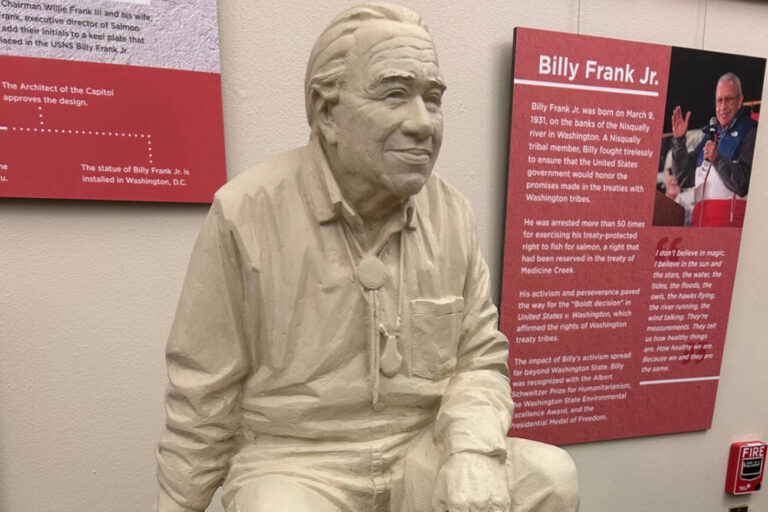
State officials are currently faced with the challenge of placing a new sculpture honoring Billy Frank Jr., a prominent figure in the Nisqually Tribe and a key leader in the fight for tribal fishing rights. This decision is further complicated by the need to consider two existing monuments: those of Marcus Whitman and Mother Joseph, both pioneering missionaries who played significant roles in the early history of Washington state.
The Legacy of Billy Frank Jr.
Billy Frank Jr. was a central figure in the struggle for Native American fishing rights. As chairman of the Northwest Indian Fisheries Commission for three decades, he worked tirelessly to ensure that tribal communities could exercise their treaty-guaranteed rights to fish in their traditional areas. His efforts led to the 1974 Boldt decision, which affirmed tribal co-management of fisheries and reshaped the relationship between Native American tribes and the state government.
Lt. Gov. Denny Heck, who first called for Frank’s recognition in state legislation in 2021, has spoken about how Frank transformed from a “getting-arrested-type guy” into a consensus builder. He emphasized Frank’s role in leading demonstrations and fish-ins that ultimately led to legal victories for tribal rights.
The Controversy Surrounding Marcus Whitman
Marcus Whitman, the subject of one of the existing statues, was a physician and missionary who established a mission in 1836 near present-day Walla Walla. While his contributions to the development of the region are acknowledged, his legacy is also marked by the complex and often fraught relationships with local Indigenous tribes. The Cayuse tribe, whose land Whitman’s mission occupied, eventually turned against him due to mutual distrust and cultural differences, leading to the tragic deaths of Whitman and his wife in 1847.
This complicated history raises questions about how to honor Whitman while also recognizing the impact of his actions on Indigenous communities. The current debate centers on whether to move the statue or find a way to place Frank’s new sculpture alongside it without diminishing the significance of either figure.
Logistical and Political Challenges
Relocating the Marcus Whitman sculpture presents both logistical and political hurdles. The statue weighs over four tons, making it impractical to move to certain locations within the Capitol, such as the third floor, due to structural limitations. Moving it outside the Capitol’s south portico would require ongoing maintenance and could expose it to vandalism.
Willie Frank III, Billy Frank Jr.’s son, has expressed strong concerns about the potential proximity of his father’s sculpture to Whitman’s. His suggestion to move the Whitman statue to the Wa He Lut Indian School on the Nisqually Reservation has drawn objections from some lawmakers who believe both statues should remain in prominent Capitol locations.
A Path Forward
Efforts to find a solution have included proposals such as moving the Whitman statue to the entrance of the Senate cafeteria, where it would be near the governor and lieutenant governor’s offices. However, this change would require a $35,000 structural analysis, which may be delayed until next year’s budget negotiations.
Despite these challenges, there is a shared desire among many to approach the issue with respect and open dialogue. Lt. Gov. Heck has emphasized the importance of dealing with one another respectfully to reach a decision that satisfies all parties.
The Significance of Placement
While the exact placement of the statues is still under discussion, the idea of situating Frank’s sculpture next to Mother Joseph’s offers an opportunity to spark meaningful conversations about the interactions between Indigenous nations and settlers. Mother Joseph, a missionary who oversaw the construction of numerous institutions in the Pacific Northwest, represents a different but equally important chapter in the region’s history.
A joint display of Frank and Mother Joseph’s sculptures could serve as a powerful reminder of both the conflicts and the common ground that have shaped Washington state. It would also reflect the broader goal of honoring all individuals who contributed to the state’s development, regardless of their perspectives.
Conclusion
As the final decision on the placement of the three sculptures approaches, the focus remains on finding a balance between honoring history, respecting the wishes of families and tribes, and ensuring that each figure’s legacy is appropriately recognized. The process underscores the importance of thoughtful dialogue and the value of preserving diverse narratives in public spaces. Ultimately, the placement of these sculptures will not only reflect the past but also shape the future of how history is remembered and interpreted.

Post a Comment for "Editorial: Bridging State History's Tensions and Unity"
Post a Comment