
House passes historic shutdown-ending bill, sends to Trump
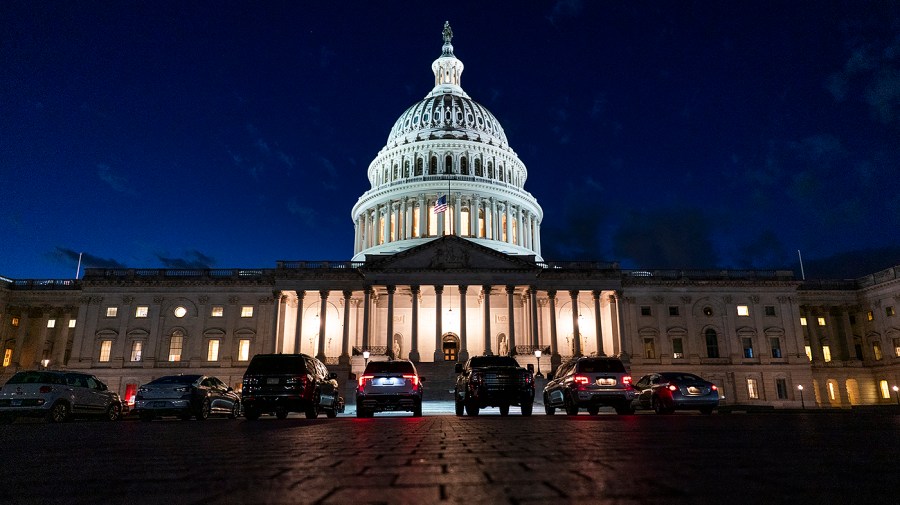
The U.S. House of Representatives passed a significant spending package on Wednesday, marking the end of a historic government shutdown that lasted for seven weeks and caused widespread economic disruption. This shutdown, which became the longest in American history, also led to internal conflicts within the Democratic Party over its strategy and direction in confronting President Trump.
The vote in the lower chamber was 222-209, with nearly all members voting along party lines. Only two Republicans opposed the measure, citing concerns about deficit spending, while six Democrats crossed party lines to support it, emphasizing the need to restore federal funding.
A major challenge arose when some House Republicans staged an 11th-hour revolt against a provision added by the Senate. This provision allowed GOP senators to sue the federal government for hundreds of thousands of dollars if their phone records were seized during an investigation into the January 6, 2021, attack on the U.S. Capitol. Speaker Mike Johnson (R-La.) managed to quell this backlash by promising to fast-track a separate bill to overturn the Senate language, with a vote expected next week.
The spending package is now heading to the White House, where President Trump has indicated his readiness to sign it into law. The vote marked the final obstacle in ending the extended budget impasse, which left federal workers without paychecks for weeks, cut off food aid to families across the country, and disrupted air travel.
This standoff also involved a new debate over the Affordable Care Act (ACA) and the future of health care tax credits scheduled to expire at the end of the year. Democrats had insisted on extending these subsidies as a condition for ending the shutdown, while Republicans demanded an end to the shutdown before any health care discussions could begin. The deadlock lasted for 43 days, breaking the previous record for the longest shutdown set under Trump’s first term.
A bipartisan agreement struck by a group of senators last Sunday eventually ended the stalemate. However, the compromise did not address the expiring ObamaCare subsidies, leading to criticism from liberal Democrats. This issue sparked a fierce backlash against the eight Democratic senators who supported the deal, as well as Senate Minority Leader Charles Schumer (D-N.Y.), who faced scrutiny from the party's base.
Schumer, who had previously supported a similar Republican spending bill in March, opposed the current bill to reopen the government, aligning with most Democrats in demanding an extension of the health care tax credits. Despite this, he faced criticism from progressive Democrats, who argued that his inability to maintain unity among party members questioned his leadership.
Rep. Glenn Ivey (D-Md.) expressed concern about Schumer’s leadership, stating, “I’m afraid that it may be time for the Senate Democrats to get a new leader.” Similarly, Rep. Pramila Jayapal (D-Wash.) called for Schumer’s removal.
House Minority Leader Hakeem Jeffries (D-N.Y.) defended Schumer, acknowledging his efforts to protect health benefits. However, the internal tensions highlight the frustrations of Democrats as they seek an effective strategy to counter Trump’s aggressive agenda, which includes expanding presidential powers, reducing the federal workforce, enriching his family, and prosecuting political opponents.
The fate of the ObamaCare subsidies has become a symbolic battle in the Democrats’ broader struggle against Trump and his allies. The recent off-year elections, which saw significant Democratic victories, have made the party’s concessions on health care more difficult to accept.
Rep. Greg Casar (D-Texas), head of the Progressive Caucus, criticized the deal, stating, “A deal that doesn’t reduce health care costs is a betrayal of millions of Americans counting on Democrats to fight for them.”
Trump used the shutdown to advance parts of his agenda, including mass firings of federal workers. When funds for the nation’s largest food aid program ran dry, he refused to use an emergency fund to provide assistance. Republicans defended these actions, arguing that the administration was forced to make tough decisions due to limited resources.
Democrats accused the administration of deliberately causing hardship, particularly for low-income and working-class Americans, as leverage against them. Rep. Rosa DeLauro (D-Conn.) condemned the situation, saying, “Imagine that the president of the United States goes to the Supreme Court to deprive kids of food.”
The spending package now headed to Trump’s desk is a hybrid bill, providing funding for large portions of the government through the 2026 fiscal year. However, remaining agencies will only receive short-term funding until January 30.
GOP leaders celebrated the passage of the bill, highlighting its benefits for federal workers and low-income families affected by the shutdown. They blamed Democrats for delaying the reopening of the government.
In a concession to Democrats, the package reverses the federal layoffs implemented by the Trump administration during the shutdown, reinstating thousands of fired workers. However, the absence of health care subsidies remains a point of contention. Even Jeffries acknowledged his disappointment with the deal.
The fight over health care is far from over. With ACA subsidies set to expire, moderate Republicans are urging Johnson to find a legislative fix to prevent premium hikes. This presents a challenge for the Speaker, given the pressure from conservatives to let the tax credits expire.
Looking ahead, the next funding deadline is January 30, and many Democrats are vowing to demand an extension of the ACA subsidies if the issue isn’t resolved by then. Another shutdown, they say, is not out of the question.

Post a Comment for "House passes historic shutdown-ending bill, sends to Trump"
Post a Comment