
How Communities Can Cope With Increasing Black Bear Encounters
UCLA's iconic Bruin statue, a symbol of the university's spirit, bears a striking resemblance to its living counterparts found in the San Gabriel Mountains, just 30 miles away. When visitors walk along Bruin Walk, they instinctively reach for their phones to capture a photo of the imposing bronze bear, with its teeth bared and muscles flexed. However, this might not be the only bear in the area in the near future—though it's hoped that the Bruin will remain the only one associated with campus tours and student selfies.
Subscribing to our newsletter is a great way to stay updated on the latest science and technology news.
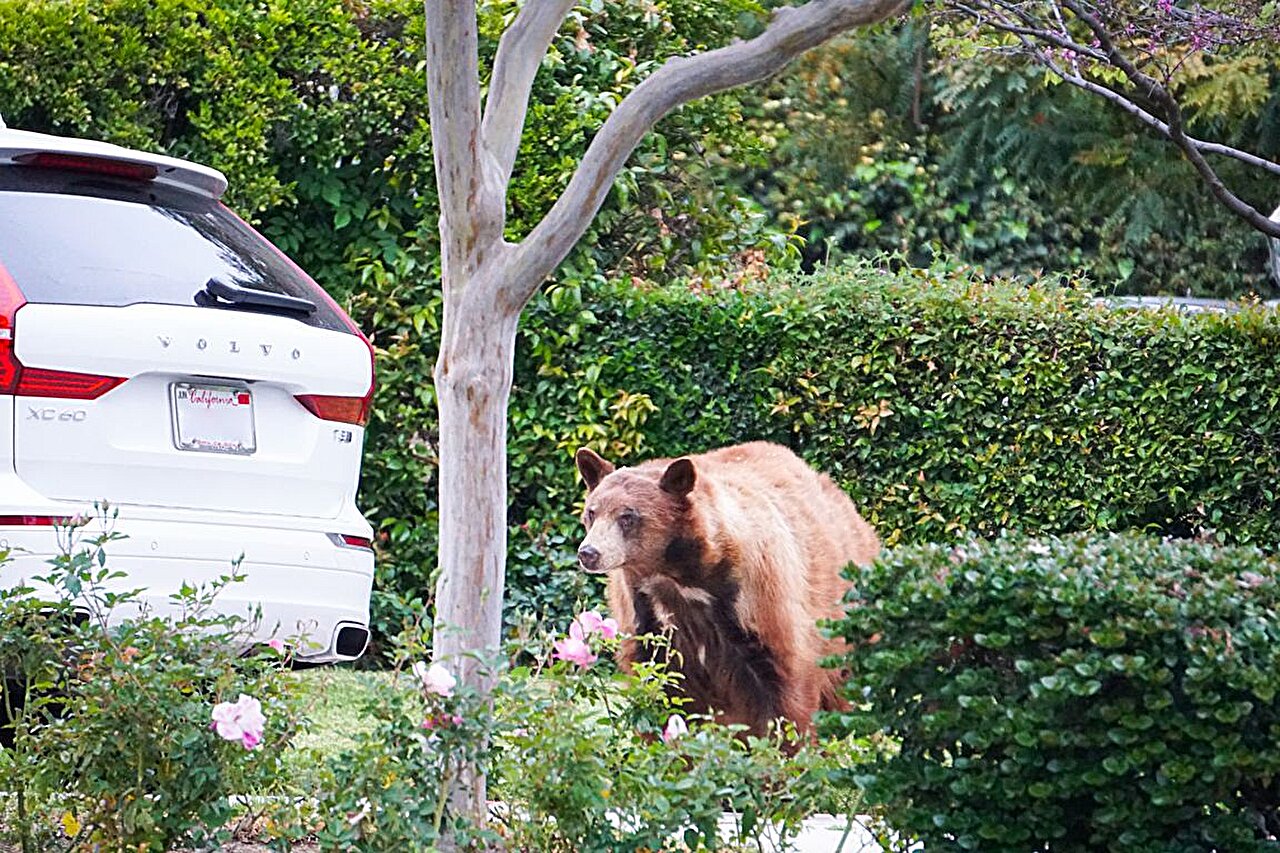
As black bear-human encounters become more frequent across Southern California, particularly during drought conditions, UCLA researcher Wilson Sherman is exploring the implications of this shift for local communities and how they can adapt.
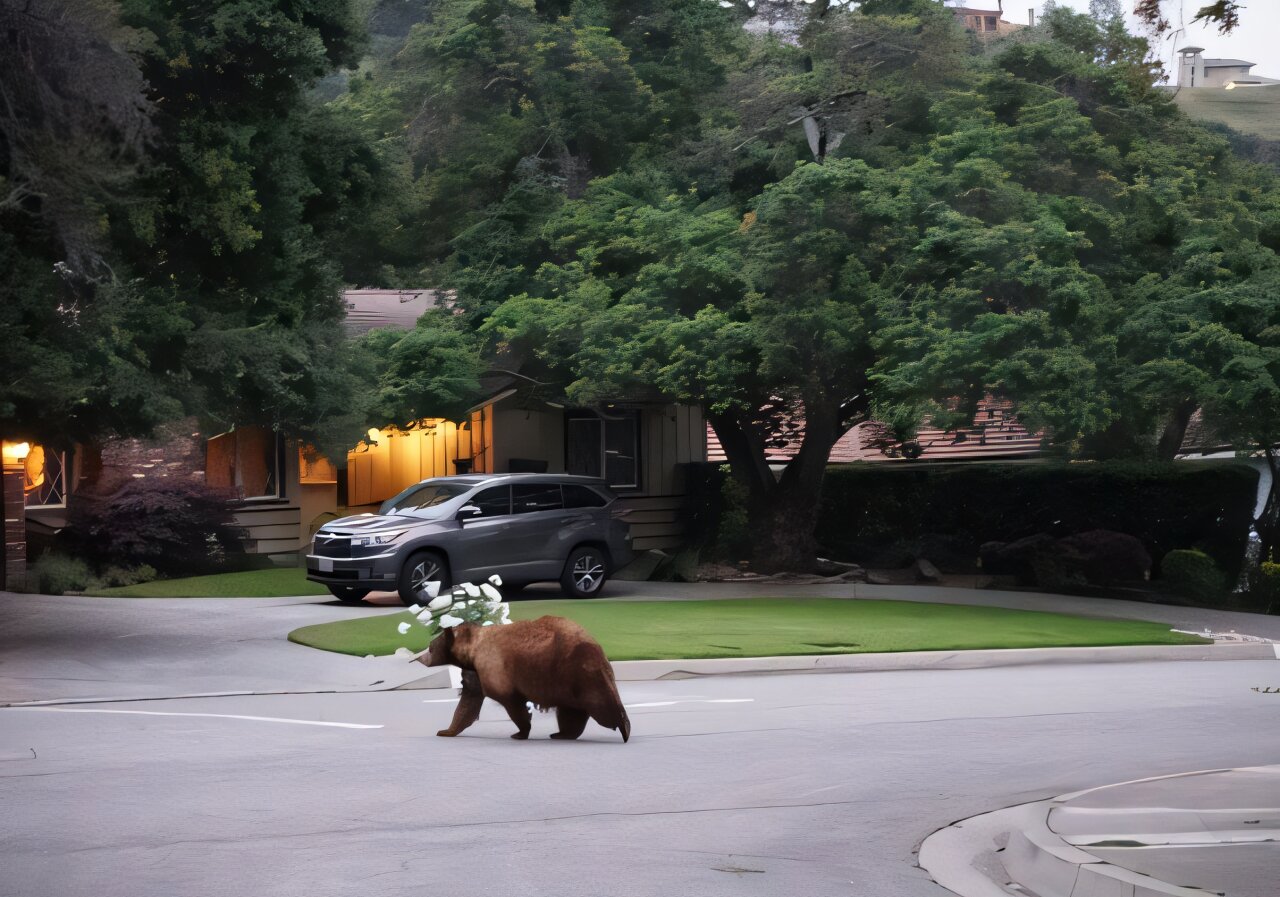
"Given recent events showing their ability to travel long distances and quickly adjust to new environments in Los Angeles, it's not far-fetched to imagine black bears appearing in neighborhoods near campus within the next decade," said Sherman, a doctoral student at UCLA's Institute of the Environment and Sustainability (IOES). "This is our new reality in Southern California."
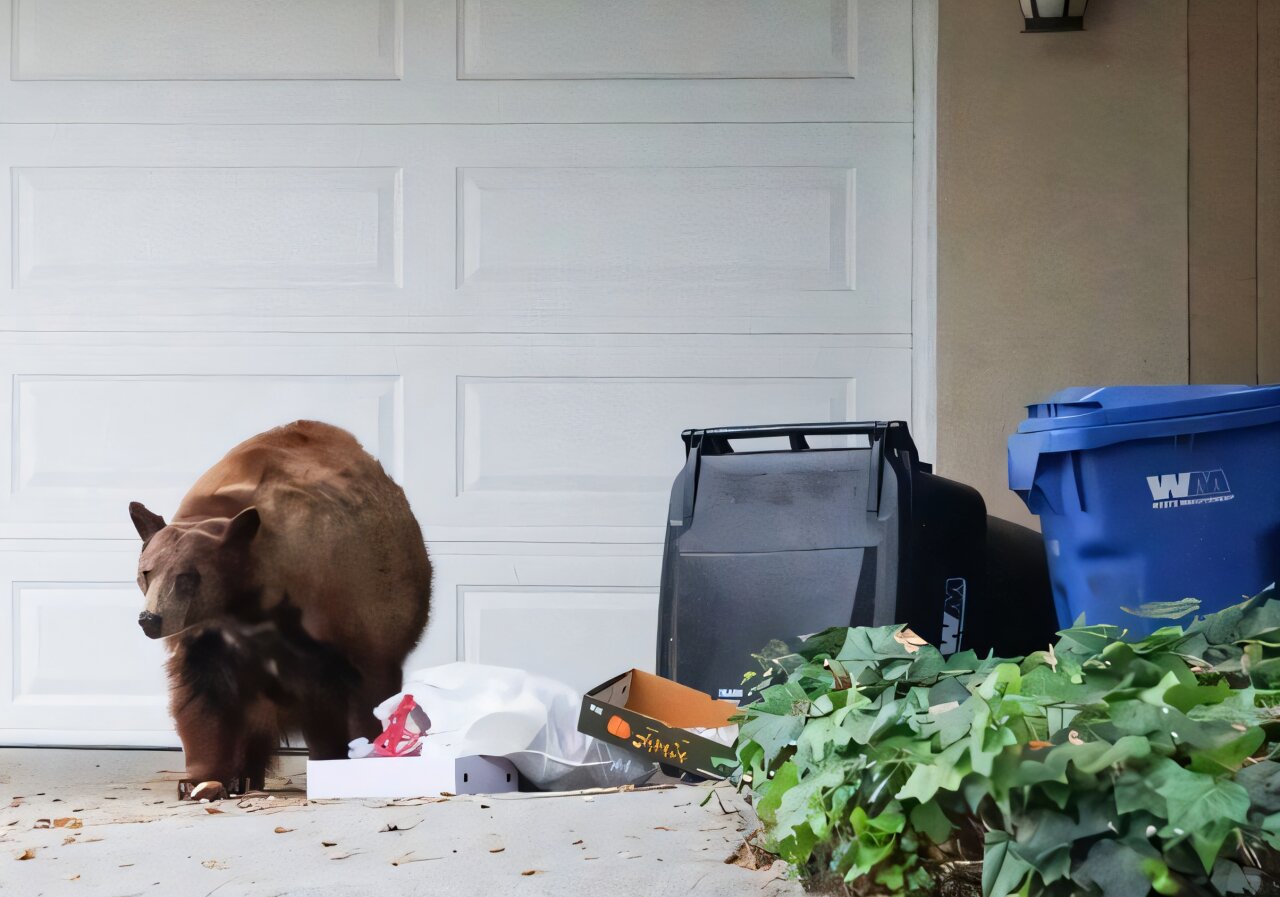
Sherman's research focuses on the increasing overlap between black bears and humans, a growing concern in the foothill suburbs of Southern California. As the season progresses into hyperphagia—a period when bears consume large amounts of food to prepare for winter—trash cans and compost piles in neighborhoods become attractive food sources.
"Why dig through rocks in the forest for a few worms when you can find a whole pizza in someone’s garbage bin?" Sherman explained. "Bears are intelligent and quickly learn that neighborhoods offer calorie-dense food."
Black Bears in Southern California
While mountain lions are often seen as the apex predators in the region, black bears have steadily moved into suburban and urban areas over the last century. In fact, it's more accurate to say that human expansion has encroached upon bear habitats. The history of black bears in Southern California isn't straightforward. Fossil records show they lived in the region thousands of years ago, but by the late 1700s, grizzly bears dominated the landscape under Spanish rule, with the Tongva people as the original inhabitants.
Grizzlies eventually disappeared from Southern California due to settlers and hunting, with the last one killed in 1916 by a farmer protecting his family and crops. It wasn’t until the 1930s that black bears began to return to the region. Their reintroduction was inspired by Yosemite's popularity, where trash-fed bears were a spectacle for park visitors. In 1933, about 30 black bears were brought to Southern California for recreational purposes. Eventually, these animals were released into the mountain ranges, leading to a thriving population that now contributes to California’s estimated 60,000 black bears.
However, as human-bear conflicts increase, wildlife management agencies face significant challenges. Sherman noted that residents in Southern California, especially in Los Angeles, tend to engage with wildlife in observational and protective ways, which differs from other parts of the country. "Historically, wildlife management agencies were structured around supporting hunters, and although they now focus on conservation and conflict mitigation, remnants of those roots still exist," he said. "This mismatch has left agencies underfunded and understaffed."
Rethinking Coexistence
Parallel to the rise in bear encounters is the evolution of the internet, particularly social media platforms, where wildlife content remains popular. Sherman’s research explores how bears appear online, with findings published in the journal Science of The Total Environment. Platforms like Nextdoor are filled with grainy doorbell camera clips of bears roaming through neighborhoods, often at night, with their eyes lit up by night vision. Other posts feature videos of bears cooling off in pools while residents film from inside their homes. These posts spark lively discussions, ranging from heart emojis to debates about managing bear interactions.
"In the neighborhoods I studied, there are 11 times more reports of bear and coyote sightings on Nextdoor than on iNaturalist, the community science platform used by ecologists interested in urban wildlife presence," Sherman said. "This tells us something about where certain communities are actually reporting and sharing information."
By analyzing these conversations, Sherman aims to understand how online discourse influences engagement with wildlife and perspectives on wildlife management to improve coexistence. He also emphasizes that fascination with bears can be as dangerous as fear. "People who are overly fond of bears can contribute to the problem," he said. "Animals that become accustomed to human interaction often end up in conflict, which can lead to fatal outcomes."
A Rapidly Expanding Range
Prevention strategies such as using bear-proof trash cans, securing doors and windows, and employing loud noises to deter bears can help keep them and people apart. However, these efforts are only part of the solution. Even as communities reduce attractants and set firmer boundaries, bears continue to move into new areas, sometimes far beyond their historical ranges.
For example, the construction of the Wallis Annenberg Wildlife Crossing, soon to be the largest of its kind in the world, will enhance connectivity between wild spaces, increasing the likelihood of more bears entering the Santa Monica Mountains. This trend is already evident, as seen with BB14, a Southern California bear celebrity who relocated from Claremont to the Los Angeles forest before moving to Topanga Canyon, where she had three cubs. She has even been spotted on the Pepperdine University campus.
"That's a set of communities that, at this point, are totally unprepared for that," said Sherman. "Connectivity is only the first step. We also need to equip communities, waste management companies, local governments, and state wildlife agencies with the resources and information they need to foster coexistence."
For Sherman, who is a National Science Foundation research fellow, this work reflects his career aspirations. "What's cool about working in urban ecology is the opportunity to reconceptualize landscapes one might not consider traditional wildlife habitat, like cities and suburbs," he said. He emphasized that while wildlife requires continuous habitat, cities already function as part of that landscape. Coexistence depends on making urban spaces more compatible with wildlife and ensuring that communities along the urban-wildlife interface have the support, information, and tools needed to set safe, effective boundaries.
Sherman notes that this interdisciplinary approach to research is exactly what UCLA is uniquely positioned to support. "I wouldn't be equipped to study interactions between humans and wildlife in this region using training from a traditional Ph.D. program focused on a single discipline, like ecology. The interdisciplinary training I am receiving in IOES allows me to approach the subject using tools from the social and natural sciences."
As black bears venture farther into Southern California, Sherman hopes local communities—including the UCLA Bruins—will be ready. Coexistence, he believes, begins with understanding the animals that now share our space.

Post a Comment for "How Communities Can Cope With Increasing Black Bear Encounters"
Post a Comment