
LA County Seeks State Tax Help After River Bike Path Surpasses $1B
A Decade-Long Struggle for the LA River Bike Path
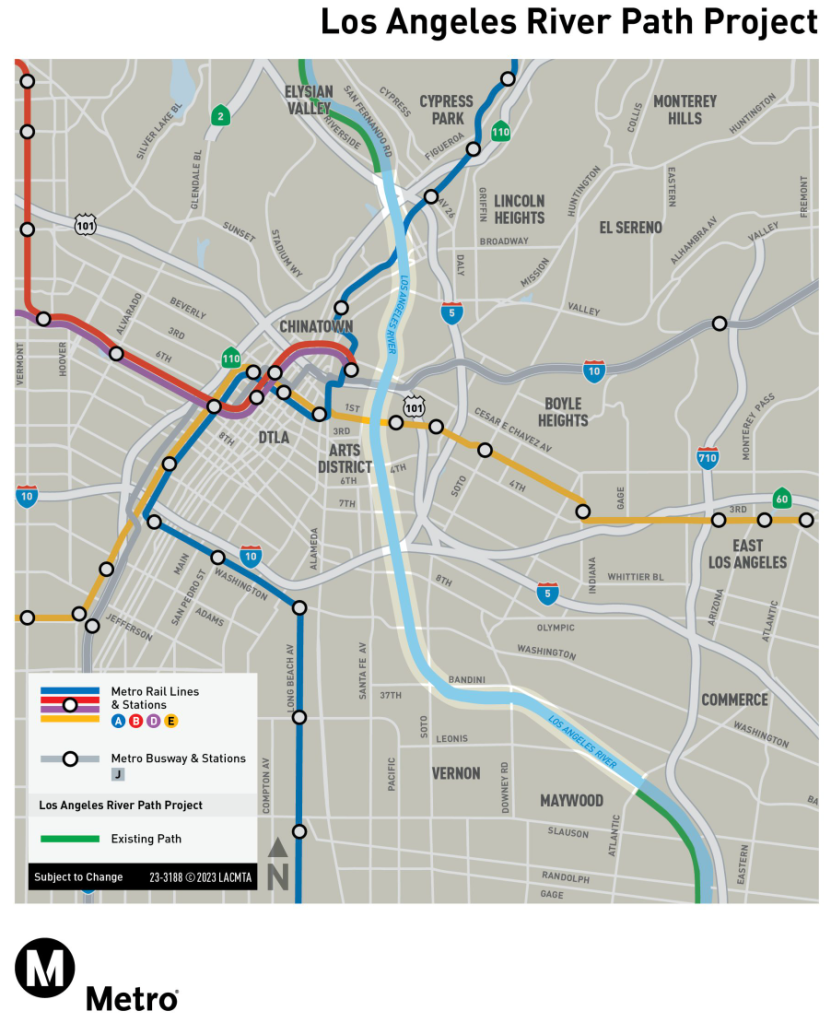
Nine years ago, voters in Los Angeles County approved Measure M, a sales tax increase aimed at funding various infrastructure projects. Among these were improvements to public transportation, street repairs, and traffic reduction efforts. One of the most anticipated projects was an eight-mile bike path along the LA River, initially estimated at $365 million.
However, nearly a decade later, the bike path remains unbuilt, with costs soaring to over $1 billion and no clear plan for its completion. This has raised concerns among local leaders and advocates who see the project as a vital step toward improving mobility and reducing traffic congestion in the city.
Measure M: A Vision for Better Transit
Los Angeles is the second-largest city in the United States but ranks 18th in public transit accessibility, contributing to the city’s notorious traffic issues. Measure M received overwhelming support from voters, with over 70% approval. The initiative was not just about building a bike path; it also included investments in bus and train infrastructure.
Michael Schneider, founder and CEO of Streets for All, explained that Measure M was seen as a way to reduce reliance on cars. “Angelinos are really tired of having to drive for every trip and having no good public transportation or active transportation options,” he said.
The vision for the bike path dates back even further than Measure M. Councilmember Bob Blumenfield, D-West San Fernando Valley, has been working on this issue for over 30 years. He recalled how the idea of a 51-mile linear park along the river was first proposed when he worked with the Santa Monica Mountains Conservancy.
The Cost Escalation and Funding Challenges
Despite initial expectations for the bike path to open in 2025, construction has yet to begin. The environmental review process is still in its early stages, and the price tag has more than doubled. Now at $1 billion, the project requires state funding to bridge the gap.
LA County Metro officials have identified several potential grants from the California Transportation Commission (CTC), including the Local Partnership Program, the Solutions to Congested Corridors Program, and the Trade Corridor Enhancement Program. However, securing these funds has proven difficult.
Blumenfield noted that the cost of the project has increased significantly over time. “If we had the money that it would have taken when we first started talking about this nine years ago, it would have been a heck of a lot cheaper,” he said. “But of course, costs go up.”
Schneider echoed this sentiment, pointing out that the current plan is too expensive. “They dramatically over-engineered it,” he said. Instead of a single-side bike path with existing overcrossings, the plan insists on a dual-side path, which adds to the cost.
Political Support and Metro's Role
While Blumenfield has made the bike path a priority, other county leaders have not shown the same level of commitment. “I don't know that everybody shares that same vision,” he said. “There's been no leader on the Metro board that's made this project a priority.”
Metro recently released an updated timeline, stating that the environmental impact inspection should be completed by next year. They also mentioned $433 million in Measure M funding available for construction, which is far below the $1 billion needed.
Blumenfield has secured $60 million for the project, but bids have come in closer to $90 million. “We're now rebidding it,” he said. He expects new bids in January.
What Comes Next?
Metro does not expect to finalize the environmental impact report until 2026 at the earliest, possibly as late as 2027. Once completed, the bike path will connect a 32-mile corridor from the San Fernando Valley to Long Beach.
Originally, the project was part of the “Twenty-Eight by '28 Initiative,” aiming to complete 28 transportation projects before the 2028 Olympics. However, Schneider stated that this goal is unrealistic under the current plan.
Metro hopes to complete at least a portion of the project within the next five years. Blumenfield mentioned that some parts of the path have already been built in his district and expressed hope for more progress before the Summer Games.

Post a Comment for "LA County Seeks State Tax Help After River Bike Path Surpasses $1B"
Post a Comment