
Lost Civil War Gold: Tales of Missing War Treasures II
The Mystery of Lost Civil War Gold
In times of war, even those who are losing often make one final attempt to outsmart their enemies. This is especially true when it comes to securing and hiding wealth. Throughout the 19th and 20th centuries, there have been numerous tales of lost treasures from the American Civil War and World War II. Today, we explore three famous fortunes that remain hidden, focusing on the legend of the Lost Civil War Gold.
A Mysterious Discovery in Pennsylvania
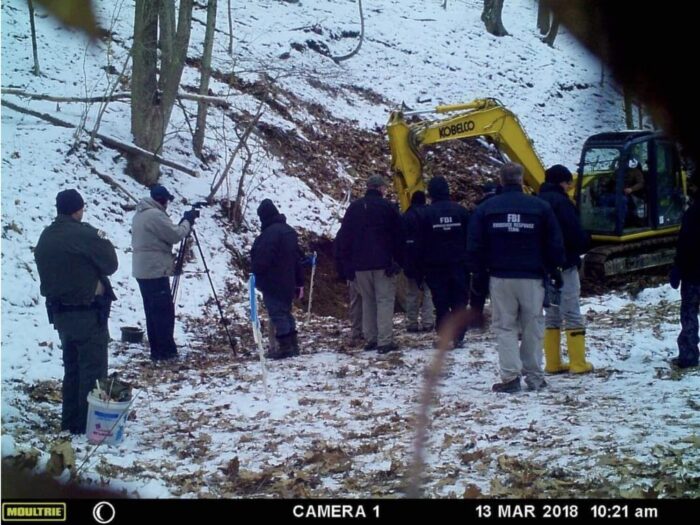
Nearly eight years ago, in March 2018, residents of Dent’s Run, Pennsylvania, were startled by metallic banging, loud voices, and the sound of jackhammers. A full-scale excavation was underway, with men and women in FBI jackets overseeing the operation. What were they searching for?
The dig caused a nationwide scandal, with local treasure hunters accusing the FBI of stealing and covering up one of the most significant finds in American history: lost Civil War gold. But what exactly was being sought?
The Origins of the Treasure
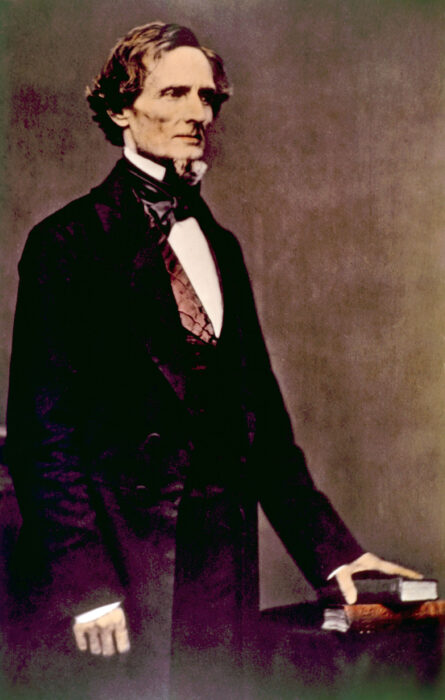
During the last days of the Civil War, the Confederate army was in dire straits. After four years of conflict and the loss of 620,000 soldiers, the Confederate capital, Richmond, Virginia, was about to fall to the Union forces. General Robert E. Lee advised President Jefferson Davis to flee immediately. Davis loaded two trains—one with his troops, family, top-secret documents, and cabinet members, and the other with the entire Confederate treasury.
Confederate leaders devised several plans to hide or relocate their wealth to prevent the Union from seizing it. Some accounts suggest that the treasure was divided up to pay Confederate Army wages, while Union troops also appropriated some of it.
Where Did the Gold Go?
According to historical records, the Confederate treasury was transported to various locations. Some of the gold was deposited into a vault in Washington, Georgia, while others were taken to Abbeville, South Carolina, where Davis intended to distribute them among the military. However, some of the gold was stolen by robbers in Georgia, who buried their loot in the mountains.
There are also rumors that Davis sent $86,000 worth of treasure to two Navy men to escort to England. Unfortunately, they stole it.
The Legend of Lake Michigan
One of the most intriguing stories involves Lake Michigan. In 1921, a Michigan banker named George Alexander Abbott, on his deathbed, told his loved ones that he had stolen Confederate gold, which now lay at the bottom of the lake. According to the story, a boxcar stuffed with Confederate treasure was pushed or accidentally fell off a boat during a stormy evening.
Colonel Robert Horatio George Minty, who was in charge of arresting Davis, might have been involved. Minty, who was Abbott's brother-in-law, was wrongfully court-martialed by the Union Army and later worked on the railroad. Two treasure hunters, Frederick J. Monroe and Kevin Dykstra, believe that Minty used his knowledge of the railroad networks to smuggle the gold from Georgia to Michigan.
They also believe that the gold was destined for Michigan's Upper Peninsula. During a storm, the boxcar on the boat with the gold would have been pushed off—a common practice for sailors transporting heavy boxcars to avoid capsizing in rough seas.
Several years ago, Monroe and Dykstra found a boxcar in Lake Michigan, but it only contained coal. Despite this, they remained optimistic that the gold still lay somewhere on the lake bed. Their quest was documented in the History Channel TV show The Curse of Civil War Gold, though no recent evidence has surfaced.
The FBI's Involvement
Fast forward to 2018. The FBI went to Dent’s Run, Pennsylvania, after an agent, Jacob B. Archer, reportedly discovered a "cultural heritage site containing gold belonging to the United States Government," according to an FBI report. Eyewitnesses described seeing several FBI agents, heavy excavation equipment, and armored cars.
One eyewitness reported seeing an armored car riding very low to the ground, as if weighed down by something heavy. The dig occurred at night.
Two treasure hunters, Dennis Parada and his son, have been working to get the FBI to release all the information on the site. They believe the organization cheated them out of a hefty finder's fee, claiming they discovered this Civil War-era gold. The FBI did admit that it was trying to find gold in that area.
According to a report on CBS, "Local lore says an 1863 shipment of Union gold disappeared on its way to the U.S. Mint in Philadelphia." Although this instance involved Union gold, it suggests that there may be more than one potential cache of Civil War treasure waiting to be found.

Post a Comment for "Lost Civil War Gold: Tales of Missing War Treasures II"
Post a Comment