
States Push to End Clock Changes Amid Daylight Saving Debate
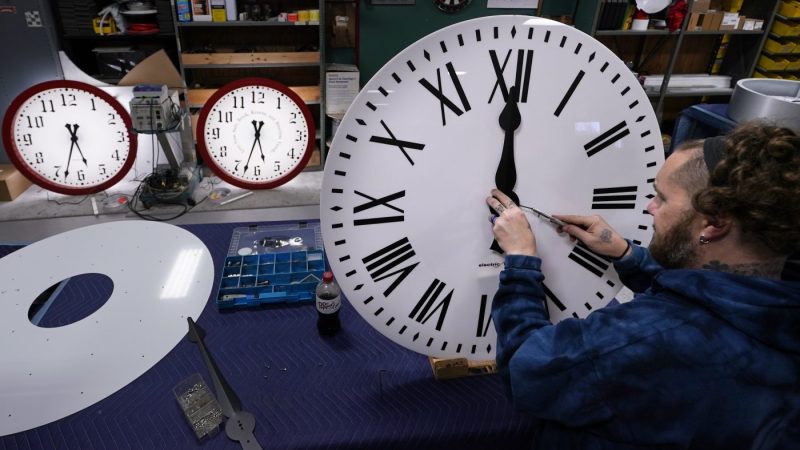
As the calendar moves into November, so too will our clocks revert to standard time, marking the end of daylight saving time. While several states aimed to avoid this seasonal time change this year, only two managed to escape losing an hour of sleep on Sunday.
In most states, lawmakers introduced bills with the goal of "locking the clocks" in place. The actual number of such bills is 14, and there are ongoing efforts at both the state and federal levels to address the issue of seasonal time changes.
There are currently bills in Congress that could establish permanent daylight saving time across the United States or allow individual states more control over their time observance. One bill even had a hearing named after Cher, though its recent attempt to be fast-tracked was unsuccessful. Similar legislative efforts have been introduced at the state level over the past year, but many remain stalled.
What Happened to “Locking the Clocks”?
Some legislation has passed, including a Senate concurrent resolution in California recognizing the health benefits of permanent standard time. Pennsylvania recently became the latest state to pass a law urging Congress to eliminate the biannual clock changes. However, similar proposals have faced obstacles in other states this year.
Two additional states, Maine and Texas, have passed bills to adopt permanent daylight saving time, pending federal approval. They join eight other states that have taken similar steps. These states include Alabama, Colorado, Delaware, Florida, Georgia, Louisiana, Tennessee, and Wyoming, along with Arizona and Hawaii. Together, these 14 states did not introduce any daylight saving time legislation during the current legislative session. The remaining four states — New Hampshire, New Mexico, Rhode Island, and Vermont — also did not bring forward any related bills.
State-by-State Overview
Several states have introduced various pieces of legislation regarding the seasonal time change:
- Alaska introduced four bills, two for permanent standard time and two for permanent daylight saving time, but none have passed.
- Arkansas saw a bill for permanent standard time die in committee.
- California has a bill to make standard time year-round, which was granted by voters in 2018, but it remains in committee.
- Connecticut proposed a bill to implement permanent daylight saving time, contingent on neighboring states doing the same, but it was referred to committee.
- District of Columbia approved a measure to exempt the district from observing daylight saving time.
- Idaho introduced a bill for permanent standard time, if Washington and Oregon followed suit.
- Illinois introduced multiple bills for permanent daylight saving time and a resolution urging Congress to make it the law, but they have not passed.
- Indiana has three bills in committee that aim to exempt the state from daylight saving time.
- Iowa introduced a bill for permanent daylight saving time, which was recommended for passage, while a similar bill in the Senate remains in a subcommittee.
- Kansas introduced a bill for permanent standard time, which passed through the Senate but is now awaiting action until January 2026.
- Kentucky has a bill for permanent standard time in committee.
- Maine passed a bill for permanent daylight saving time, but a bill for permanent standard time died.
- Maryland withdrew a bill for permanent daylight saving time, and no further legislation has been introduced since.
- Massachusetts introduced multiple bills for permanent standard time and one for permanent daylight saving time, all referred to committees.
- Michigan introduced a bill to exempt the state from daylight saving time, which was referred to committee in March.
- Minnesota has companion bills in committee, one for permanent daylight saving time and another for permanent standard time.
- Mississippi declared a bill for permanent daylight saving time dead in March.
- Missouri introduced a bill that would switch to permanent standard time unless the U.S. adopts permanent daylight saving time.
- Montana saw a bill for permanent standard time die in May.
- Nebraska introduced two bills, one for permanent daylight saving time and one for permanent standard time, scheduled for final readings in March.
- Nevada passed a bill for permanent standard time in the Assembly, but it stalled in the Senate.
- New Jersey introduced a bill for permanent standard time in February, which was referred to committee.
- New York introduced several bills to study the effects of daylight saving time and to make it permanent or standard time, but none have passed.
- North Carolina introduced a bill for permanent daylight saving time, which was referred to committee.
- North Dakota introduced a bill for permanent standard time, which was amended to call for permanent daylight saving time before failing to pass.
- Ohio has House and Senate resolutions calling for Congress to make daylight saving time permanent, but they remain in committee.
- Oklahoma had a bill for permanent standard time recommended for passage but failed to get enough votes.
- Oregon introduced a bill to put most counties on permanent standard time if California and Washington did the same, but it remains in committee.
- Pennsylvania introduced bills for both permanent standard and daylight saving time, which were referred to committees.
- South Carolina introduced bills for both types of permanent time, but they remain in committee.
- South Dakota saw a bill for permanent standard time fail to pass earlier this year.
- Texas has passed legislation for permanent daylight saving time, making similar bills unlikely to pass.
- Utah introduced a bill for permanent standard time, which was tabled indefinitely.
- Virginia had separate bills for permanent standard and daylight saving time, but neither passed.
- Washington has a bill for permanent standard time in a Senate committee.
- West Virginia introduced two bills to eliminate daylight saving time, which were referred to committee.
- Wisconsin has legislation to lock clocks on standard time in committee.
Why Daylight Saving Time Ending May Be Better for Our Health
While some states can opt for permanent standard time, there is a bill in Congress that could allow them to choose permanent daylight saving time. Without federal action or state-level decisions, we will revert to daylight saving time on March 8 next year.
Copyright 2025 Nexstar Media, Inc. All rights reserved. This material may not be published, broadcast, rewritten, or redistributed.
For the latest news, weather, sports, and streaming video, head to NBC4 WCMH-TV.

Post a Comment for "States Push to End Clock Changes Amid Daylight Saving Debate"
Post a Comment