
The Legacy of the Last Samurai
The Epic Battle That Sets the Stage
In the opening episode of Last Samurai Standing, the samurai protagonist Shujiro Saga (Junichi Okada, also a producer and action choreographer) embarks on a relentless journey across a muddy battlefield. He cuts through dozens of enemies as he charges up a hill, past the enemy’s jinmaku (a type of curtain or barrier), and beheads their leader. This intense action sequence is not just a display of strength but a symbolic moment that marks the end of an era.
However, the victory is fleeting. As Shujiro tries to halt the bloodshed with his sword, the battle is quickly interrupted by cannon fire. “Stop!” he screams into the gunpowder sky, as men from both sides are indiscriminately slaughtered around him. This scene sets the tone for the entire series, which takes place a decade after the Battle of Toba–Fushimi, a pivotal event in the Boshin War. The effects of this opening battle—filmed over three weeks with 300 actors—will ripple throughout the story.
A New Era for Japan
The opening battle signals the end of the Edo period, when the samurai warrior class held significant political and social power, and the beginning of the Meiji era in 1868. This new era saw the restoration of imperial rule and rapid industrialization, bringing Western ideas and influences into Japanese society. However, these changes do not happen overnight. A decade later, when Shujiro is married with two children, the samurai class has lost much of its former glory. Many remain, but carrying a sword is now outlawed, leaving many of them jobless and destitute.
The Death Game: Kodoku
The main action of Last Samurai Standing takes place in 1878, during a cholera outbreak. When Shujiro’s family falls ill, he cannot afford medicine. His daughter dies, and in desperation, he enters a death game competition called kodoku. This competition promises one billion yen to the winner, a sum that could save his wife and son.
The kodoku is inspired by a poison-making ritual in Japanese folklore, where bugs are placed in a jar and allowed to kill each other until only one survives. In this version, 292 fighters start in Kyoto, each wearing a wooden tag. If they kill another competitor, they receive their tag. To pass through seven checkpoints on the road to Tokyo, they need a certain number of tags. Those who fail to collect enough or lose their own will be killed by armed guards.
The Organizer and the Motive
While the kodoku is funded by four wealthy businessmen, it is organized by Kawaji (Gaku Hamada), the Superintendent-General of Japan's police service. Kawaji hates the samurai, believing they hinder Japan’s progress. He organizes the game to eliminate the warrior class, knowing they will participate. He betrays his government colleagues, including Home Minister Okubo (Arata Iura), to achieve this goal. It is eventually revealed that Kawaji was also responsible for ordering the cannon fire at the Battle of Toba–Fushimi, killing samurai on both sides.
The Final Episode and Unanswered Questions
After six episodes, Last Samurai Standing ends in the middle of the story. Remaining contestants include Shujiro; Futaba (Yumia Fujisaki), the teen girl he is determined to protect; Iroha (Kaya Kiyohara), a female warrior who trained with Shujiro; Kyojin (Masahiro Higashide), a strategist who temporarily allies with Shujiro; Sayama (Jyo Kairi), the young man Futaba refuses to leave behind; and Kocha Kamuy (Shota Sometani), the Ainu archer.
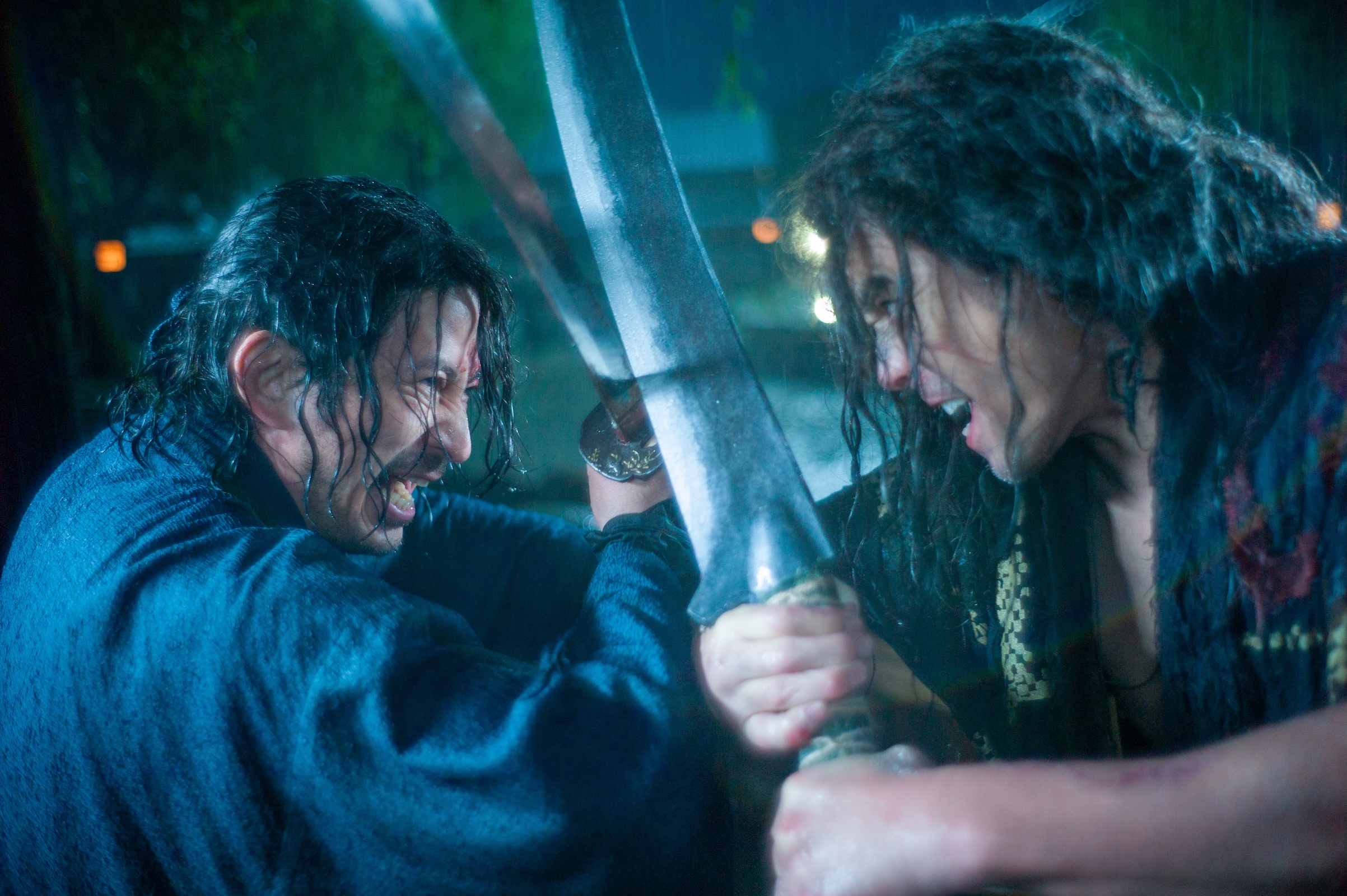
Shujiro kills Bukotsu
One of the most ruthless competitors, Bukotsu (Hideaki Ito), enjoys killing and even targets innocent bystanders. In the final episode, we learn that Bukotsu was once on the battlefield at the Battle of Toba–Fushimi. He and Shujiro fought then, with Shujiro winning. Bukotsu made a promise: if Shujiro leaves him alive, he will hunt him down. Years later, after living in prison, Bukotsu is recruited for the kodoku by Sakura (Yasushi Fuchigami), a former samurai and Kawaji’s chief enforcer.
The Fight Choreography and Practical Effects
The fast-paced fight sequences in Last Samurai Standing are meticulously choreographed. Okada, who also worked on the action scenes, emphasizes the use of practical effects and real human bodies rather than relying on CGI or stunt doubles. “We want real human bodies to work on it,” he says. “And I have been training and working on martial arts, so I'm not using stunt doubles. So in not relying on CGI or using stunt doubles, with just one cut, you could capture everything.”
The Mystery of Gentosai
Midway through the series, we learn that Shujiro grew up training at a secretive samurai school alongside his adopted siblings, including Iroha. Their master ordered them to kill one another until only one survived. They fled, and now they are hunted by Gentosai (Abe Hiroshi), an effective samurai at their former master’s command. Gentosai is a competitor in the kodoku, driven solely by his mission to kill the trainees of the school.
The Ending and Future of the Series
The final moments of Last Samurai Standing show Kawaji passing by Shujiro, who has some allies in the imperial government. Will Shujiro and Kawaji meet face to face? The series ends with an “End of Chapter One” title card, suggesting more chapters to come.
Although a Season 2 has not been announced, it seems likely that the story will continue. The kodoku must come to an end, no doubt with more betrayals before it does.
Questions left unanswered at the conclusion of Episode 6 include: Where do Kyojin’s loyalties truly lie? Does Iroha still want to kill Shujiro for what she sees as his abandonment of their family? Will Shujiro succeed in protecting Futaba? Can he keep his promise to his wife that he will return?
As the series concludes, the screenwriter and director Michihito Fujii hopes people will be drawn into the world of Last Samurai Standing enough to talk about it with friends and family. “Of course, if you want to go deeper, you can study about this samurai or the sword,” he says. “But, for the very, very first, I want people to be able to keep on watching until the end because they got so excited.”

Post a Comment for "The Legacy of the Last Samurai"
Post a Comment