
Turkeys Stay Affordable as Other Thanksgiving Items Rise in Price
A Thanksgiving with Challenges and Opportunities
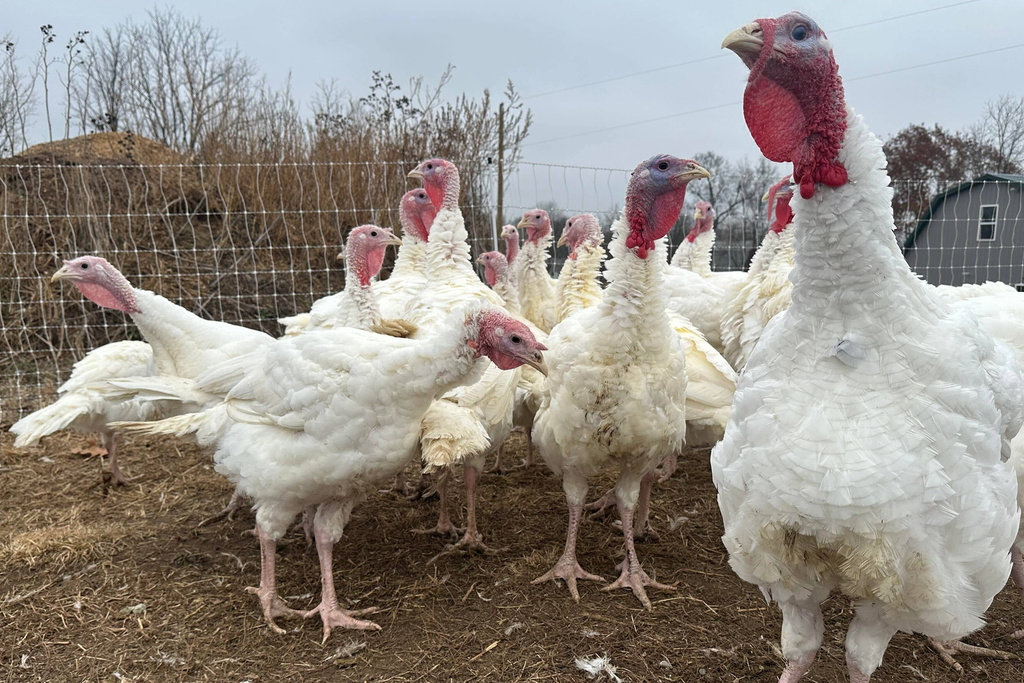
Old Brick Farm, located in Chelsea, Michigan, is a family-run operation that has been raising chickens, turkeys, and ducks for generations. This year, the farm was fortunate to avoid bird flu and avian metapneumovirus, two diseases that have significantly impacted the U.S. turkey population. Larry Doll, the farm’s owner, attributes this success to strict biosecurity measures and limiting contact with animals from other farms.
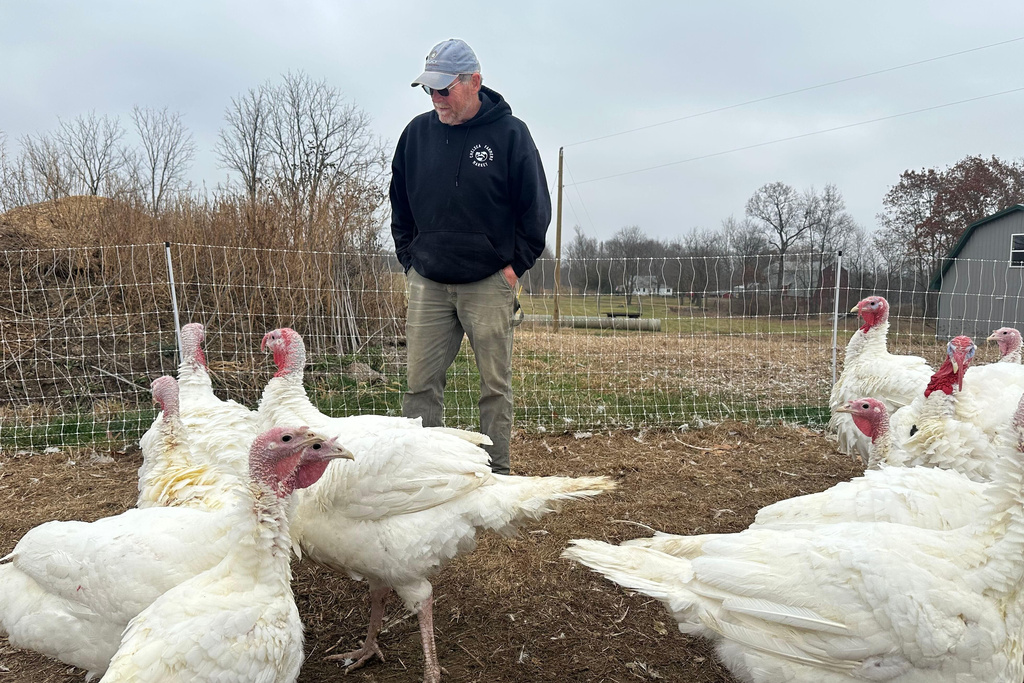
Despite these precautions, the overall turkey flock has reached a 40-year low due to disease outbreaks. This decline has led to fewer available turkey chicks at hatcheries, making it harder for farmers like Doll to plan their production. He recently placed an order for 100 more hatchlings, but they won’t arrive until July.
“Getting your order in early is crucial,” Doll said. “If you wait, you might not get the birds you need.”
The impact of these challenges is reflected in rising turkey prices. According to the U.S. Department of Agriculture, wholesale turkey prices are expected to increase by 44% this year. However, many retailers are offering discounts or free turkeys to help consumers manage the cost of Thanksgiving meals.
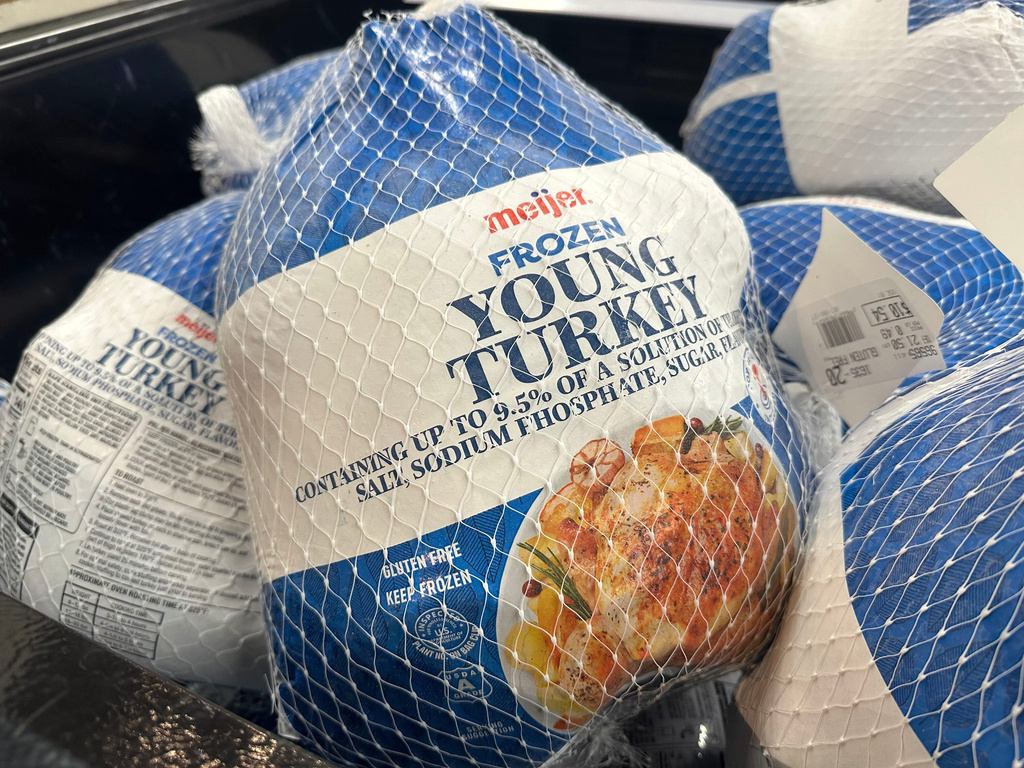
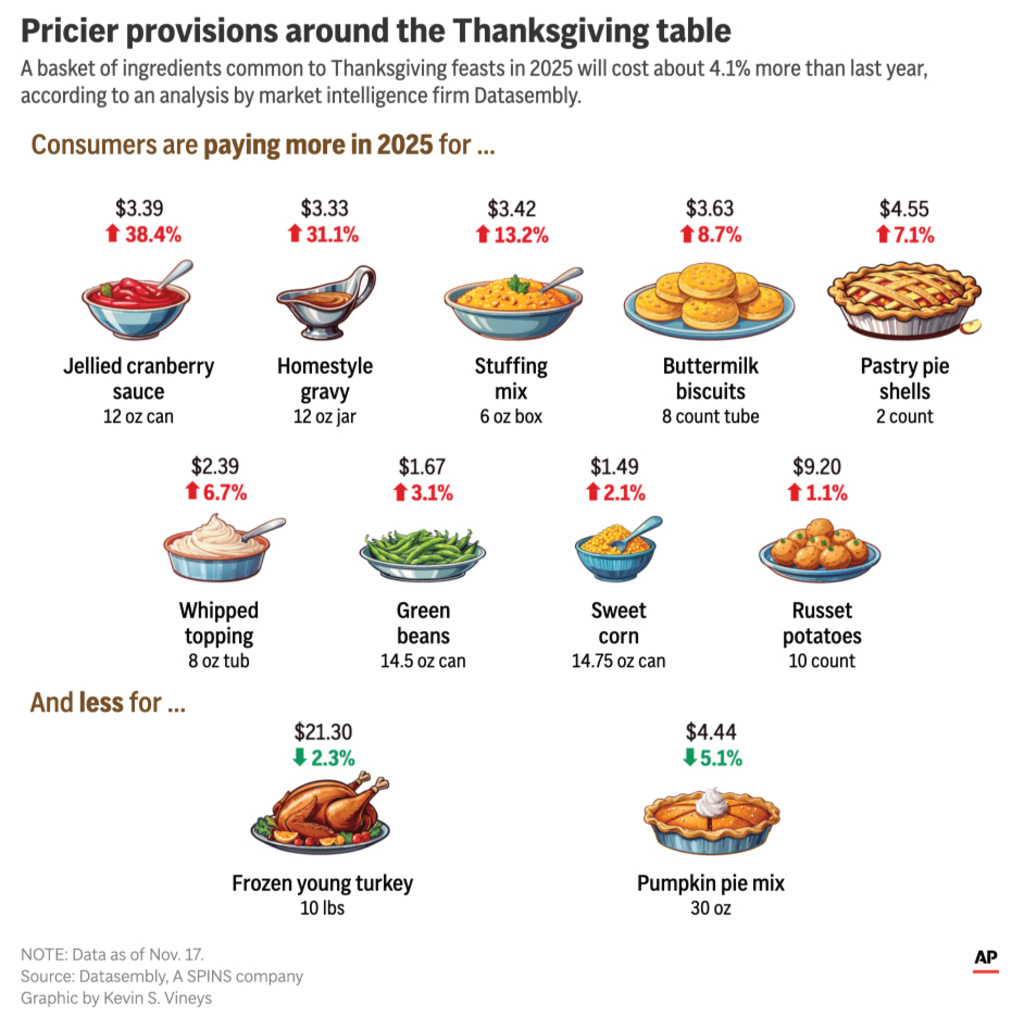
While the price of turkey may be lower than last year, other ingredients for the holiday feast could be more expensive. Tariffs on imported steel, for example, have increased the cost of canned goods. As of November 17, a basket of 11 Thanksgiving staples—including a 10-pound frozen turkey, potatoes, stuffing, and canned vegetables—cost $58.81, which is 4.1% higher than the previous year, according to Datasembly, a market research company.
Datasembly reported a 2% decline in the retail price of a 10-pound turkey as of November 17. However, different organizations have provided varying estimates for the total cost of a Thanksgiving meal. The American Farm Bureau Federation estimated that feeding 10 people would cost $55.16 this year, a 5% decrease from last year. Meanwhile, the Wells Fargo Agri-Food Institute estimated the cost at $80, which is 2% to 3% lower than last year's estimate.
Dealing with Rising Costs
Grocery chains are also offering promotions to attract shoppers during the busy holiday season. Discount grocer Aldi is advertising a $40 meal for 10 with 21 items, while Kroger claims customers can feed 10 people for under $50 using its store-brand products. President Donald Trump previously highlighted Walmart’s Thanksgiving meal basket, which he claimed was 25% cheaper than last year. However, this was due to a different assortment of items.
David Ortega, a professor of food economics and policy at Michigan State University, noted that these promotions aim to draw customers into stores despite the rise in wholesale turkey prices. In the second week of November, frozen 8-16 pound hens were averaging $1.77 per pound, up 81% from the same period last year, according to Mark Jordan of Leap Market Analytics.
Consumer Choices and Market Shifts
Avian viruses are the main cause of the turkey price increase, but another factor is the rising cost of other meats. Beef prices, for example, were up 14% in September compared to last year. Paul Nadeau, a retired consultant from Austin, Texas, explained that he now prefers turkey over beef because of the high cost of beef brisket, which can exceed $100.
“I don’t know of anything that’s down in price since last year except for eggs,” Nadeau said.
Impact of Tariffs and Weather
Tariffs on imported steel and aluminum are also contributing to higher food costs. Farok Contractor, a professor at the Rutgers Business School, noted that customers are paying 10 cents to 40 cents more per can due to these tariffs. This has affected the price of jellied cranberry sauce, which rose 38% from last year in Datasembly’s survey. Weather conditions also played a role, with U.S. cranberry production expected to drop by 9% due to drought in Massachusetts.
In Illinois, where most of the country’s canning pumpkins are grown, dry weather helped avoid diseases that typically affect pumpkins in wet conditions. As a result, the price of pumpkin pie mix decreased by 5% compared to last year.
A Family Tradition
Back at Old Brick Farm, which has been in Doll’s family since 1864, the focus remains on quality and tradition. Doll walks among his turkeys, patting their heads as they move between the barn and pasture. He plans to deliver them to an Amish butcher, selling all 92 turkeys he raised this year at $6.50 per pound.
Doll enjoys the profit and the satisfaction of supplying a holiday meal. “I just love it, to think that we’re providing them food, but the centerpiece of their Thanksgiving dinner,” he said.

Post a Comment for "Turkeys Stay Affordable as Other Thanksgiving Items Rise in Price"
Post a Comment