
Why Can't UK, Lexington Address Housing Before Demolition?
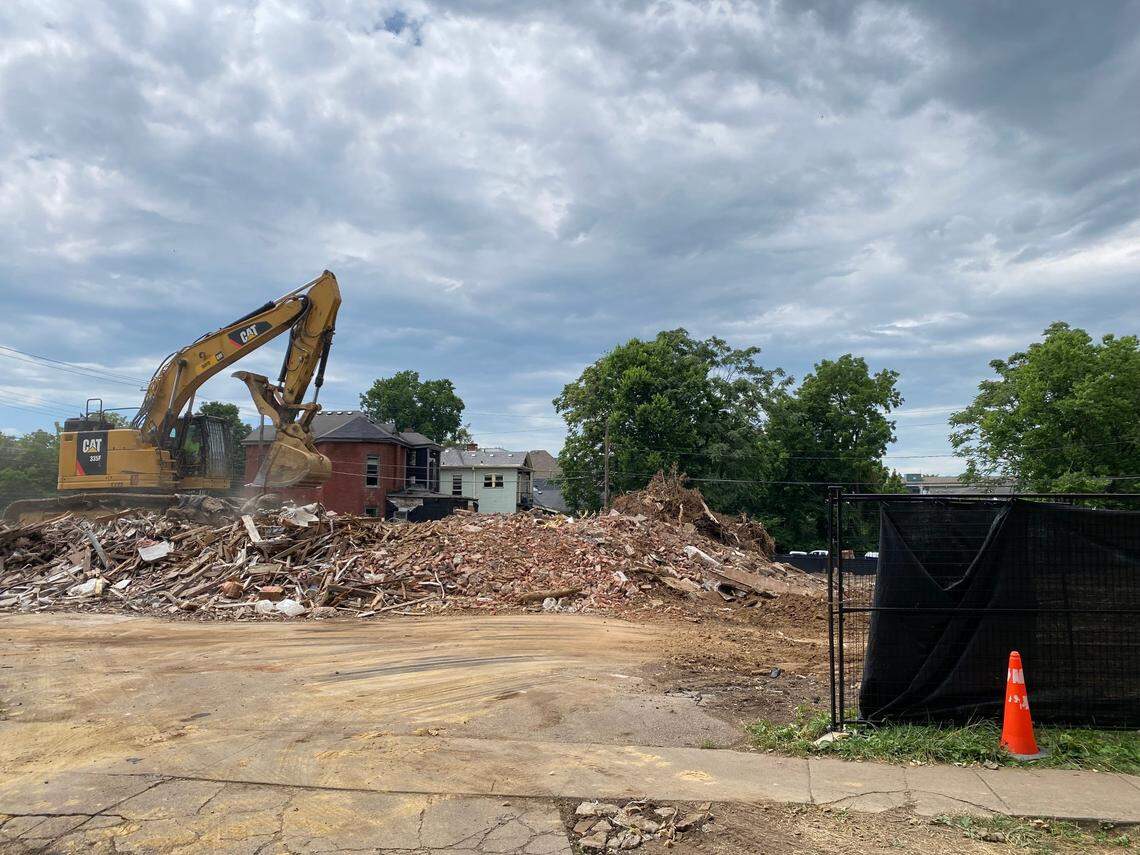
Rapid Development in Downtown Lexington
The Maxwell-High Street corridors of downtown Lexington are undergoing significant changes. At least four large apartment buildings by private developers are planned: three on Maxwell and one on High Street at the site of the current YMCA. The pace of these developments has raised concerns among residents, as parts of Lexington's historic core are being demolished rapidly.
As you drive past an open hole that used to be filled with decrepit yet National Historic Register houses, it's hard to ignore the impact of these changes. The three Maxwell projects—aimed primarily at University of Kentucky (UK) students—have already passed the Lexington Fayette Planning Commission. However, the Lexington-Fayette Urban County Council has decided to hold a public hearing on the last one, a 900-bed complex that will stretch across Stone, Kalmia, Maxwell, and Rose.
The public hearing is scheduled for 5 p.m. on Wednesday, November 19, followed by a vote on the zone change. This issue is expected to be contentious, with the Blue Grass Trust for Historic Preservation leading the charge against the development. Jon Coleman, the Trust's executive director, noted the significant public outcry over this particular project.
"It's been interesting to see the tremendous public outcry over this one," Coleman said. "I don't know if people have woken up to what's going on. While we need increased density because the housing crisis is severe, that doesn't throw out the need for thoughtful density, and this is a slash and burn campaign."
A Coalition of Concerned Residents
The fight has brought together a coalition of residents, including some young people. Gray Broderson, an artist and activist, agrees that Lexington needs more housing but not at the expense of existing homes.
"We're not completely opposed to development, but when it obliterates active housing for people, it's not the path we should be going down," Broderson said. "We need actually affordable housing, not housing that starts at a tiny room that is $900 a month."
Lexington is facing a housing crisis due to its unique situation as the site of the state's flagship university and the Urban Service Boundary aimed at preserving Fayette's horse farms. These apartment buildings help alleviate some of the pressure, though they may not be considered "affordable housing" per se. They can prevent UK's expanding student body from taking over more residential neighborhoods.
However, this situation highlights the need for better planning and cooperation between the city and the university. The real challenge lies in how UK and the city can work together more effectively to address housing issues crucial to both entities.
The Role of Historic Designations
One of the reasons it was difficult to protest the Stavroff project—a 238-unit, six-story building on East Maxwell Street—was that the 13 historic buildings had been allowed to decay so deeply that rehabilitating them seemed nearly impossible. Despite a host of historic buildings, this area was not protected by an H1 historic overlay. This decision was influenced by developer Bill Lear, who supported the H1 designation if it stopped at Rose Street.
While H1 overlays have their own challenges, they are essential in preventing mass demolition. If you're opposed to density on Maxwell, you must also support it elsewhere. The Hub project on Maxwell and Rose will demolish some buildings known as the "missing middle"—those kinds of four-plexes seen throughout Lexington's older neighborhoods.
Collaboration Between City and University
The lack of collaboration between the city and UK is a recurring issue in university towns. UK knows how many students it expects over the next decade and where it wants to grow the campus. This information would be valuable to city planners, but the two entities often operate in silos.
This problem has persisted since President Eli Capilouto arrived in 2011. There hasn't been a proper Town-Gown commission or task force since then. Universities continue to grow, which is why UK spent years buying up houses west of Limestone and demolishing them for health care facilities.
Debra Hensley, a former Urban County Council member, recalls sitting down with UK President David Roselle to discuss housing. She emphasized the need for leadership and better communication between the university and city officials.
"I would say the current president lives not too far away from all this, and he should be reaching out to city officials on this," she said. "It's unbelievably burdensome for this neighborhood to take on all these huge buildings in such a small area."
Moving Forward
Jay Blanton, vice President for university relations and chief communications officer for UK, stated that the university aims to be a good partner with the city. He mentioned ongoing efforts to engage with council members and continue dialogue about future developments.
Planning Commission member Frank Penn expressed a desire to be involved in these discussions. He questioned how many more projects would be needed and suggested that the university should come before the commission to discuss future plans.
Cities inevitably change, and it's up to residents to decide what kind of city they want. With so many thoughtful and concerned citizens, there is potential for better discussions before major developments proceed.
"Housing policy is about everything—health, education, economics, transportation," Hall said. "It's so entangled and has repercussions to everything."
It's challenging, but not impossible, to have more housing without losing Lexington's character. The city has the potential to rise to this challenge.

Post a Comment for "Why Can't UK, Lexington Address Housing Before Demolition?"
Post a Comment