
College Degrees No Longer Help Young Americans Land Jobs. Why a High School Diploma and Trade Skills May Be Best in 2026
The Changing Landscape of Education and Employment
For generations, the promise of a college degree was clear: after four years of hard work, students would emerge with a credential that guaranteed a stable and well-paying job. This promise held strong for many years, as college graduates consistently found employment faster, experienced lower unemployment rates, and earned higher wages compared to those with only a high school diploma. However, this once-reliable path is now showing signs of strain.
According to research from the Federal Reserve Bank of Cleveland, the safety net provided by a college degree is starting to fray. Gad Levanon, chief economist at the Burning Glass Institute, told CNBC that "for the first time in modern history, a bachelor’s degree is no longer a reliable path to professional employment." Goldman Sachs analysts have also noted that the "safety premium" of a college degree has shrunk to its narrowest margin in decades.
Trade Programs Rise in Popularity
As the value of a traditional college education wanes, trade programs are gaining traction. These programs are no longer seen as a "Plan B" but rather as a strategic choice for those looking to enter the workforce quickly. The cost of trade school typically ranges from $3,973 to $16,877, which is significantly less than the average $38,270 paid for a traditional four-year program.
Unlike a bachelor’s degree, where students often accumulate debt while studying theories they may never use, many trade pathways allow students to earn money while learning. Apprenticeships, hands-on training, and tax credits can help cover expenses while students develop real, marketable skills.
The Unreplaceable Value of Trade Careers
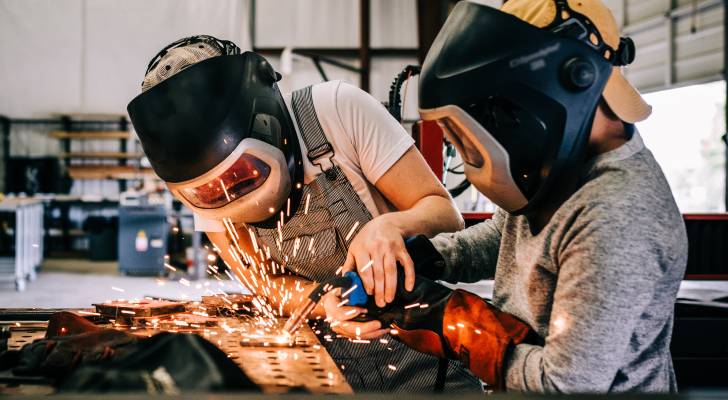
One key advantage of trade careers is that they cannot be easily automated. Electricians, plumbers, welders, and mechanics remain essential to the U.S. economy, and federal investments like the Bipartisan Infrastructure Law are increasing demand. The country is expected to add about 345,000 new trade jobs by 2027–28, with clean-energy projects creating even more opportunities for those who prefer hands-on work.
Mike Rowe, CEO of the mikeroweWORKS Foundation, highlights the growing importance of these roles. He notes that while AI is beginning to impact white-collar jobs, it is not threatening the jobs of tradespeople. "It’s not coming for the welders. It’s not coming for the plumbers. It’s not coming for the steamfitters, or the pipefitters or the HVAC. It’s not coming for the electricians," he said at the Pennsylvania Energy and Innovation Summit.
A Growing Shortage of Skilled Workers
Despite the increasing demand, there is a significant shortage of skilled workers. More than a million trade roles are unfilled nationwide, including 500,000 in manufacturing alone. For every five tradespeople retiring, only two are stepping in to replace them. This shortage is driving up wages and making the field more financially attractive than ever.
Crist Morillon's story illustrates the potential of trade careers. A fun auto shop elective at her Phoenix-area high school sparked a passion she never expected. By graduation, she knew she didn’t want student debt or four more years in a classroom. Instead, she enrolled in a one-year automotive program at Universal Technical Institute, earning her associate degree for about $18,000 after scholarships.
Real-World Success Stories
Morillon’s career took off quickly after graduation. Tesla recruited her straight off campus for a service assistant role, and within a year, she was promoted to service technician. She spent four years at Tesla before joining Lucid Motors in 2021, where she still works today, earning about $78,000 a year.
This steady income allowed her to achieve financial milestones many of her peers are still dreaming about. At 24, she bought her first home, a classic American dream. She believes this would have been out of reach had she taken the traditional college route. The median first-time homebuyer in the U.S. is now 40, according to the National Association of Realtors.
"I would probably still be living at my parents’ house and paying off student loans," she told CNBC Make It. "Instead, I’m able to financially support myself, my parents and my younger sister when they need it."
The Financial Impact of Student Debt
The average federal student loan balance sits at $39,075 per borrower. While one pathway requires four years in the classroom and often decades of repayment, another can fast-track workers into stable paychecks and earlier financial milestones like homeownership and retirement contributions.
As the economy shifts, the equation is getting more complicated. AI is already reshaping many white-collar fields, tightening entry-level hiring, and redrawing what "job security" looks like. Skilled trades, meanwhile, are getting harder to automate and often easier to enter without life-altering debt.
Choosing the Right Path
While a college degree can still be a powerful investment, especially for careers that require one, families may want to run the numbers more carefully. They should compare expected salaries to debt, look for programs with co-ops or apprenticeships, and consider which path offers the strongest return in a shifting economy.
What to Read Next
- Robert Kiyosaki says this 1 asset will surge 400% in a year — and he begs investors not to miss its ‘explosion’
- Dave Ramsey says this 7-step plan ‘works every single time’ to kill debt, get rich — and ‘anyone’ can do it
- I’m almost 50 years old and have nothing saved for retirement. What do I do? Don’t panic. Here are 6 easy ways to catch up (and fast)
- Young millionaires are rethinking stocks and banking on these assets instead — here’s why older Americans should take note
Join 200,000+ readers and get The News Pulse’s best stories and exclusive interviews first — clear insights curated and delivered weekly. Subscribe now.

Post a Comment for "College Degrees No Longer Help Young Americans Land Jobs. Why a High School Diploma and Trade Skills May Be Best in 2026"
Post a Comment